Become a Vogue Business Member to receive unlimited access to Member-only reporting and insights, our Beauty and TikTok Trend Trackers, Member-only newsletters and exclusive event invitations.
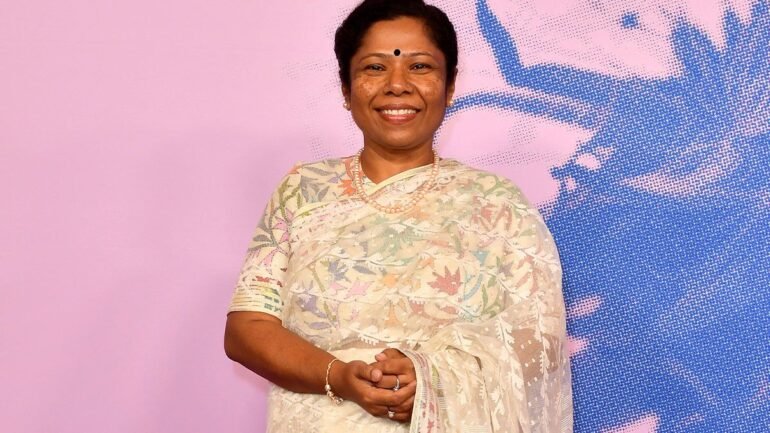
Kalpona Akter is one of the Vogue Business 100 Innovators Class of 2025. View the full list here.
When Bangladeshi trade unionist Kalpona Akter got her first job in a garment factory, she was 12 years old. Her father had been the primary earner, but he got sick, and her mother had to stay home to look after the five children. Akter and her 10-year-old brother became the breadwinners.
For the first two years, Akter says she was just grateful to be earning — a paltry $6 per month for over 400 hours work — but she soon realised that something wasn’t right. “I had done a lot of overtime before Eid, and I had planned to use the money for at least one good meal each day, and some new clothes for my siblings,” she recalls. “The factory manager said they were going to pay us less for the overtime. I knew it was wrong, but I didn’t know how to fight it.”
Of the 1,800 workers, 92 men decided to strike, and Akter became the only woman to join them. After a few days of refusing overtime, the managers agreed to pay the wages owed, but they reduced the overtime fee moving forward. “We didn’t know how much money we were supposed to get, so we were OK with that,” says Akter.
The following week, 26 of those who went on strike were fired. Unable to work, they sought advice at a nearby factory, which led them to the Solidarity Centre, a US non-profit supporting workers in their fight for labour rights, safe workplaces, fair wages and democratic union representation (formerly known as the Asian American Free Labour Institute). The fired workers came back and told Akter about a labour law designed to protect workers, which could help them secure the pay and protections they were entitled to. A week later, Akter faked a hospital appointment to get time off work, and went to the Solidarity Centre to see for herself. “I think of that moment now as my second birth,” she says. “It was the first time I heard that you should only work eight hours [per day], that overtime pay should be double, that maternity leave and daycare centres existed, that I shouldn’t be slapped or beaten on the production floor, and that there should be clean water in the bathrooms. It blew my mind.”