They had pop-up headlights, cassette decks, and enough crazy angles to rival a stealth bomber. The 1980s were weird, wonderful, and full of cars that were trying to push the boundaries of automotive design at any cost. And while some of those machines were ugly, slow, and inefficient, others are still seriously cool — even decades later.
Whether you grew up drooling over sports car posters on your bedroom wall or you’re just now discovering the joys of proper analog driving, these ten ’80s icons prove that good style and automatic seatbelts never go out of fashion.
To provide the most accurate and up-to-date information, this article uses data sourced from various manufacturers and authoritative sources, including Classic.com and Bring a Trailer.
BMW E30 3 Series

Few cars captured the magic of driving in the ’80s quite like the BMW E30. With its boxy good looks, rear-wheel drive balance, and build quality, it became an instant icon — and a benchmark for how small sports sedans should feel. From the humble 318i to the M3, every version feels connected in a way modern cars can only dream about.

The E30’s magic lies in its simplicity. No touchscreens, no drive modes, no fake engine sounds — just a naturally aspirated inline-four or six, a tight manual gearbox, and feedback so direct it’ll make you grin every time you turn the wheel. It’s the car that made BMW’s “Ultimate Driving Machine” slogan more than just marketing. And while values have climbed for clean M3s, plenty of affordable 325is models still deliver the same joy — and parts are easy to find thanks to BMW’s massive enthusiast network.
|
Strengths |
Weaknesses |
|
|
Porsche 928

When Porsche launched the 928, it wanted to replace the 911, lol. That didn’t happen — but what we got instead was a grand touring masterpiece. The 928 mixed futuristic design, a front-mounted V8, and otherworldly refinement. It was fast, comfortable, and wildly expensive, which made it the choice of Wall Street sharks and Miami Vice extras alike.

Today, the 928 stands out as one of the most unique Porsches ever built, looking like Porsche asked, “What if aliens worked for us?” It’s a rare blend of brute force and elegance, capable of effortless highway cruising or backroad hustling. It feels less like a sports car and more like a sculpture. Maintenance used to scare people off, but enthusiasts are now realizing these cars are built like tanks — provided they’ve been cared for. A well-kept 928 is a slice of ’80s luxury that still feels ahead of its time.
|
Strengths |
Weaknesses |
|
|
Mazda RX-7

The rotary-powered RX-7 was Mazda’s way of proving that small engines could pack a punch. Lightweight, agile, and perfectly balanced, it became Japan’s answer to European sports cars — only more reliable and more fun to drive.

The first-gen (FB) RX-7 had simplicity on its side, while the second-gen (FC) took things upscale with turbo power and a more refined chassis. Either way, you’re getting a car that loves corners and rewards smooth driving. It’s the kind of machine that makes you want to take the long way home — every single time. Just keep in mind that rotaries need love. Ignore maintenance, and it’ll bite you, but treat it right, and you’ll have one of the most characterful engines ever made.
|
Strengths |
Weaknesses |
|
|
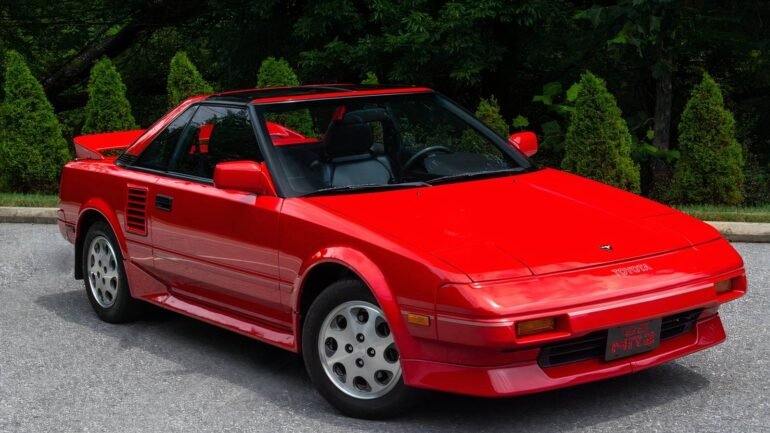
Toyota MR2

The original MR2 was Toyota’s wild card — a tiny, mid-engine sports car that drove like a baby Ferrari but cost less than a Camry. Its 1.6-liter engine made modest power, but in a car this light, it felt alive. And with sharp steering and a snappy five-speed manual, it quickly became a cult favorite.

Everything about the AW11 MR2 screams ‘80s charm — the angular design, the pop-up headlights, the way the engine sits right behind your ears. It’s mechanical joy in compact form, and it’s one of the most affordable mid-engine classics you can still find. Plus, it’s a Toyota. That means reliability, easy parts access, and minimal drama. It’s the car that proves fun doesn’t have to come with frustration.
|
Strengths |
Weaknesses |
|
|
Audi Quattro

The Audi Quattro didn’t just change rallying — it changed everything. When it debuted in 1980, all-wheel drive was something you found on trucks, not sports coupes. Then Audi bolted it to a turbocharged five-cylinder engine and started winning. The rest, as they say, is history.

The Quattro’s rally pedigree gave it instant credibility, and its angular bodywork still looks like it’s moving even when parked. On the road, it’s surprisingly civilized, with a deep, grumbly exhaust note that sounds like pure turbocharged thunder. It’s not the easiest car to find, and prices can stretch up to $60,000, but for those lucky enough to own one, it’s a key player in the automotive legendarium — the car that put Audi on the map.
|
Strengths |
Weaknesses |
|
|
Volkswagen Golf GTI Mk2

The Mk2 GTI took everything great about the original hot hatch and made it better. It was slightly bigger, more refined, and still endlessly tossable. Whether you had the eight-valve or the peppier 16-valve version, the GTI was the car that made practicality fun. Many enthusiasts point to the Golf GTI as the cornerstone of the hot hatch category.

It’s not about outright speed — it’s about how connected you feel behind the wheel. Few cars manage to blend everyday usability with genuine driving joy like the Mk2 GTI does. And because it’s a Volkswagen, you can wrench on it with basic tools and a bit of patience. Today, the Mk2 stands as a symbol of everything that made the ’80s great: simple design, driver engagement, and a sense of fun baked into every corner.
|
Strengths |
Weaknesses |
|
|
Ford Mustang Fox Body

The Fox Body Mustang might be the ultimate ‘80s muscle car. Lightweight, simple, and powered by a V8 that sounds like thunder, it became the canvas for every drag racer and street tuner in America.

From high school parking lots to quarter-mile tracks, the Fox Body earned its reputation as cheap, fun, and endlessly modifiable. Stock versions are rare today because most have been turned into project cars — but a clean, unmolested example is pure nostalgia. It’s not refined, but that’s part of its charm. The Fox Mustang is all about attitude — and it still delivers it in spades.
|
Strengths |
Weaknesses |
|
|
Nissan 300ZX

Before the wild twin-turbo 300ZX of the ’90s, there was the Z31 — the car that carried Nissan’s Z-car legacy into the digital age. With its doorstop styling, turbocharged performance, and futuristic digital dashboard, it was the definition of ’80s cool.

It’s a surprisingly capable grand tourer, with plenty of comfort and the kind of ‘80s vibe that makes every drive feel like a scene from a movie. The Z31 doesn’t get as much attention as the later models, but that just means you can still find them for a bargain. Even still, the earlier ones have the flip lights, and if that isn’t on your radar, it should be. Think of it as Japan’s answer to the Corvette — but with more subtlety, more style, and a much better reliability record.
|
Strength |
Weaknesses |
|
|
Mercedes-Benz 190E

Built to go head-to-head with BMW’s M3, the 190E 2.3-16 was Mercedes-Benz at its most competitive. It had a Cosworth-tuned engine, a dogleg manual gearbox, and a chassis that could handle serious abuse — both on the Autobahn and the racetrack.

The 190E wasn’t just fast; it was beautifully engineered. It feels solid in a way few modern cars do, with doors that close like a bank vault and an engine that loves to rev. It’s an understated performance sedan that never shouts — it just gets the job done with precision. If you want an ‘80s classic that combines performance and class, this is it.
|
Strengths |
Weaknesses |
|
|
Pontiac Fiero GT

Ah, the Fiero — America’s mid-engine…well, dream may be a stretch, but it’ll do until the real dream gets here. When it debuted, it promised Ferrari looks for a Chevy price. The early cars didn’t quite deliver, but by the time the GT arrived in 1985, Pontiac had sorted it out. The fastback design, V6 power, and improved suspension turned it into something genuinely good to drive.

Today, the Fiero GT is one of the quirkiest and most enjoyable ’80s cars you can buy. It’s fun to drive, surprisingly comfortable, and guaranteed to draw a crowd at any cars-and-coffee event. Sure, it’s not perfect, but it’s a reminder of when GM wasn’t afraid to take risks — and that alone makes it worth owning.
|
Strengths |
Weaknesses |
|
|