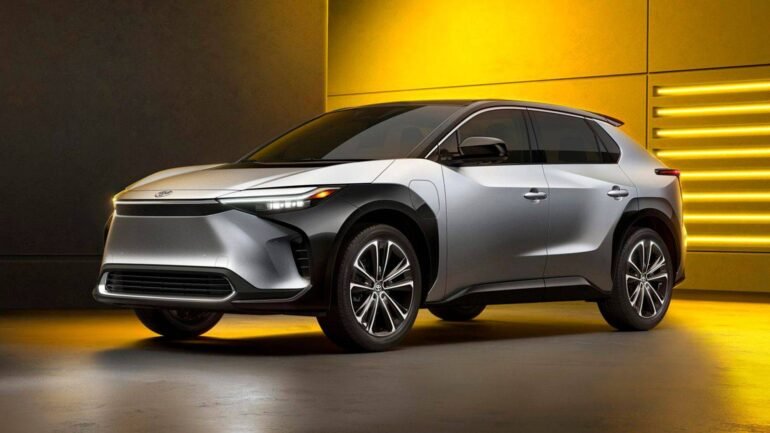
Toyota is one of the most noteworthy brands that is currently sitting at the forefront of solid-state battery technology development for personal mobility use, with plans to release a revolutionary option with 745 miles of rangeby the end of the decade. This will be one of the most significant introductions to the EV industry and will change the way consumers see EV products. The premise of solid-state battery technology aims to provide longer ranges and faster charging times, resulting in improved overall longevity and convenience.
Many experts punt solid-state batteries to be the next major step in making EVs a more viable mainstream option. This is thanks to the substantial benefits that they offer over lithium-ion batteries, which are today’s standardized option. As is the case with anything, this technology also has its fair share of cons, such as high development costs and a complicated manufacturing procedure. For this reason, it’s going to take much longer than a decade until we start seeing this chemistry introduced to mainstream cars at an affordable rate. A new development consisting of a crucial partnership with a Japanese mining company further advances Toyota’s goal of getting this technology into the consumer’s hands.
In order to give you the most up-to-date and accurate information possible, the data used to compile this article was sourced from various manufacturer websites and other authoritative sources, including Reuters.
This New Venture Grants It Access To Crucial Cathode Materials

Sumitomo Metal Mining and Toyota Motor Corporation have entered a joint development agreement to mass-produce cathode materials for all-solid-state batteries intended for future battery electric vehicles. These batteries replace the liquid electrolyte of current lithium-ion cells with a solid electrolyte, promising higher energy density, faster charging, longer lifespan, and improved safety. Toyota expects to introduce BEVs equipped with this technology between 2027 and 2028. The collaboration builds on research that began in 2021, when both companies started addressing performance degradation in cathode materials caused by repeated charge and discharge cycles.
Using Sumitomo Metal Mining’s proprietary powder synthesis process, the partners developed a new, highly durable cathode material optimized for all-solid-state batteries. Sumitomo will leverage its two decades of experience in producing cathode materials for various electrified vehicles to scale up production of this new compound.

Sumitomo Metal Mining’s Extensive History
- Sumitomo Metal Mining is a major Japanese company specializing in mineral resources development, smelting, and materials manufacturing.
- The company traces its origins to the 17th century, with formal establishment in 1950 as part of the Sumitomo Group.
- It operates across three main segments: mineral resources, smelting and refining, and materials for electronics and batteries.
- Sumitomo is one of the world’s leading producers of nickel and copper and a key supplier of cathode materials for lithium-ion batteries.
- The company plays a major role in supplying materials for electric vehicles and energy storage systems through partnerships with automakers like Toyota.
- Headquartered in Tokyo, Sumitomo Metal Mining runs mining and refining operations across Asia, North America, and Oceania.
Both companies will continue improving material performance, quality, and safety while reducing manufacturing costs to make mass production viable. The partnership represents a critical step in Toyota’s broader battery strategy, which targets a balance between performance, cost, and sustainability. Toyota’s development of all-solid-state batteries aligns with its plan to expand BEV offerings and secure leadership in next-generation mobility technology.
By enabling smaller, lighter, and more efficient battery packs, these advancements could extend vehicle range and shorten charging times, addressing key consumer concerns that limit EV adoption today. Sumitomo’s material expertise and Toyota’s manufacturing scale form a complementary relationship aimed at commercializing what could become a global benchmark in solid-state battery production.
Woven By Toyota Accelerates Collaborative Relationships
The Japanese Brand Is Backing New Partnerships

Toyota Motor Corporation has established the Toyota Invention Partners program as a new strategic investment subsidiary to strengthen collaborations between the Japanese brand and its subsidiaries, affiliates, and external partners as part of its shift toward becoming a holistic mobility company. This arm operates as a wholly owned subsidiary that will focus on early-stage startups and innovators in Japan and abroad who align with Toyota’s vision of inventing the future together. Unlike conventional time-bound investment funds, the partners program will adopt a long-term approach to creating sustainable business value while supporting Toyota’s mission of producing happiness for all.

Beyond financial backing, it will also offer access to Toyota’s human resources, technical knowledge, and manufacturing infrastructure to help partners grow and build lasting collaborations. Toyota says that this initiative is a key enabler of innovation that bridges its corporate network with entrepreneurs, inventors, and participants from its Woven City initiative to drive progress across mobility technologies.

Alongside this, Toyota’s venture investment arm, Woven Capital, has launched Fund II with $800 million, which is about the same amount as its first funding round from 2021, to invest in Series B for late-stage companies in areas such as AI, automation, climate technology, energy, and sustainability. Over the last four years, Woven Capital has invested in 18 firms and fostered new business opportunities across the Toyota Group. To streamline operations and strengthen coordination, Toyota made Woven Capital a wholly owned subsidiary on July 1, 2025. Kenta Kon, Toyota’s CFO and CEO of TIP, stated that the company’s strategy now centers on invention-driven collaboration with external partners to create technologies and ventures beyond Toyota’s existing scope. George Kellerman, Managing Director of Woven Capital, said Fund II will empower breakthrough innovators to scale globally using Toyota’s vast platform.
Toyota Is All-In On Solid-State Battery Technology
The Japanese Brand Continues To Heavily Invest In The Tech

Toyota’s main goal in the solid-state battery field is to get its EVs to surpass the 700-mile range threshold. Traditional lithium batteries feature liquid electrolytes, which can limit energy density and pose safety risks such as overheating and fires. In contrast, solid-state batteries get rid of the liquid electrolyte solution in favor of a solid material, which results in a higher energy density, faster charging times, and reduced safety concerns. The benefit of this design also means that the pack takes up less space and contributes less to the EV’s curb weight, making for lighter EVs.

Toyota’s solid-state battery will undoubtedly change the landscape and overall adoption of EVs, particularly in the U.S., if it manages to offer a battery that can cover 745 miles on a single charge. Most EVs typically cover an EPA-estimated range between 200 miles and 400 miles. Range anxiety remains a concern for a lot of prospective EV consumers in the U.S., even though there are more public charging stations than ever before. EVs also achieve impressive range and efficiency levels, making them much more viable options than ICEs in today’s market. The only issue is that they are much more expensive options to consider, and they depreciate at a much faster rate. Introducing a solid-state battery pack to these cars is likely to alleviate these issues, as it drastically improves the long-term ownership viability.
Source: Reuters