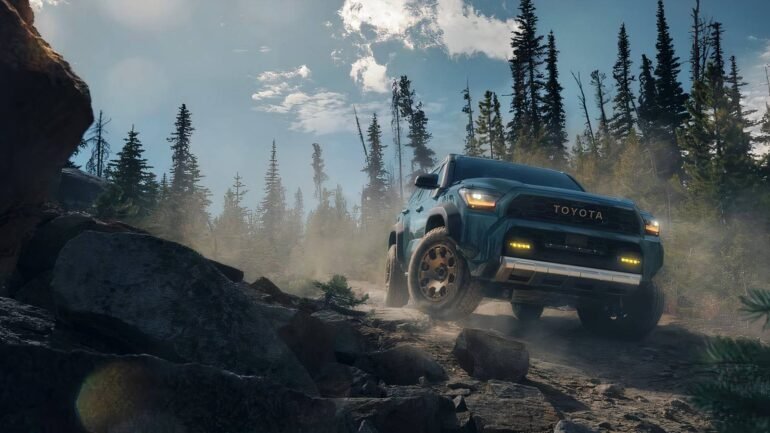
Like most brands today, Toyota pours a lot of resources and effort into creating SUVs, and while the competition is tough in such a crowded market, the Japanese marque is still turning out some of the most respected models. Long-known for dependability, versatility, and reasonable starting prices, Toyota SUVs are a solid go-to for many of us, with models like the RAV4, Land Cruiser, Grand Highlander, and Sequoia all offering a good blend of everything we want.
However, there are two Toyota SUVs that are dominating the mid-size SUV segment: the Toyota Highlander and the Toyota 4Runner. Both are large enough for families, both are comfortable, and both are useful for everyday use, but which one deserves your money? We are taking a look at the Highlander vs. 4Runner debate and are discussing what sets both of these mid-size Toyota SUVs apart.
To give you the most up-to-date and accurate information possible, the data used to compile this article was sourced from Toyota’s website and other authoritative sources, including J.D. Power, Kelley Blue Book, and Fueleconomy.gov.
The Price Showdown: 2025 Toyota Highlander Vs. 2025 Toyota 4Runner
Both the Toyota Highlander and the Toyota 4Runner are cut from the same cloth; both are mid-size SUVs, both are similar in size, both are available with seven passenger seats, and both are available with an MSRP (before fees and destination charges) in the $40,000 ballpark.
They may be siblings in the Toyota lineup, but some key differences between the Highlander and 4Runner make both more specialized than the other in certain fields.
2025 Toyota Highlander Trims And Prices

This year’s Toyota Highlander lineup includes five non-hybrid trims and four hybrid trims, with prices starting at $40,320 and topping out at just shy of $55,000.
- 2025 Toyota Highlander LE. MSRP: $40,320.
- 2025 Toyota Highlander XLE. MSRP: $43,470.
- 2025 Toyota Highlander Hybrid XLE. MSRP: $46,820.
- 2025 Toyota Highlander XSE. MSRP: $47,140.
- 2025 Toyota Highlander Limited. MSRP: $47,575.
- 2025 Toyota Highlander Hybrid XLE Nightshade. MSRP: $47,820.
- 2025 Toyota Highlander Hybrid Limited. MSRP: $51,275.
- 2025 Toyota Highlander Platinum. MSRP: $52,725.
- 2025 Toyota Highlander Hybrid Limited 25th Edition. MSRP: $53,480.
- 2025 Toyota Highlander Hybrid Platinum. MSRP: $54,475.
There are two engine choices for this year’s Highlander: a 2.4-liter gas inline-four and a hybrid inline-four for the hybrid trims.
2025 Toyota 4Runner Trims And Prices

There are 12 different flavors of this year’s Toyota 4Runner, with a slightly higher starting price for the base trim than the Highlander, while top-end starting prices are much higher at $67,400. There are two engine options: a 2.4-liter turbocharged i-FORCE inline-four or a 2.4-liter i-FORCE MAX turbocharged inline-four hybrid.
- 2025 Toyota 4Runner SR5. MSRP: $41,270.
- 2025 Toyota 4Runner TRD Sport. MSRP: $47,750.
- 2025 Toyota 4Runner TRD Off-Road. MSRP: $49,690.
- 2025 Toyota 4Runner TRD Off-Road i-FORCE MAX. MSRP: $52,490.
- 2025 Toyota 4Runner TRD Sport Premium. MSRP: $53,100.
- 2025 Toyota 4Runner TRD Off-Road Premium. MSRP: $55,470.
- 2025 Toyota 4Runner Limited. MSRP: $55,900.
- 2025 Toyota 4Runner TRD Off-Road Premium i-FORCE MAX. MSRP: $58,270.
- 2025 Toyota 4Runner Limited i-FORCE MAX. MSRP: $60,700.
- 2025 Toyota 4Runner Platinum. MSRP: $63,360.
- 2025 Toyota 4Runner TRD PRO. MSRP: $67,400.
- 2025 Toyota 4Runner Trailhunter. MSRP: $67,400.
2025 Highlander Vs. 2025 4Runner: Performance Specifications Compared

Both the gas-engined 4Runner and Highlander grades are equipped with Toyota’s most reliable current engine choice, the 2.4-liter turbocharged T24A-FTS inline-four, but their respective engines’ outputs are rated slightly differently.
The 4Runner SR5, TRD Sport, TRD Sport Premium, TRD Off-Road, TRD Off-Road Premium, and Limited come equipped as standard with the 2.4-liter non-hybrid powertrain, while all Highlander trims without ‘Hybrid’ in their name come equipped with the gas-only engine.
|
Spec |
2025 4Runner |
2025 Highlander |
|---|---|---|
|
Engine |
2.4-Liter Turbocharged Inline-Four |
2.4-Liter Turbocharged Inline-Four |
|
Transmission |
Eight-Speed Automatic |
Eight-Speed Automatic |
|
Horsepower |
278 Horsepower |
265 Horsepower |
|
Torque |
317 LB-FT |
310 LB-FT |
|
Driveline |
Rear-Wheel Drive or Four-Wheel Drive |
Front-Wheel Drive or All-Wheel Drive |
|
0–60 MPH |
7 Seconds – 7.5 Seconds |
7.2 Seconds – 7.4 Seconds |
|
Top Speed |
Unverified |
Unverified |
|
Towing Capacity |
6,000 LBS |
5,000 LBS |
|
Payload Capacity |
1,550 LBS |
1,715 LBS |
The 4Runner Off-Road, Off-Road Premium, and Limited are available with the i-FORCE MAX hybrid powertrain; it comes as standard in the Platinum, TRD Pro, and Trailhunter grades, and all Highlander trims with ‘Hybrid’ in their name come with a hybrid powertrain.
The 4Runner and Highlander hybrid trims (including the 4Runner trims that are available with both the gas engine and hybrid engine) utilize different setups; the 4Runner boasts the i-FORCE MAX rig, while the Highlander trims are available with the A25A-FXS Toyota Dynamic Force inline-four.
|
Spec |
2025 4Runner Hybrid |
2025 Highlander Hybrid |
|---|---|---|
|
Engine |
2.4-Liter Turbocharged i-FORCE MAX Inline-Four Hybrid |
2.5-Liter Inline-Four Hybrid |
|
Transmission |
Eight-Speed Automatic |
e-CVT |
|
Horsepower |
326 Horsepower |
245 Horsepower |
|
Torque |
465 LB-FT |
175 LB-FT |
|
Driveline |
Four-Wheel Drive |
All-Wheel Drive |
|
0–60 MPH |
6 Seconds |
7.3 Seconds – 7.8 Seconds |
|
Top Speed |
Unverified |
Unverified |
|
Towing Capacity |
6,000 LBS |
3,500 LBS |
|
Payload Capacity |
1,550 LBS |
1,715 LBS |
For both hybrid and non-hybrid models, the 4Runner is the more powerful flavor and can tow more, which is indicative of what both models are really set up for, but when it comes to fuel consumption (both hybrid and non-hybrid models), the Highlander is more frugal.
According to Fueleconomy.gov, i-FORCE-equipped 4Runner models can achieve an estimated combined mpg rating of 17 mpg (16 mpg in the city and 19 mpg on the highway), while the gas-only Highlander can achieve an estimated rating of between 24 and 25 combined mpg, with the front-wheel drive grades achieving the slightly better fuel returns.
|
Spec |
2025 4Runner (Hybrid Trims) |
2025 Highlander Hybrid |
|---|---|---|
|
City MPG |
23 MPG |
35 MPG |
|
Highway MPG |
24 MPG |
35 MPG |
|
Combined MPG |
23 MPG |
35 MPG |
Toyota 4Runner And Highlander: Which Is The Cheapest To Run?

Despite the lower available prices for the 2025 Highlander, the 2025 4Runner boasts slightly lower 5-year ownership costs. According to Car Edge, it will cost you, on average, $49,682 to own a Highlander for five years, compared to the slightly lower cost of $48,301 for a 4Runner.
Where the differences are very apparent, though, are in depreciation and fuel costs. The estimated 5-year depreciation rate for a Highlander is 41%, while the 4Runner holds on to its value better, with an estimated 5-year depreciation of 32%. As an example, if you bought a base-trim Highlander at its MSRP of $40,320, in five years, you could potentially sell it for roughly $23,788. If you bought a 4Runner SR5 for its MSRP of $41,270, in five years, you could potentially sell it for approximately $28,000.

As we have seen, the Highlander and Highlander Hybrid models are better at sipping fuel than the 4Runner, and this is also apparent in 5-year fuel costs. On average, it is estimated that it will cost you $10,045 in fuel costs for a 4Runner, while it is noticeably less over five years for the Highlander, with estimates sitting at $6,600.
Where the Highlander and 4Runner are closer is in terms of maintenance costs. Both models are very highly rated for reliability, with the 4Runner receiving a 4 out of 5 RepairPal reliability rating and the Highlander receiving the same, but yearly maintenance costs for the Highlander are slightly lower at $489 versus the 4Runner’s $514 average annual maintenance bill.
This evens out slightly long-term, but the Highlander is still slightly cheaper, with a $2,082 cost for maintenance compared to the 4Runner’s 5-year maintenance cost of $100 more.
What Model Offers The Best Off-Roading Features?

Both models are built tough with Toyota-grade reliability, and both models boast decent mud-tackling features as standard, but there is no denying that if you are looking for a family SUV that can also be used for some weekend fun on the trails and in the wilderness, the 4Runner lineup is the one to look at.
The Highlander is set up more for frugal and useful on-road use, with more forgiving road springs fitted. You do still get Multi-terrain Select in AWD models, available Dynamic Torque-Vectoring, and an available panoramic view monitor and HUD so you can see what is going on around your wheels, but the 4Runner is a different level of off-road useful.
Even the entry-level 4Runner SR5 makes sense for off-road fun, with available part-time or full-time four-wheel drive, a two-speed transfer case (high/low) available for four-wheel drive models, Active Traction Control (A-TRAC), an automatic limited-slip diff, Multi-Terrain Select (four-wheel drive models), and the hardy TNGA-F body-on-frame construction, making it very handy on the rough stuff.

If you want to go further into off-road fun, it does come at a premium, but the TRD Off-road, TRD Pro, and Trailhunter trims all have you very well-covered. The 4Runner TRD Off-Road features Bilstein remote-reservoir shocks, a locking electronic rear differential, and Toyota’s new Stabilizer Bar Disconnect Mechanism (SDM), but the real fun starts at the TRD Pro and Trailhunter levels. Both are the same price, but are made for different types of adventuring.
The TRD-Pro is going to serve you the best for serious off-road dashes, with TRD-tuned FOX QS3 three-way adjustable internal-bypass shocks, a TRD performance air intake, 33-inch Toyo Open Country A/T Tires on 18-inch wheels, a locking rear diff, and the same SDM as the TRD Off-Road. The 4Runner Trailhunter is the factory-made overlanding companion.
“We switched to the TRD for off-road fun – and boy is the 4Runner TRD fun. With the extra power, we were climbing steep hills with ease, and steeper hills where the horizon disappears with little trouble and minimal scrabbling from the 33-inch all-terrain tires.”
Car Buzz Test Drive of the 2025 Toyota 4Runner – Ian Wright
The 4Runner Trailhunter comes equipped with Old Man Emu 2.5-inch forged monotube shocks, 33-inch Toyo tires, rock rails, high-strength steel skid plates, an ARB roof rack, pre-wired auxiliary switches, an onboard air compressor, and a high-mount low-profile snorkel air intake. In other words, it is meant for staying away from civilization for as long as possible.
Interior Features And Everyday Usability

Gone are the days when SUVs were made for nothing but off-road guts and lugging; today, despite the Highlander’s and 4Runner’s clear gap in off-road ability, both are nicely equipped to make life comfortable for you and your family on the road.
Both boast decent legroom across all three available rows of seating; both boast decent cargo capacities, and both have a lot of creature comforts that make them nice places to be on long road trips.
|
Spec |
2025 4Runner |
2025 Highlander |
|---|---|---|
|
Front Headroom |
39.7 Inches |
41.2 Inches |
|
Front Legroom |
41.7 Inches |
42 Inches |
|
Rear Headroom |
38.6 Inches |
39.4 Inches |
|
Rear Legroom |
32.9 Inches |
38.7 Inches |
|
Third-Row Headroom |
34.3 Inches |
36.1 Inches |
|
Third-Row Legroom |
29.3 Inches |
28 Inches |
Cabin Features And Family Comfort

Both models do a stellar job in comfort, but it is done slightly differently. The 4Runner, even the SR5 and TRD Sport trims, lean in heavily with a blend of ruggedness and comfort, with soft-touch materials, an 8- or 14-inch multimedia display, Apple CarPlay, Android Auto, and dual-zone climate control all included.
Higher trims like the Limited, Platinum, and Trailhunter are available with a lot of luxury features, considering what else they are good for. You can get these trims with ventilated leather seats, ambient lighting, a HUD, and a power moonroof, while the cabins are all relatively spacious. In the driver’s seat, visibility is good courtesy of its upright position, and you feel relatively high up in a road-commanding stance.

The Highlander, in contrast, is a little more refined in terms of tech and a more ‘family-friendly’ fit. The Base LE and XLE trims come equipped with tri-zone automatic climate control, multiple USB-C ports, and optional second-row captain’s chairs, while the Limited and Platinum grades boast a 12.3-inch touchscreen, a 12.3-inch digital gauge cluster, a JBL sound system, and heated and ventilated perforated leather seats.
The 4Runner feels more rugged and utilitarian yet still modern, while the Highlander feels more suited for a refined, tech-forward on-road drive.
Is The 4Runner Or Highlander Better For Everyday Use?

Answering whether the 4Runner or Highlander is better for everyday use is dependent on whether you need to cross a field to get to work every day, because then we would say that the 4Runner is, but when it comes to on-road use, the Highlander may just clinch it. Both models sit firmly in the mid-size segment, and both boast similar dimensions, with the 4Runner measuring in at 194.4 inches (L) x 78 inches (W) x 72.6 inches (H), while the Highlander measures 194.9 inches (L) x 76 inches (W) x 68.1 inches (H).
The slightly slimmer width of the Highlander will make life easier in the cities and on tighter roads, and, alongside the more generous legroom across the first two rows, will give anyone you’re ferrying around a bit more space, but the higher cargo capacity of the 4Runner is hard to argue with. Both the Highlander and the 4Runner come equipped with split rear folding seats, and while the 4Runner’s rear seats don’t fold flat and the Highlander’s do, you get more room for carrying things around.

With all the seats in place, the 2025 4Runner boasts 48.4 cubic feet of storage space in non-hybrid trims, 42.6 cubic feet in two-row hybrid trims, and 44.8 cubic feet in three-row models, but when you fold away the rear seats, you get a massive 90.2 cubic feet in two-row non-hybrid models, 82.6 cubic feet in two-row hybrid models, and 84.4 cubic feet in three-row models.
The Highlander only boasts 16 cubic feet of space with the seats up, and a maximum cargo capacity of 84.3 cubic feet in both hybrid and non-hybrid models.
Top Speed’s Verdict On The Toyota Highlander Vs. Toyota 4Runner Debate

Both the Toyota Highlander and Toyota 4Runner are very respectable models, but as we have looked at, both are made for different kinds of family SUV life. The 2025 Highlander has been rated 4 out of 5 stars on Kelley Blue Book, while the Toyota 4Runner has been owner-rated on JD Power as 83 out of 100 overall, so there is little to differentiate how owners view them.
If you are looking to spend less money in the long term, the 4Runner looks to be a wiser choice, mainly because of the lower rate of depreciation, but in the short term, the Highlander looks to be a better choice, with slightly lower starting prices and much lower fuel costs (on average). Where the Highlander looks to be a better choice is also in terms of ‘family-friendly’ comfort and on-road comfort (both ride and space inside). You can get more in a 4Runner with all the seats down, but if you aren’t in the market for a vehicle that won’t get much use hauling big objects around, the Highlander is worth looking at.

Both models are reliable, built for everyday use, and versatile. However, if it is family safety you are concerned with, despite both models coming equipped with the Toyota Safety Sense 3.0 system, the Highlander is rated higher. According to the IIHS, the 4Runner fares slightly worse in terms of safety (courtesy of a rating of ‘Poor’ for its headlights), while last year’s Highlander model received a ‘Top Safety Pick.’
Despite looking at the Highlander versus the 4Runner, it is a tough call all around, except for in one aspect: off-roading. The Highlander poses little threat to the 4Runner in terms of hitting the rough stuff and options for making a very capable SUV even more capable. As we have looked at, even the base model 4Runner can handle the mud well, while all Highlander trims are squarely designed for on-road comfort. If you are looking for the option to hit the trails after dropping the kids off at school, it is no doubt the 4Runner you want; if you are looking for a more refined ride and more space across in the cabin, it is the Highlander that will serve you better.