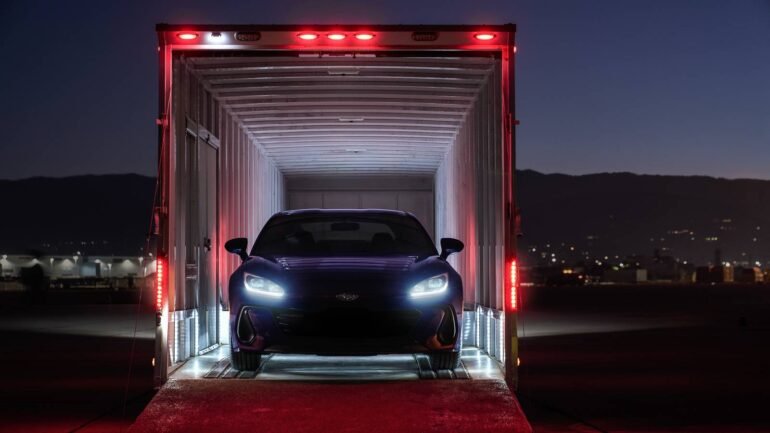
For nearly a decade,  Toyota and Lexus have dominated the automotive reliability landscape, consistently outperforming competitors when it comes to dependability. Both brands have built rock-solid reputations for producing vehicles that stand the test of time. However, 2025 has brought a surprising shake-up: a new contender has emerged with even higher reliability scores than these Japanese giants.
The brand claiming the crown is also from Japan and has been taking a measured, conservative approach in recent years—staying out of the spotlight while focusing on what matters most. Now, that strategy has paid off with the number one reliability ranking. Let’s dive into what makes this exceptionally dependable Japanese automaker stand out and everything you should know about them.
Subaru Takes The Reliability Crown

Though some may question the validity of Japanese brands’ reliable reputation, over the last few years, they have done quite the job of keeping most European, American, and South Korean brands out of the top ten on most lists, giving some real gravitas to the idea that Asian and Japanese brands rule the reliability rankings. This year is no different, and according to Consumer Reports, brands ranking from number 6 to 1 for predicted reliability are all Japanese. But, this year, knocking off Lexus and Toyota from the top spots, the number 1 spot goes to Subaru.
|
Brand |
Predicted Reliability |
|---|---|
|
Subaru |
68/100 |
|
Lexus |
65/100 |
|
Toyota |
62/100 |
|
Honda |
59/100 |
|
Acura |
55/100 |
|
Mazda |
55/100 |
Lexus And Toyota Have Slipped Down The Table

Depending on what list you look at and what reliability survey is taken, both Toyota and Lexus are always found at the top or near the top of the list, but for the CR list, it is quite apparent that both the stalwart Japanese brands have both taken a dependability dent. In 2024, Lexus was ranked first with a reliability score of 79 out of 100, and Toyota was ranked second with a reliability score of 76 out of 100. The bigger news for Subaru, though, is how they have sprung up from sixth on the list, with a reliability score of 69 out of 100, to the top of it.
Reliability ratings have also clearly gone down market-wide, and Subaru has dropped a mark, but it is a lot more telling for Subaru’s growing rock-solidness than the 14 reliability points that both Lexus and Toyota have dropped respectively.
Subaru’s Most Reliable Models In 2025

For years now, Subaru has been compared to the likes of Toyota, Lexus, Honda, and Acura, but maybe with its growing reputation for dependability, Subaru will start to gain some ground on the other Asian brands that have ruled the market for so long.

This year, the lowest reliability score, according to data from JD Power, is the 2025 Subaru BRZ, which boasts a still reasonable for a modern sports car reliability rating of 76 out of 100. The 2025 Outback scores well at 80 out of 100 for reliability, and the Impreza and Legacy are ranked 82 out of 100, which are not bad numbers at all, but it is the 2025 Subaru Forester and 2025 Subaru Crosstrek that are the brand’s most reliable lineups.
|
Model |
2025 Subaru Forester |
2025 Subaru Crosstrek |
|
JD Power Reliability Rating |
83/100 |
83/100 |
|
Overall JD Power Rating |
83/100 |
85/100 |
Safety Features In Droves Across The Board

Subaru’s surge past two Japanese automotive titans that seemed unshakeable is certainly noteworthy, but there’s more to the story than just reliability numbers. A key factor driving Subaru’s impressive ratings is the brand’s unwavering commitment to safety—something that directly influences overall dependability.

Central to Subaru’s most reliable models is the Symmetrical All-Wheel Drive System, a feature that gives vehicles like the Forester, Outback, Ascent, and Impreza both rugged capability and exceptional traction in any conditions. The foundation of this system is Subaru’s signature horizontally opposed Boxer engine, positioned low and flat within the chassis to create a lower center of gravity.
The “symmetrical” designation refers to the drivetrain’s unique configuration: everything from the engine through the transmission and drive components is arranged in a straight, balanced line. This intelligent design allows power to flow evenly to all four wheels, delivering consistent traction and control that drivers can count on.

Unlike some systems that only kick in when there is a loss of traction, Subaru’s system is always active, which means that you are ready to hit the tricky stuff instantly. Alongside that, though, a lot of Subaru models come fully equipped with bundles of safety tech that outshines a lot of more expensive brands. Central to the safety tech is the EyeSight Driver Assist Technology, which includes:
- Automatic Emergency Braking.
- Adaptive Cruise Control.
- Lane-Keep Assist.
On top of all of this, Subaru models are built on the Subaru Global Platform, which utilizes high-strength steel to enhance crash safety and all-round structural integrity and also comes equipped with additions and features that make the whole ride safe, which include eight airbags as standard and a ring-shaped reinforcement frame.
Low Starting Prices All Round It Top Off

We have all heard that paying more can bring higher quality, but one of the best things about Subaru is that even though they are now topping the charts for sturdiness, they are still available at relatively reasonable prices across the board of their SUVs, sports cars, and crossovers. Subaru’s cheapest model, the Impreze, starts out south of $24,000 while the most expensive Subaru Ascent starts out just below $40,000.
How Problems Per 100 Vehicles Stack Up

It is a slightly different story with Subaru when it comes to reported problems per 100 vehicles (PP100), as recorded by the Initial Quality Survey each year. This year’s market average sits at 202 PP100, which is the highest it has been in some years, and Subaru has been reported to have 212 PP100. At the top of the table for the least PP100 is Lexus, and in second place is Buick, with reported PP100s of 140 and 143, respectively.
So why is there such a disparity in the rankings? Subaru sits way down the table in 16th position, whereas all the other brands it trumps are way ahead of it. The simple answer to that is that the Initial Quality Survey concentrates on ownership over the first 90 days, whilst Consumer Reports concentrate on long-term ownership.
|
Model |
Lexus |
Buick |
Mazda |
Toyota |
Cadillac |
Subaru |
|
IQS Ranking |
1 |
2 |
3 |
4 |
5 |
16 |
|
PP100 |
140 |
143 |
161 |
162 |
169 |
212 |
So, by making a presumption from the data of both surveys, if you were to buy new from Subaru, and if some problems did arise in the first 90 days that were sortable under warranty, holding on to a new Subaru model could pay off in the long run. Repair Pal has also said that Subaru has an overall reliability rating of 3.5 out of 5, but this takes into consideration most models they have ever produced, not just the 2025 lineup.
What Is Causing Cars And SUVs To Become More Unreliable?

The annoying fact is that reliability ratings across the board have been dropping and rising over the last few years, but the 2025 PP100 ratings are the highest they have been in recent years. In 2020, the market average sat at 134 PP100; in 2021 it was 121 PP100, in 2022 it was 190 PP100, in 2023 it rose again to 192 PP100, and last year, it rose to 195 PP100.
The rise of problems in modern vehicles has been put down to the growing dependency on electronic and technology-based aids and powertrains. Whether that be the infotainment system in front of you, the hybrid system mated with the engine under the hood, the EV battery motor setup, or the plethora of techy aids all over the cabin. But, with the over-reliance on new technology comes teething problems, and so far, auto brands are still fine-tuning what they have added to their models.
This can also be put down to the fact that the whole auto market is still reeling from supply issues, which started during the pandemic, so it may take a little longer to get everything “settled” again.
“It is not surprising that the introduction of new technology has challenged manufacturers to maintain vehicle quality. However, the industry can take solace in the fact that some problem areas such as voice recognition and parking cameras are seen as less problematic now than they were a year ago.”
– Frank Hanley, Senior Director of Auto Benchmarking at J.D. Power.
The Biggest Changes In The Reliability Table

The rankings have changed over the last year quite substantially, but none more so than Subaru’s rise to the top. Subaru sat in eighth position in the Consumer Reports survey in 2024, with a reliability score of 46, and is now first.
Toyota was in second position last year and is now in third position. Lexus dropped from the top spot to second, Mazda has taken a tumble from third position down to sixth position this year, Acura dropped from fourth position last year, with a score of 54 to fifth position this year, and Honda gained a space from fifth position last year with a score of 54 to 59 this year.
How Other Automakers Are Fairing This Year

The rise in problems with vehicles is market-wide, and no brands, even the most reliable Japanese cars that are renowned for their dependability, have taken a slight knock. Of the luxury brands, Buick and Porsche take the highest positions on the IQS, with rankings of 169 PP100 and 186 PP100, respectively, while among the mainstream makers, there have been some improvements, and some have become more unreliable.
|
Model |
Cadillac |
GMC |
Chevrolet |
BMW |
Mini |
|
2024 PP100 |
214 |
201 |
160 |
206 |
182 |
|
2025 PP100 |
169 |
181 |
169 |
189 |
190 |
The Least Reliable Auto Brand In 2025

Unfortunately, for the EV and the ICE markets, there is an even split. Rivian ranks the lowest in the Consumer Reports survey, and Volkswagen ranks lowest in the IQS. This does seem to fit in with what is happening in the market currently, with new technology taking center stage all over both their respective builds, and though VW has been on the market for some time compared to Rivian, there are clearly some issues with the quality of their recent builds.
Rivian only appears in the Consumer Reports survey in last place with a very low score of 14 out of 100, while VW appears in both surveys with a reported PP100 in the IQS of 285 PP100 and the CR survey with a low score of 34 out of 100.
Will Reliability In Vehicles Ever Improve?
The good news is that reliability will likely improve over a bit more time. According to the IQS, for the last few years, in-cabin tech has been the most troublesome area. Still, the problem areas such as smartphone integration, hands-free tech, and other cabin tech have become less problematic in the last few years and are being reported less and less, which is good news if you are driving an ICE vehicle.
But, as BEV improved by 33PP100 over the last year, PHEVs have been getting worse for reliability – declining by 26 PP100, which makes them the most problem-prone vehicle type on the market. Though this is bad news if you are driving around in a new plug-in hybrid model, it does show that newer technology, like the tech being used in BEVs, is coming on, even if it is relatively slow.
Sources: JD Power, Consumer Reports, RepairPal