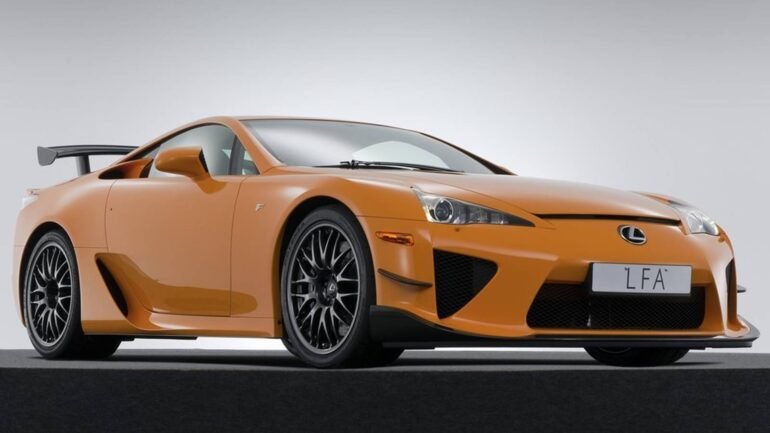
We all know and love certain German sports cars for their reputation for high-spec engineering, proper power from some of the best engines to ever grace the underhood of a car, and for their track-worthy handling credentials, but it is not all sunshine and rainbows with German sports cars, especially when Japanese brands like Lexus enter the fray.
Since they broke new ground in the sports car market in 1992 with the Lexus SC 400, the Japanese marque has only gotten better at rolling out sports cars and continues to pose a threat to long-respected German models. But today, the debate is hot on which one you should buy: a Lexus sports car or a German sports car. Both Lexus and German marques produce some immense models, but which is better?
Performance Showdown: Lexus Precision Vs. German Engineering
The first thing you’ll likely think about when buying a sports car is how much horsepower the engine can churn out. There is a clear winner when it comes to Lexus vs. German sports cars, and you’ll likely guess which one out of the two it is.
The most powerful stock-built Lexus sports car is the legendary 2010–2012 Lexus LFA, which boasts a high-revving 4.8-liter naturally aspirated (NA) V10 that can kick out 563 horsepower and 354 pound-feet of torque. In 2025, the most powerful Lexus car model is the Lexus IS 500 F SPORT PERFORMANCE, which boasts a 472-horsepower NA V8. In comparison, the most powerful stock-built, road-legal German creation to ever tear it up is the Mercedes-AMG one, which pushes out 1,063 horsepower from a 1.6-liter hybrid V6 that can rev up to 11,000 rpm.
So in terms of power, there is really no comparison to be made. But does the most powerful always mean the best for sports cars?
Turbocharged, Hybrid, And Naturally Aspirated Characterful Engines: Which One To Choose?

Turbocharged or naturally aspirated? We know that purists won’t waste brain time on considering a turbocharged model, unless they are looking for an air-cooled collector’s item in the shape of a Porsche 911 Turbo S (993), but for the most part, we think that naturally aspirated engines will pique their interest a little more. In terms of real, purist NA fun, it can be argued that Lexus has more recent models to choose from compared to a lot of German brands.
While the evolution of turbo technology has made it easier than ever to squeeze power out of smaller-displacement engines while potentially still delivering in terms of fuel economy, if you want a sports car to feel like a sports car should (again, for the purists), then models like the Lexus LFA, the high-revving V8-equipped Lexus IS 500, and the silky-smooth V6-toting Lexus RC 350 have still got you covered.
“The engine is fun to prod, and while not alarmingly rapid, it gets off the line quickly, and the torque keeps on carrying the car. A squeeze of the throttle to overtake from 40 or 60 mph, and there’s a nice surge, and the job is done.”
CarBuzz Test Drive Review of the Lexus IS 500 F SPORT PERFORMANCE by Ian Wright
Of course, there are swathes of German cars that boast a naturally aspirated engine, but not many from current lineups. The likes of the 2025 Porsche 911 GT3 and the 2025 Porsche 718 Spyder RS both boast a 502-horsepower NA flat-six and a 492-horsepower flat-six, respectively. When it comes to the likes of BMW, there are no current models that boast a naturally aspirated engine; they are all turbocharged in one way or another.
The same goes for Audi and Mercedes-Benz; their respective 2025 sports car lineups don’t include a single naturally aspirated engine. So, we have to take our hats off to Lexus for continuing to produce sports cars with one under the hood.

If you are just looking for power and speed, and don’t mind the motivation behind it, German marques do have you well-covered on the current market. ‘Entry models’ like the reasonably priced 2025 BMW M2 Coupe boast a 2.0-liter turbocharged inline-four mild-hybrid good for 255 horsepower and 0–60 mph times of 5.3 seconds (AWD model), all for just shy of $40,000. If you want to go down the NA route with a 2025 Lexus RC 350, you do get a 311-horsepower V6, but slower rest-to-60 times of 5.8 seconds.
Similar can be said for the new Lexus IS 500 F SPORT PERFORMANCE; you get a 472-horsepower 5.0-liter V8 under the hood, but it will cost you just over $60,000, and you only get a 0–60 mph time of 4.4 seconds. Which, of course, is a lot quicker than the M2, but is it worth $20,000 more (engine-wise) for a non-turbocharged sprint?

When it comes to hybrid motivation, there aren’t many brands that don’t utilize it in their sports cars today (except for Audi here in the U.S.A.). Lexus rolled out their most powerful hybrid sports car, the 2025 Lexus LC 500h, which boasts a 3.6-liter V6 mated to two electric motors, and pushes out 354 horsepower and 369 pound-feet of torque, while still being able to achieve an estimated combined mpg rating of 29 (26 mpg in the city and 34 mpg on the highway).
There is little in the way of hybrid German sports cars that are in the 350-horsepower ballpark; they are all a lot more powerful, but can still deliver not-terrible combined mpg ratings, so if you are looking for hybrid motivation and sheer power, German cars are more likely to deliver at the moment. However, MPG ratings are generally not as economical as what you’d find with the LC 500h, which, although it is being discontinued after the current MY, strikes a decent balance.
|
Spec |
2025 Porsche Panamera S E-Hybrid |
2025 BMW M5 |
|---|---|---|
|
Engine |
4.0-Liter Bi-Turbocharged V8 Hybrid |
4.4-Liter Bi-Turbocharged V8 Plug-In Hybrid |
|
Transmission |
Eight-Speed Automatic |
Eight-Speed Automatic |
|
Horsepower |
771 Horsepower |
717 Horsepower |
|
Torque |
737 LB-FT |
738 LB-FT |
|
Driveline |
All-Wheel Drive |
All-Wheel Drive |
|
0–60 MPH |
2.9 Seconds |
3.4 Seconds |
|
Top Speed |
202 MPH |
155 MPH |
|
MPG Ratings (City/Highway/Combined) |
48 MPGe (Combined) |
12 MPG/17 MPG/14 MPG (gas) or 50 MPGe (Gas & Electric) |
High-Tech Sports Handling Or Hands-On Pure Engagement

The Lexus LFA is one of the best-handling Lexus sports cars ever created; it is low to the ground, there is no power steering, weight distribution is equal front-to-rear, and it boasts a front-mid engine layout, but even in more recent years, both Lexus and German sports cars have been designed to take slightly different routes on how feedback and handling are delivered. With Lexus, arguably, sticking with the purer configurations.
While you may think of Lexus sports cars as being more GT-like and comfortable, both the Lexus LC 500 and RC F Track Edition prove they deserve a reputation for track-worthiness behind the wheel (for the modern market). The LC 500 boasts the GA-L rear-wheel drive platform, Yamaha-tuned chassis bracing, and an NA V8, all of which give it balanced, linear response.
The lack of turbo surge or overactive traction nanny means you get a direct feel between your right foot, the steering, and the pavement. The LC 500 does boast Adaptive Variable Suspension and Active Rear Steering, which both refine the steering, but do it without sterilizing the feedback.

There is no denying that some German cars are made to tear it up on the track and up through the hills, but it can be argued that, alongside clever weight distribution and weight saving, the steering and feedback are ‘too precise’ and aided too much by electric features. Models like the 2025 Porsche 911 Carrera S (992.2), the 2024 BMW M4 Competition (G82), and the 2024 Audi R8 V10 Performance chase perfection through technology.
The 911’s rear-axle steering, PASM adaptive dampers, and active torque vectoring make it almost like riding on a rail through the corners, while its PDK dual-clutch transmission delivers rapid gear changes. The M4’s Active M Differential, integrated braking system, and M Drive Professional rig mean you can drive it like you stole it. The R8 boasts the Quattro AWD system and magnetic ride suspension, while a seven-speed S TRONIC dual-clutch transmission allows for lightning changes.
Of course, with these models, you are paying an awful amount more than you are paying for an LC 500, but is it too much tech for driving? Especially if you are looking for a real seat-gripping ride with real feedback in the corners. We see nothing wrong with using electric nannies if it means you get a stable ride at speed, but there seems to be a big difference in how Lexus sports cars and German sports cars get the results.
Interior Designs: Do You Go For Driver-Centric Or Old-School Class?
Both German sports cars and Lexus sports cars have evolved to ensure that they are nice places to be while you are pinning it, but they are both set up slightly differently. The driver-focused minimalism of the Germans vs. the handcrafted plush design of Lexus.
Both aim for interior comfort, but Lexus models seem to celebrate the marque’s dedication to an immense eye for detail, while German marques look to prioritize clean efficiency and performance-inspiring tech-heavy ergonomics and digital precision. It is effectively the faceoff between ‘soulful luxury’ and ‘clinical precision,’ both good, but both crafted for a different feel behind the wheel.
Lexus Takumi Craftsmanship

One of the many reasons that Lexus models are so reliable and are such nice places to be stuck in traffic is because of the culture of Takumi craftsmanship. Takumi Masters are artisans who have dedicated decades to perfecting one craft, and Lexus works with them to create some of the most sumptuous interiors known to the market.
The LC 500’s cabin blends futuristic form with traditional Japanese artistry in the form of hand-stitched L-aniline leather, Alcantara door inserts, and polished magnesium paddle shifters. The dash sweeps toward you in the cabin in a single flowing motion, and was inspired by the ‘Shimamoku’ wood-grain pattern found in fine Japanese furniture.
The LC 500’s LFA-inspired digital tacho is placed mechanically with the instrument cluster and acts as a nod of the head to their halo supercar, while the switchgear is tuned to feel mechanical.

Featured in the RC F Track Edition, carbon fiber takes a lot of the attention away from anything. It is utilized on the roof, center console, and the instrument panel, and contrasts with the suede-trimmed seats and red stitching that make it look like it was to be driven at full chat. But, despite its race-bred purpose, the interior still feels luxurious and not industrial.
The cabin boasts hefty sound insulation; there is not a huge bias on techy features; the stitching is precise, and the soft-feel materials used all make it a place to be comfortable and feel connected to the raucous driving you can do in it.
Techy German Sports-Centric Designs

In contrast, when you are in a German performance car, you know you are in a German performance car. With models like the 2025 Mercedes-AMG GT 63 Coupe (C192), it is like stepping into the cockpit of a fighter. The cabin wraps around you with turbine-style vents; a 12.3-inch digital cluster and a 14.1-inch infotainment screen sit in eye view, and you get displays that show you drift data, AMG Dynamic Select settings, and telemetry.
The AMG Performance steering wheel, trimmed in microfiber and finished with rotary drive-mode dials, gives you instant access to traction, exhaust, and suspension controls. The seating is deep, heavily bolstered, and can be kitted out in Nappa leather, but the whole driver-centric cabin is built to feel like a command center, with performance comfort placed over luxury comfort.

The new Audi RS 5 Competition channels a slightly different kind of precision than the AMG. It boasts Virtual Cockpit Plus, which replaces traditional gauges with razor-sharp readouts for G-force, tire pressure, and lap times, all in real-time on the display. The flat-bottom steering wheel, carbon-fiber inlays, and RS Design Package, which includes red upholstery stitching, give it a real motorsport flair, while the Dynamic Ride Control and customizable RS mode buttons on the wheel ensure that you know that you can ride the RS hard.
Are Lexus Sports Cars More Reliable Than German Sports Cars?

We have heard and experienced how expensive German sports cars can be to own, both in terms of fuel and maintenance costs, but are they really harder on the wallet than Lexus sports cars?
Lexus has the distinct advantage of being the luxury arm of Toyota, which, despite dropping in the reliability rankings slightly in recent years, still turns out some of the most reliable models on the market. According to RepairPal, overall, Lexus has a reliability score of 4 out of 5. This puts them 7th out of all brands in terms of reliability. Bear in mind, though, that the data on RepairPal concerns all Lexus models with available data, not just sports cars.
The story for German brands is slightly worse off, according to RepairPal, with Audi, BMW, Mercedes-Benz, and Porsche all scoring lower in terms of reliability.
- Audi. RepairPal Reliability Score: 3/5.
- BMW. RepairPal Reliability Score: 2.5/5.
- Mercedes-Benz. RepairPal Reliability Score: 3/5.
- Porsche. RepairPal Reliability Score: 2/5.
Where the tides look to be changing is in terms of problems per 100 vehicles (PP100), with some German brands slowly creeping up on Lexus’ high-end dependability.

According to the 2025 Initial Quality Survey, Lexus is still the most reliable brand, with a reported 166 PP100. So, much better than the market average, which stands at 192 PP100. However, Porsche only has a reported 188 PP100, while BMW only has 196 PP100. It may still be clear-cut with Lexus being the most reliable, at the moment, but things look to be slowly changing.
If we take the 2025 Lexus LC 500, it boasts a JD Power reliability score (as rated by owners) of 92 out of 100, which is very impressive for a sports car, but both the 2025 Porsche 718 Cayman and Porsche 911 have been 86 out of 100 and 89 out of 100 for reliability, respectively. Not all that far behind, while offering a lot more power and athletic prowess.
How Ownership Costs Stack Up Between Lexus And German Sports Cars

For the most part, there isn’t much beating Lexus in the sporty segment when it comes to ownership costs. They are one of the most well-renowned brands for holding their value and providing a relatively easy life, and while reliability rankings seem to be slowly changing, ownership cost ratings have not.
According to CarEdge, it will cost you, on average, $68,002 to own a new Lexus model for five years (including maintenance, fuel, interest, insurance, and depreciation). For an Audi model, it will cost you $77,895; for a BMW, $99,912; for a Mercedes-Benz, $93,223, and while CarEdge doesn’t have information on Porsche, their RepairPal average maintenance bill of $1,192 is indicative of high costs all around.
These are brand-wide costs, though. When it comes to some of the most impressive models from each brand, Lexus sports cars can be seen to be falling slightly behind over five years of ownership compared to their German counterparts.
|
Lexus LC 500 |
Audi RS 5 Coupe |
BMW M3 |
Mercedes-AMG GT 43 |
|
|
Depreciation |
$50,769 (49%) |
$40,759 (48%) |
$40,793 (43%) |
$47,718 (49%) |
|
Insurance |
$18,485 (18%) |
$16,100 (19%) |
$23,665 (25%) |
$17,755 (18%) |
|
Maintenance & Repairs |
$2,618 (3%) |
$3,558 (4%) |
$4,762 (5%) |
$4,240 (4%) |
|
Loan Interests |
$18,034 (18%) |
$13,664 (16%) |
$14,237 (15%) |
$16,950 (17%) |
|
Fuel Costs |
$12,835 (12%) |
$11,000 (13%) |
$12,160 (13%) |
$11,000 (11%) |
|
Five-Year Average Total Costs |
$102,741 |
$85,081 |
$95,617 |
$97,663 |
Again, though, this is model-dependent, and, as we know, Lexus models are generally known for their lower running costs than some high-maintenance German sports cars. But it does show how things are not as clear-cut as they once were.
MSRPs And How Prestige Takes Its Toll
You may be forgiven for looking at the average five-year ownership costs and not really minding that a Lexus LC 500 costs more to own than something like the M3, for three reasons. Firstly, there are loads of BMW M3s on the road, while only circa 14,500 LC 500 models have been slated for the U.S. market. Secondly, because there are rumors that we may be saying goodbye to the LC 500 with an NA V8 in the next couple of years, and thirdly, because of the starting prices compared to some of the other more powerful and sporty German models.
- 2025 Lexus LC 500. MSRP: $101,100.
- 2025 Audi RS 7. MSRP: $131,195.
- 2025 BMW M5 Touring. MSRP: $123,900.
- 2025 Mercedes-AMG GT 63 S E PERFORMANCE. MSRP: $197,000.
- 2025 Porsche 911 Carrera. MSRP: $132,200.
If you own arguably the best Lexus sports car ever created, the LFA, which currently has an average auction price of $841,929, you can expect value to hold well, courtesy of its good reliability rating, proper on-road guts, and relatively cheap labor costs, but because Lexus hasn’t yet garnered the same kind of reputation as European sports cars, some of the ‘lesser’ models don’t hold their value as well on the classic market. German sports cars, thanks to their luxury breeding, do tend to lose value quickly, while Lexus models do hold their value well, but that is only generally true for the newer models.
This isn’t a bad thing; you can pick up some impressive Lexus sports cars for a fraction of their original cost at auction, but when it comes to some of the most collectible German sports cars, there is no competition. To put this into perspective, the most expensive Lexus sports car ever sold at auction was a 2012 Lexus LFA Nürburgring Package with 2,000 miles on the clock; it fetched $1.6 million.

However, the most expensive Porsche ever sold, a 1970 Porsche 917K, went across the auction block for over $14 million, while the most expensive Mercedes ever sold, a one-of-two build 1955 Mercedes-Benz 300 SLR Uhlenhaut, is the most valuable car ever, with the latest auction price of $142 million.
Lexus is a relatively new sports car brand, and while they offer a huge amount of obtainable and reliable road fun, they are yet to be the iconic sports car brand with a huge wealth of history that commands immense auction prices and more than one seriously collectible model.
Top Speed’s Verdict On The Lexus Vs. German Sports Car Debate

After all is said and done, we know that it is all down to personal preference. We know that there are die-hard German sports car fans who will never deviate from the Porsche or BMW market. Likewise, we know there are Lexus fans who will swear by them until the end of time. There is no denying that both Lexus and German brands like Mercedes-AMG, Audi, BMW, and Porsche have rolled out some legendary models, and if you are in the market for a classic German car like an air-cooled Porsche, there isn’t much we can say that will sway your decision to head over to Lexus.
But, as the track record seems to show, Japanese sports cars tend to have lower maintenance costs and slightly stronger reliability ratings compared to German sports cars. Of course, this is down to what model you are looking at, but if you are looking for a generally hassle-free (again, model and condition-dependent) sports car with typically lower starting prices (both new and old), there are lots of Lexus sports cars and athletic iterations that will serve you well for a long time with proper maintenance.

We have seen some German cars become more reliable in recent years and shake off some of their high-maintenance cost reputation, with the likes of Porsche scoring very well for its breeding in the 2025 Initial Quality Survey, and with lots of examples of reliable used German sports cars, like the 2008 Audi TT, the 2010 Porsche Panamera, and the 2013 BMW 5 Series all scoring above 4 out of 5 for reliability, still knocking around. But if you are looking to avoid stereotypically high parts and labor costs when something does go wrong, for the most part, Lexus models will likely be cheaper to fix in comparison.
Where the Germans will see you right, though, is in terms of iconic racing heritage, sheer power, and aggressively acting and looking models (both inside and out). We tend not to see too many Lexus sports models that look like they are going to take a bite out of you, whereas models like the AMG GTR, the new BMW Z4, the E34 BMW M5, the original Audi Quattro, the BMW M8 Competition, and the Porsche 718 Cayman (to name a few) all look aggressive, and all have the goods to back it up.
The sensuous luxury of most Lexus sports cars (if you don’t count the LFA) looks and feels nice to many, but if you are looking for something that looks mean and looks like it will punish most other cars on the road for daring to try and overtake you, you have to go German.
Source: RepairPal, FuelEconomy.gov, CarEdge, J.D. Power, Kelley Blue Book, and NHTSA.