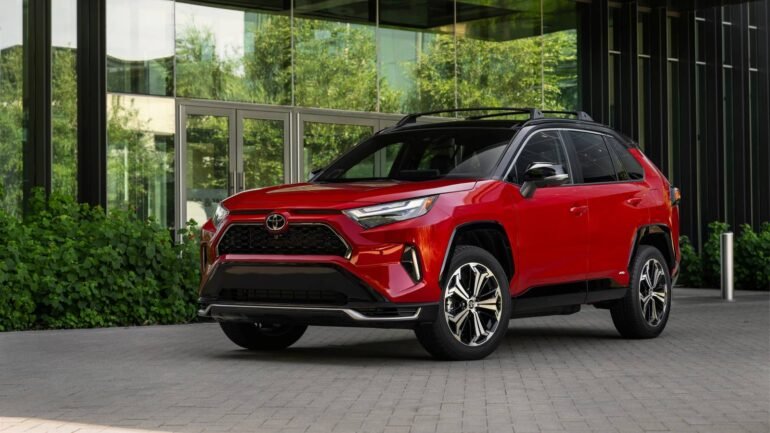
The car manufacturing game has changed a lot over the years. We’ve seen trends come and go, and the SUV trend looks set to stay for an extended period. At the heart of that trend is an engine option that’s the most efficient. That engine is a four-cylinder and powers just about every top-selling SUV on the market.
It currently represents more than 20 years of technological development across all manufacturers, leveraging economies of scale and cross-manufacturer parts swapping, and has had to sway buyers’ sentiment and confidence away from the old faithful V6 and V8 gas guzzlers.
Technology Advancement Over The Past Twenty Years
From Smart Turbo-Charging Systems To Injectors. A Lot Has Happened.

The automobile industry has significantly benefited from the technology age. Global markets have opened the door to engineering advancements in how everything is built and how processes and systems operate, from component improvements like greater processing power from microchips and semiconductors to advances in electronic devices to physical hardware like injectors, innovative turbocharging systems, fuel pumps, and materials used in engine building. If you haven’t kept up to speed, don’t fret. It’s a complete mind bender for even those deep in the industry. Four cylinders continue to be pushed to new technological limits, unknown to anything 20 years ago.

Throughout that period, the goal has always been the same: “Do more from less.” Gone are the days of carburetors and archaic technologies. We’re living in a world where efficiencies are hunted, and the engines that drive our cars are required to be. As a by-product of the pursuit of reliability and technological advancement, we don’t need V6 (or more) power to drive the general population around. Oh, no. A well-engineered and built turbocharged four-cylinder is more than up to the task for just about anything these days. Especially when it comes to what’s required for the mass market, and the SUV, and the sales figures attached to the list below back that up, too.
Breakdown Of Top 10 Selling SUVs — Year To Date
|
Make |
Model |
Total Units Sold Year-To-Date |
Engine Type |
|
Toyota |
RAV4 |
358,134 |
2.0L or 2.5L 4-cylinder engine |
|
Honda |
CR-V |
307,501 |
1.5L turbo and 2.0L naturally aspirated and hybrid (4-cylinder) options/1.6L (4-cylinder) and 2.0L diesel |
|
Chevrolet |
Equinox |
205,583 |
1.5L turbocharged 4-cylinder/1.6L Turbo-Diesel I4 |
|
Chevrolet |
Trax |
169,406 |
1.2L turbocharged 3-cylinder |
|
Hyundai |
Tucson |
165,239 |
2.5L naturally aspirated 4-cylinder |
|
Nissan |
Rogue |
161,824 |
1.5L turbocharged 3-cylinder |
|
Ford |
Explorer |
160,929 |
2.3L EcoBoost turbocharged 4-cylinder |
|
Jeep |
Grand Cherokee |
154,221 |
3.6L Pentastar 2.0L Hurricane 4-cylinder Turbo (2026 Model year cont.) |
|
Subaru |
Crosstrek |
142,725 |
2.0L 4-cylinder/2.5L 4-cylinder |
|
Kia |
Sportage |
134,102 |
2.5L 4-cylinder |

The 10 Most Groundbreaking Turbo Systems Of The Past 20 Years
These are the key vehicles that ushered in the latest in turbocharged innovation.
Buyers’ Sentiment And Confidence Around Smaller Engines
The Bigger The Better? (But) Are We Still Stuck In Our Ways?

We’re still dealing with the legacy of distrust in smaller-capacity engines, but that part of the consumer base is dwindling. Those who have not experienced a paradigm shift of sorts have retreated to a more niche part of the motoring world, and that’s OK too. I class myself as someone who appreciates a large capacity V8 with more torque to shift the earth slightly off its axis, but I also see the value in four-cylinders doing the bulk of the work at a lower cost, being cheaper to acquire, maintain, and fuel.

If you haven’t moved with the times, I suggest you come to terms with the four-cylinder sticking around for longer, and if not, look away, as we’re already seeing signs of the three-cylinder creeping in to take its place. No one is safe.
The World Of Homogenous Car Parts Being Supplied Has Gotten Small
Building Your Own Systems Is Just Too Expensive. Cross-Manufacturer Sharing Is Just That Much More Cost-Effective.

In modern times, there are many specialist component suppliers offering piston, injector, spark plug, and camshaft components. It just makes sense that, on such a commercial scale, with so many cars being sold, parts are made en masse to drive down overall costs and reduce manufacturing turnaround times.

Being big and bespoke just hasn’t made sense for a long time now, and I have a feeling this is how it’s going to stay for a while. Fewer parts doing the same job, or doing it better, are more cost-effective for a manufacturer, and let me be the one to point out the rise of the three-cylinder and the possible threat it poses to the four-cylinder.

Feeling uncomfortable there? Then, to make things worse, how many times have you popped the hood, looked closely at specific parts around the engine, and noticed another logo that isn’t the manufacturer’s? We’re living in a world where efficiencies are hunted, and the engines that drive our cars are required to be. In the pursuit of reliability and technological advancement, we don’t need V6 (or more) power to drive the general population around.

10 Of The Best Engines Ever Built By American Carmakers
Yes, Germans are great at engineering cars, but that doesn’t mean Americans aren’t. Here are some examples.
The Configuration Of Four Cylinders Just Works
It’s The Right Balance, And It’s Ok To Admit It

Ever since the Classic Mini changed the configuration and transversely mounted a four-cylinder across the front axle, driving the front wheels, it changed the game for passenger motoring forever, and what would become the small-to-midsized SUV, which the majority of cars sold today subscribe to.

That simple configuration removed the need for a heavy V6 (or more) in the engine bay, taking up extra space, adding more weight, or increasing the size required for a straight-six engine with a rear-wheel drive setup, along with the need for a tunnel for a driveshaft and rear axle. That omission’s blueprint of a four-cylinder, along with the front-wheel drive, freed up extra room for passengers, headroom, and luggage space. That recipe, on scale, just works.
Bigger Engines Are Just Not Economical Anymore

MPG figures, construction costs, supporting systems, and ancillary products required for anything bigger than a four-cylinder are expensive. Gearboxes have a heavier effect on suspension components, and repair bills are just some of the extra costly items. It’s not that viable. Yes, there is the argument that a bigger engine requires less effort, but the costs associated with building and keeping that engine running don’t justify its existence.

SUVs became the flavor of the month some time back and have stayed that way ever since. If all manufacturers, especially those on the top-selling SUV list, have gone four-cylinder, then you need to ask yourself whether you want to compete with anything else or face extinction. There may be some cases where V6 power makes a business case, but in general, the market is just too saturated and competitive for a manufacturer not to follow the crowd.

10 Small Cars With Surprisingly Powerful Engines
Choosing a compact car doesn’t mean that compromises have to be made when it comes to power and performance – these pocket rockets are proof.
The Concept Of A True Original Equipment Manufacturer Is A Dying Concept
From Engine Components To Electronic Systems

Original Equipment Manufacturer (OEM) — Remember that buzz term? The world of OEM specific to a brand is somewhat gone. No longer are car companies able to design and produce their own version of parts, as it is unrealistic. There are a lot of parts, especially engines, that are shared amongst the cars you see on the road.

The engine at the core of this discussion, with the four-cylinder being the best bang-for-the-buck option to mass produce. In most cases in the world of fast-moving consumer goods and services, there isn’t time to build it yourself. It’s easier, quicker, and cheaper to outsource to an expert company.

If you’re still hung up on the four-cylinder, let me assure you that you may not be the only one, but let me also reassure you that the majority of drivers out there don’t know if they have a four-cylinder, six-cylinder or steam engine under the hood and that is, whether you like it or not, the state of motoring that we find ourselves in.

Other, more prioritized factors drive decision-making when buying a car. It’s not the worst thing in the world. Not by a mile. The four-cylinder represents all that is mass-market production and efficiency, and it doesn’t look like it’s going to change anytime soon. The recipe just works.
Sources: Car Edge