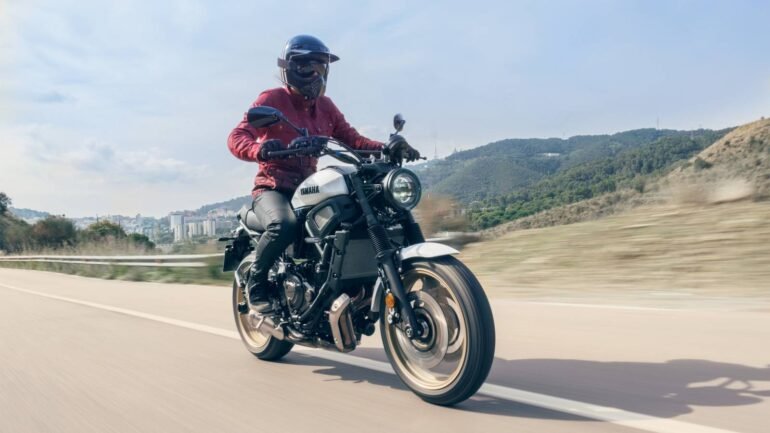
Complexity is the name of the game today. And that’s true for motorcycles as well. After all, modern bikes are nothing short of a tech fest today. A simple example would be a six-axis IMU on a sport bike. The electronic safety net won’t protect a rider from true stupidity, but it will certainly let the rider explore the limits without the fear of binning it on the first try. Confidence is half the game, too. However, if you’re not the kind who gets into extreme situations with your motorcycle and doesn’t push the limits or ride in inclement weather, do you really need all the electronics?
There is also a lot of joy to be had in a motorcycle that is simple and doesn’t require a lot of money to buy or maintain. Of course, electronics can help mask a lot of drawbacks, so it takes more effort than you might realize to make a simple motorcycle good. With manufacturers catering to every type of customer possible today, it isn’t a surprise that such a naked motorcycle is available; what is surprising is how few of them exist today. Here then is the simple roadster that proves you don’t need rider aids.
The Yamaha XSR700 Is The Simple Roadster That Proves You Don’t Need Rider Aids

Yamaha, like everyone else, uses platform sharing as much as possible. The XSR700 shares its components with the other Yamahas with a ‘7’ in their names (mainly the MT-07 and the Tenere 700). The one thing all these models have in common is that they are light, and they are very fun. Unlike the other two, however, the XSR700 takes its retro bit quite seriously. So seriously, in fact, that it doesn’t have anything but the most basic rider aids.
Yamaha XSR700 Price: $8,599

One of the great things about a motorcycle that doesn’t have electronics is that there is an opportunity to keep the price down. Yamaha has not grabbed this opportunity, sadly. It is priced the same as the MT-07, which has a by-wire throttle, ride modes, traction control, and the ability to add an optional quickshifter.
Yamaha XSR700 Engine

The XSR700 is powered by the same CP2 crossplane parallel twin engine that powers the MT and Tenere with the same displacement. ‘Crossplane’ is Yamaha’s way of saying that it has a 270-degree firing order. This is a truly fun engine that wants the rider to be a hooligan, which is quite at odds with the way the XSR looks! This is also a cable throttle, so there are no electronic aids preventing you from listening to your inner devil. There are no ride modes or traction control.
Yamaha XSR700 Transmission And Final Drive

There is a six-speed transmission available, and since there is no by-wire throttle, there is no quickshifter, even as an option. You’re going to have to know what you’re doing here to extract the maximum from it.
|
Engine Configuration |
270° I2 |
|
Displacement |
689 cc |
|
Power |
74 HP @ 8,750 RPM |
|
Torque |
49.4 LB-FT @ 6,500 RPM |

10 Modern Classics That Blend Heritage With Cutting-Edge Tech
These retro-style bikes offer modern performance to go along with their classic designs.
Yamaha XSR700 Chassis

The XSR700 shares its steel diamond frame with the MT-07. It has a different subframe, though, to suit the different styling and seat. The suspension comprises standard forks at the front and a monoshock at the rear. Only preload adjustment is present, that too, just as the rear. Travel is 5.1 inches at both ends.
This might seem a little too simple for a modern motorcycle, but it fits with the retro theme. What isn’t retro are the brakes – ABS is a standard feature. The wheels, too, are alloys with tubeless tires.
Yamaha XSR700 Dimensions

This is quite a small motorcycle with a 55.3-inch wheelbase. Yet, it does have a 32.9-inch seat height that is a little taller than competitors like the Kawasaki Z650RS. At the same time, it weighs 410 pounds, which is nearly identical to the Kawasaki that has two more cylinders. The 3.7-gallon fuel tank should be enough for most situations, meanwhile.
Yamaha XSR700 Features

Yamaha has kept the XSR simple, and this carries over to its feature set. It has a circular instrument cluster that is wholly digital. This reverse LCD cluster offers all the information you’ll need. Yamaha also updated it with all-LED lighting, but there is precious little else to talk about when it comes to the XSR700’s features.

10 Modern Classics That Bring Retro Cool Without the Headaches
From retro icons to fresh takes, these bikes prove old-school still rules
Yamaha XSR700 Competition

The modern retro roadster segment has been expanding steadily, and there are quite a few great contenders in the middleweight segment. Notable models include the Kawasaki Z650RS, Honda CB650R, Suzuki GSX-8T, and Triumph Trident 660. However, all of these models are packed to the gills with electronics, which means we’ll have to discard them for this discussion.

There is another model that follows the blueprint of the XSR700, but goes even further down the retro road. Yes, the RE Continental GT650. There’s also the scrambler-type alternative: the Royal Enfield Bear 650. It has an air-cooled engine, downtube chassis, and spoke rims with tube tires. It even has a 19/17 inch wheel rim combination. Power isn’t its strong suit, though, as it’s a much slower motorcycle, with a lower power output and a much higher curb weight. The price difference means it stays in the conversation if you’re on a budget.
Yamaha XSR700 Vs Royal Enfield Bear 650
|
Model |
Yamaha XSR700 |
Royal Enfield Bear 650 |
|
Price |
$8,599 |
$6,849 |
|
Engine |
270° I2 |
270° I2 |
|
Cooling |
Liquid cooled |
Air cooled |
|
Displacement |
689 cc |
890 cc |
|
Power |
74 HP @ 8,750 RPM |
47.4 HP @ 7,150 RPM |
|
Torque |
49.4 LB-FT @ 6,500 RPM |
41.7 LB-FT @ 5,150 RPM |
|
Curb Weight |
410 LBs (wet) |
472 LBs (wet) |
Source: Yamaha Motorsports