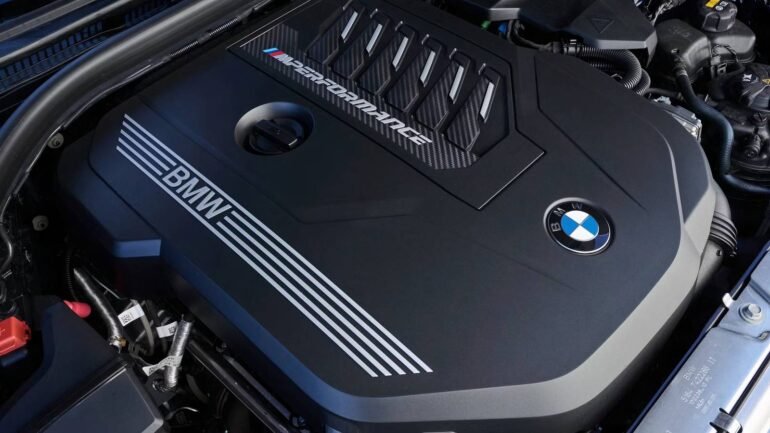
The enthusiast world loves inline-six engines – engines with six cylinders in a row – and BMW is an example of an automaker with a long history of inline-sixers. As we’ll see later, the format has its benefits, and the German brand has kept the inline-six alive since its earliest versions in the 30s. Not all BMW inline-sixes are equal and although some – such as the N52 – stand out in history, the BMW engine has gone through a constant evolution that has improved the design over time.
Inline-six engines are making a comeback and companies like Mazda and Stellantis have brought these engines back into the fore as fuel economy and emissions are key considerations, as well as the efficacy of modern turbocharging. Let’s take a moment to briefly look at the course of the modern BMW inline-six engine’s evolution.

10 Most Powerful BMW Engines Ever Made
Discover the history of the royalty of German performance engines throughout the decades.
A Brief Timeline Of BMW’s Inline-Six Engines
BMW Inline Engines Over Years: Basic Specs

|
BMW M50 |
BMW M52 |
BMW M54 |
BMW N52 |
BMW N54 |
BMW N55 |
BMW B58 |
|
|---|---|---|---|---|---|---|---|
|
Engine format |
2.0-2.5-liter, NA I6 |
2.0-2.8-liter, NA I6 |
2.2-3.0-liter, NA I6 |
2.5-3.0-liter, NA I6 |
3.0-liter, NA I6 |
3.0-liter, NA I6 |
3.0-liter, NA I6 |
|
Power |
148-189 hp |
148-190 hp |
168-228 hp |
174-268 hp |
302-402 hp |
302-445 hp |
286-375 hp |
|
Torque |
140-181 lb-ft |
140-207 lb-ft |
155-221 lb-ft |
170-232 lb-ft |
295-398 lb-ft |
295-502 lb-ft |
295-384 lb-ft |
|
Dates produced |
1990-1996 |
1994-2000 |
2000-2006 |
2004-2015 |
2006-2016 |
2009- (Alpina models) |
2015- |
BMW’s adventure with six cylinders started in the 30s with various variants of various sizes. The smallest of these, the M78, made less than 30 horsepower. Four-cylinder engines featured in the BMW portfolio starting in 1960 with the M10, which would power the first-generation, E30 BMW M3. This was one of only two M3 generations to not use the six-cylinder format (the other being the E90-generation M3, which was powered by a V8).

We can pick up the story at BMW’s modern inline-six engines, which started with the M50 in 1989. BMW engines already used aluminum cylinder heads, but the blocks were generally iron. At this time, when the M50 was released, it brought with it a new variable valve timing system called VANOS – it adjusted the valve timing based on engine load and rpm, optimizing fuel efficiency and power.
This system was a big step forward for the BMW inline-six, although the system wasn’t immune to failure and would later present problems, especially when coupled with turbocharging (something that would later happen with the N54). Many improvements were made to the engine family as it evolved, with issues such as the heavy iron blocks, head gasket problems, Nikasil cylinder lining issues, and turbocharging complications with the VANOS system all helping to refine future derivatives and versions.
Many of these modern inline-six BMW engines featured M division derivatives for BMW’s high-performance flagship models, but some engine generations such as the N52 and N54 did not.
Key Events And Evolutions In Modern BMW Inline-Six Engines

- The M50 introduced the VANOS variable valve timing system
- Its successor, the M52 incorporated the exhaust cam into the VANOS system
- BMW’s M54 engine brought various improvements to the durability and reliability of the engine, including the head gasket (a common failure point for the M54)
- The M54 won Ward’s 10 Best Engines three years in a row
- The N52 was another big leap forward with the use of Alusil for the cylinder liners, following issues with the Nikail lining of previous engines
- BMW utilized a magnesium/aluminum block for the N52 which reduced the weight of the engine – previous blocks were an iron design
- The N52 was the last naturally aspirated inline-six produced by BMW
- A variant called the N53 was produced which added direct injection (the N52 used port injection) but this engine wasn’t available in all markets
- BMW’s N54 brought twin-turbocharging to the inline-six platform and other improvements such as the Valvetronic system
- Turbocharging enhanced performance, but brought its own challenges, especially when combined with the VANOS system
- Three wins on Ward’s 10 Best Engines list are listed for the N54
- There was no M-specific variant for the N52 or the N54
- BMW released the N55 which brought more improvements to the inline-six family with a single twin-scroll turbocharger and Valvetronic (variable valve lift)
- The N55 was featured on Ward’s 10 Best Engines list for three consecutive years
- BMW’s N55 started the brand’s consistent relationship with the 3.0-liter engine displacement that continues today
- Following the N55 is the B58, which was another big leap forward in design (see later)

Could Your Next Mercedes Have A BMW Engine? Here’s The List
It may not sound like something you’d ever expect, but Mercedes-Benz could start using BMW engines in some of their most popular models.
What Makes The Straight-Six Engine Format Popular

By their nature, inline-six engines are favored not just by a subset of enthusiasts but by manufacturers and regular consumers alike due to various characteristics inherent in the design. Straight-six engines have regained popularity today because of the shift away from larger V8s. Turbocharged or hybridized six-cylinder units are smaller but provide power or performance on par with larger, eight-cylinder ones. Being smaller means they can consume less fuel when driven economically and emit fewer harmful emissions. For the E90-generation M3, BMW strayed from the use of six-cylinder engines that featured in the previous two generations. After the E90-generation, the brand swapped back to the inline-six, and this engine has remained integral to the M3 lineup ever since.

Some of the benefits of inline-six engines are shared with V6s, especially when it comes to downsizing and size, but straight-sixes also have their own benefits. Here’s a summary of the most common benefits of inline-six engines:
- Compact size: relative to eight-cylinder engines and V6s, the inline bank is narrower and occupies less space (although the engine is usually physically longer)
- Fewer parts: the engine generally has one or two camshafts rather than two or four as is commonly seen in a Vee setup – this can also facilitate repairs and maintenance and potentially reduce cost when replacing parts integral to the valvetrain
- Well-balanced setup: the refinement and smooth-running nature of the straight-six is commonly referenced as desirable and contributing to better reliability – the motion of the pistons cancel each other out and balance is optimized, even more so than in an inline-four engine
- Some sources suggest that the inline-six engine produces more torque than a comparable engine with a different engine setup

Here’s Why The Toyota Supra Uses A BMW Engine
Toyota and BMW have an inline-six relationship of necessity, not of want.
BMW’s B58 Engine: The Current Star In The Lineup
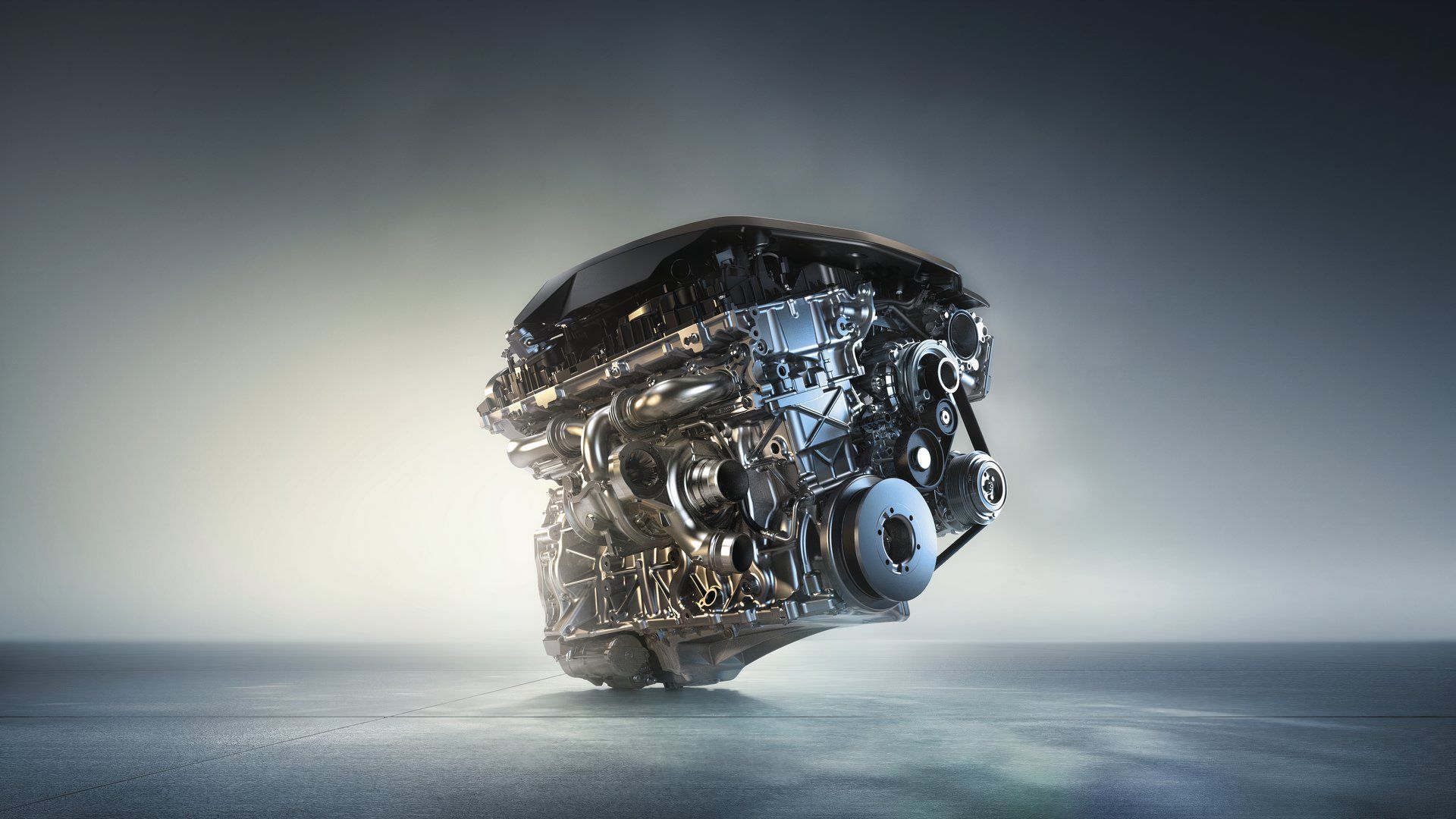
Released in 2015 and debuting in the F30 BMW 3 Series, the B58 brought various modifications and improvements to the lineup and remains an engine to be taken seriously in 2025. Some refer to it as a modern Toyota 2JZ engine, referencing its inline-six setup and ability to make big power outputs.
This engine is part of BMW’s modular engine family that includes the B38 and B48 inline-three and inline-four variants. They share the same 500-cc cylinder displacement. The B58 generation includes a high-performance S58 variant that’s twin-turbocharged.
This engine is especially impressive since it can make more than 500 horsepower from its relatively small displacement. Improvements include the closed-deck design, a (small) increase in displacement, an increase in boost pressure, and a higher compression ratio. Redline rpm remains the same at 7,000 rpm.

One of the impressive things about the B58 is its installation in a wide range of models and manufacturers. BMW’s lineup includes the B58 in models from small coupes such as the BMW 2 Series to much larger models such as the BMW X7. Other brands have also used the B58 in their lineup, including Toyota and Ineos, in very different applications.
When the Toyota Supra returned for a fifth generation, it came with the B58 engine and was based on a shared platform with the Z4. Another application that shows off the B58’s durability and reliability is the Ineos Grenadier, a rugged off-road SUV inspired by the original Land Rover Defender.
There’s likely more life left in the BMW six-cylinder engine yet. As the engine format continues to yield benefits, including in fuel economy and emissions compared to V8s that are in terminal decline, the engine will likely not be disappearing shortly.