Technology is undoubtedly the default interface for nearly every experience. Surfaces are smooth, glass, and cold; interactions are fast, efficient, and increasingly intangible. While this digital integration has delivered convenience, it has also created a new form of fatigue, one that many travelers are actively seeking to escape.
According to the 2024 Eagle Hill Consulting Worker Vacation Survey, 58% of workers reported fully disconnecting on their last vacation. This statistic reflects a desire to step away from constant notifications, app-based interactions, and the cognitive load of continuous connectivity.
In response, digital detox programs are emerging as a strategic hospitality offering. These programs are not anti-technology; rather, they reposition technology into a supportive, background role. The design principle is intentional subtraction: fewer screens in guestrooms, the removal of in-room tablets, and printed welcome materials instead of app-based directories. Technology remains present where necessary, but it no longer dominates the guest journey.
Within this context, even small operational elements take on greater significance, including the key card.
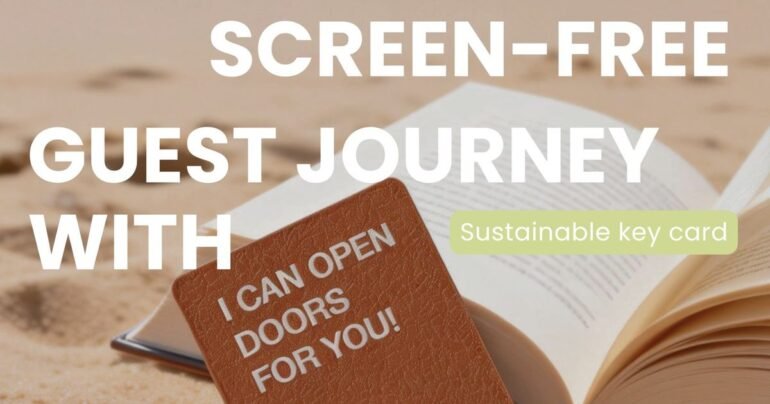
The key card represents one of the first tactile interactions a guest has with a hotel room. It is a subtle touch-point that signals what kind of experience awaits. Sustainable key cards crafted from wood, PLA, and plant-based leather introduce warmth, texture, and material authenticity at the very beginning of the stay. Unlike plastic or purely digital access solutions, these materials engage the senses and reinforce the philosophy of grounded, intentional hospitality.
At the same time, physical key cards reduce reliance on mobile key applications, continuous Bluetooth activation, and digital on-boarding processes. For guests seeking a true disconnection experience, eliminating these technological steps removes friction and cognitive noise.
For hoteliers designing sensory-driven environments, every detail contributes to the narrative. Sustainable key cards are not merely an operational choice; they are a strategic design decision aligned with broader sustainability goals and experiential positioning. They communicate that the property values materiality, environmental responsibility, and mindful hospitality.
As digital detox programs continue to evolve, success will depend on coherence across all touch-points. Luxury in this context is not defined by adding more technology, but by curating what to remove. In doing so, hotels can create environments where guests reconnect not with their devices, but with their surroundings, their senses, and themselves.
ABOUT GCSTIMES
Since 2011, GCSTIMES has pioneered sustainable development, evolving from smart card R&D to sustainable material innovation. Today, we stand as a global platform for sustainable solutions. Sustainability is our foundation. Through technological innovation and creative solutions, GCSTIMES delivers diverse services and tangible products, positioning ourselves as both manufacturers and innovators.
Brand Portfolio: GCS, AUROkeys, Xenyra, and Glint Spot, offering sustainable smart cards, creative (custom-shaped) key cards sustainable supplies, cultural gifts, and bespoke design and related services.