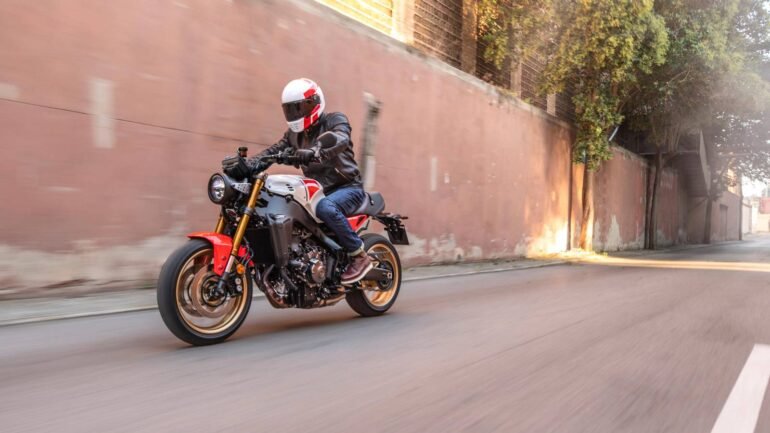
Bringing back the old-school retro vibe for today’s riders, manufacturers have embraced the trend with a wide range of modern classic offerings. Within this growing category, retro naked motorcycles stand out for their unique blend of timeless design and contemporary performance. The BMW R 12 nineT has long set the standard in this space, thanks to its air-cooled boxer engine and heritage-rich silhouette. However, its premium price tag places it beyond reach for many enthusiasts.
Now picture a motorcycle that captures the same retro spirit, delivers exciting performance, and comes in at a significantly lower cost. That’s exactly what the Yamaha XSR900 offers. Far from being a mere budget alternative, it makes a bold statement with its triple-cylinder powerplant and vintage-inspired styling infused with modern technology. For riders who crave retro aesthetics without compromising on tech or agility, the XSR900 is the sleeper hit of the segment.
To give you the most up-to-date and accurate information possible, the data used to compile this article was sourced from Yamaha Motorsports and BMW USA, among other authoritative sources.
The XSR900 Is The Yamaha Retro Naked That Rivals The BMW R nineT At A Lower Price
Starting Price: $10,599

Let’s be honest, the BMW R 12 nineT is a work of art. Its boxer engine is an iconic centerpiece, the craftsmanship is flawless, and its road presence is undeniable. But as you admire its polished aluminum and classic lines, you can’t help but notice the price. It’s a premium machine with a premium price tag, starting at $17,245, with optional packages pushing the total well over $29,000. And while you can’t put a price on perfection, you can certainly find a brilliant alternative.
That’s where the Yamaha XSR900 comes in. At a starting price of just $10,599, it undercuts the BMW by a whopping $6,646, without skimping on performance or personality. The moment you lay eyes on it, you’re hit with a wave of nostalgia. The classic round headlight, the sculpted, race-inspired fuel tank with its exposed intake, and the sleek, minimalist tail section all scream heritage.
But look closer, and you’ll see a level of modern detail that sets it apart. The exposed aluminum Deltabox frame isn’t just a structural element; it’s a piece of the design, a testament to its modern performance core. And here’s the kicker: it’s not just about looks. The XSR900 packs a serious punch with its modern CP3 triple engine, advanced electronics, and lightweight chassis. You’re getting serious performance and tech at a price that feels almost rebellious.
Yamaha XSR900 Key Highlights
- Neo-retro styling inspired by Yamaha’s racing heritage
- CP3 inline triple engine with ride-by-wire throttle
- Lightweight aluminum chassis for agile handling
- IMU-based electronics suite with lean-sensitive ABS and traction control
- Quickshifter, slipper clutch, and TFT dash standard
- Fully adjustable KYB suspension front and rear
Triple-Powered Soul With a Modern Pulse For The Yamaha XSR900
Max Power Output: 117 HP @ 10,000 RPM

If the XSR900’s styling is what catches your eye, its engine is what truly wins you over. At the core of it lies Yamaha’s renowned 890cc CP3 engine, a triple-cylinder marvel built on the Crossplane Concept. This configuration delivers the punchy low-end torque of a V-twin, the smooth, linear power of an inline-four, and a unique exhaust note that sets it apart from anything else on the road. Borrowed directly from the MT-09, the CP3 produces 117 horsepower—more than the BMW R 12 nineT’s 109 horsepower—and it’s housed in a lighter chassis, giving the XSR900 a clear edge in power-to-weight performance.
The CP3 is said to pull strongly from the bottom end and builds toward a thrilling crescendo as you near the redline. It’s an engine that encourages you to be playful, whether you’re effortlessly flicking through gears on a twisty road or just enjoying the city streets. Yamaha understood that the real magic isn’t just in peak horsepower—it’s in how that power and torque are delivered across the rev range, making every ride engaging and effortlessly fun.

Yamaha XSR900 vs BMW R 12 nineT Engine Specifications
|
Spec |
Yamaha XSR900 |
BMW R 12 nineT |
|
Engine Type |
Liquid-cooled, DOHC Inline 3-cylinder |
Air/oil-cooled two-cylinder, boxer-twin |
|
Displacement |
890 cc |
1,170 cc |
|
Bore x Stroke |
78 x 62.1 mm |
101 x 73 mm |
|
Compression Ratio |
11.5 : 1 |
12.0 : 1 |
|
Max Power |
117 HP @ 10,000 RPM |
109 HP @ 7,000 RPM |
|
Max Torque |
68.6 LB-FT @ 7,000 RPM |
85 LB-FT @ 6,500 rpm |
|
Transmission |
6-speed manual |
6-speed manual |
|
Final Drive |
Chain drive |
Cardan shaft drive |
Lightweight Precision Of The Yamaha XSR900 Meets Retro Swagger
Chassis Type: Aluminum Deltabox Frame

Beneath its retro styling lies a foundation built for agility and control. The aluminum Deltabox frame, inherited from Yamaha’s sports bike lineage, offers exceptional rigidity while keeping weight to a minimum. Paired with a box-section aluminum swingarm that stretches the wheelbase, the setup enhances straight-line stability without compromising cornering finesse.
As you lean into a bend, the bike responds with precision and confidence. The fully adjustable KYB suspension—featuring 41 mm upside-down forks up front and a monoshock at the rear—lets you fine-tune your ride to match your style, whether you’re attacking twisty roads or gliding through city traffic. The geometry places you in a riding position that’s both sporty and relaxed, with intuitive feedback from the chassis that keeps you connected to the road.
Yamaha XSR900 Chassis Specs & Dimensions
|
Chassis |
Aluminum Deltabox |
|
Front Suspension |
41 mm inverted fork, fully adjustable |
|
Rear Suspension |
Single shock, fully adjustable |
|
Front Tire And Wheel |
120/70 R17 |
|
Rear Tire And Wheel |
180/55 R17 |
|
Front Brakes |
Dual 298mm hydraulic discs with ABS |
|
Rear Brakes |
245mm single hydraulic disc with ABS |
|
Wheelbase |
58.9 inches |
|
Ground Clearance |
5.5 inches |
|
Seat Height |
32.1 inches |
|
Curb Weight |
432 pounds |

Furthermore, to complement its sporty handling, the XSR900 comes equipped with premium braking hardware. It is equipped with dual 298mm front discs paired with Brembo radial master cylinders, delivering strong, progressive stopping power with excellent feel. At the rear, a 245 mm disc adds balance and control. It’s combined with lean-sensitive ABS.
Comfort hasn’t been overlooked, either. With a seat height of 32.1 inches, the XSR900 offers a sit-in riding posture that enhances stability and control. The wide handlebars and rubber-mounted footpegs reduce vibration and fatigue, making longer rides more enjoyable. It’s a thoughtful balance of retro swagger and modern precision, built to make every ride feel effortless and engaging.
The Yamaha XSR900 Gets Modern Rider Aids in a Classic Shell
Five-Inch Full-Color TFT Display & Rider Modes

Despite its accessible price point, Yamaha has packed the XSR900 with features that rival those found on far more expensive machines. Its tech package most importantly includes the Inertial Measurement Unit (IMU) borrowed from the brand’s higher class superbike. This system enables four distinct riding modes, lean-sensitive traction control and ABS, as well as slide and wheelie control—all working together to enhance safety and performance across varying conditions.
You can access and manage all these features using its new 5-inch full-color TFT display, which offers four different display themes, including a retro, analog-style tachometer exclusive to the XSR900. The display also supports smartphone connectivity via the Yamaha Y-Connect app and provides full turn-by-turn navigation through Garmin’s StreetCross app.
Yamaha XSR900 Standard Features
- Five-inch full-color TFT display with smartphone connectivity
- Garmin StreetCross navigation integration
- Yamaha Ride Control (YRC) with pre-set and customizable modes
- Traction Control System (TCS) with lean-angle sensitivity
- Slide Control System (SCS)
- Back Slip Regulator (BSR)
- Yamaha Variable Speed Limiter (YVSL)
- Quick Shift System (QSS) for seamless gear changes
- Full LED lighting (headlight, taillight, and turn signals)
- Cruise control for highway comfort

To further personalize your ride, Yamaha Ride Control (YRC) lets you fine-tune engine response and electronic intervention levels with three preset modes and two custom profiles tailored to your preferences. Additional features include the Back Slip Regulator (BSR) to minimize rear-wheel lockup during aggressive downshifting, the Yamaha Variable Speed Limiter (YVSL) for controlled cruising, and a third-generation Quick Shift System (QSS) that enables seamless clutchless gear changes.
All of this is integrated into the bike’s classic silhouette and operated through newly designed, intuitive handlebar switches that make navigating the tech as enjoyable as the ride itself. All in all, there’s no doubt that the BMW R 12 nineT offers a more premium feel and the legacy of German engineering, but the Yamaha XSR900 isn’t just a budget alternative. Its packaging is far more comprehensive and modern, which isn’t just about timeless aesthetics; it’s about superior performance and rider confidence.