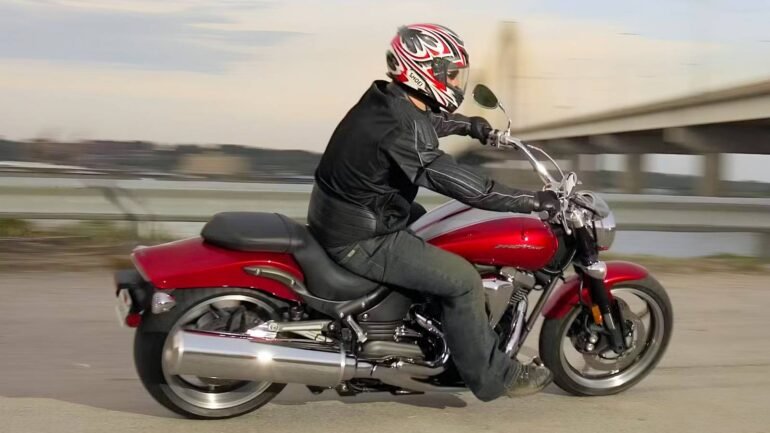
The Yamaha Road Star Warrior was one of those rare bikes that people often overlooked, but it always looked like it meant business. Released in late 2001 for the 2002 model year, it offered a muscle-bound alternative to Harley-Davidson’s performance cruisers by mixing American-style brawn with Yamaha’s precise engineering. Its big 1,670 cc V-twin engine, lightweight steel frame, and low, athletic stance made it feel like a mix between a cruiser and a streetfighter. Even though the market has changed, the Warrior’s sculpted tank, wide rear tire, and strong lines still catch the eye and command respect.
To give you the most up-to-date and accurate information possible, the data used to compile this article was sourced from Yamaha. The information provided is current as of the time of this writing.
How The Yamaha Road Star Warrior Redefined The Power Cruiser Game
Yamaha’s 2002 Warrior mixed muscle and style ahead of its time

When Yamaha launched the Road Star Warrior in 2002, it was more than just another cruiser. It was a bold attempt to mix muscle-bike performance with the classic V-twin feel. The lightweight steel frame was unusual for cruisers at the time. This feature set it apart from the usual heavy-steel-framed bikes, giving it sharper handling. The 1,670 cc air-cooled V-twin engine packed serious torque.
Yamaha added sports bike parts like inverted front forks, dual four-piston front brakes, and a wide 200-section rear tire. These features were typical of a supersport, not a cruiser. Visually, the Warrior pushed boundaries, too. Its long, low stance, flangeless fuel tank, and minimalist bodywork gave it a muscular, almost hot-rod aesthetic. It looked futuristic in the early 2000s and continues to command attention today.
Yamaha’s engineers took inspiration from both their Star cruiser line and the high-performance YZF sports bikes to create a machine that felt as happy carving corners as it did cruising Main Street. Even though the Warrior was innovative and capable, it never sold as well as it should have. This may be because it didn’t fit the usual cruiser style of the time. Looking back, it was ahead of its time, showing off a design that would later appear in bikes like the Ducati Diavel and Harley’s V-Rod Muscle. Today, the Road Star Warrior is a forgotten icon that still looks and performs like a modern classic.
Yamaha Road Star Warrior: Engine Power Meets Cruiser Performance
A 1,670cc V-twin delivers torque, speed, and surprisingly agile handling

The Yamaha Road Star Warrior was powered by a 1,670 cc air-cooled V-twin engine, a powerhouse that combined classic cruiser character with impressive performance. Unlike many big cruisers of its era, the Warrior’s engine produced a strong, linear torque curve for effortless acceleration at low speeds. With roughly 84 horsepower and 100 pound-feet of torque, it moved with authority, whether launching off a stoplight or cruising on the highway.
Also, innovative for the time, the Warrior had electronic fuel injection, not a carburetor, which was a significant technical advancement for Yamaha cruisers at the time. But the Warrior wasn’t just about raw numbers. Yamaha paired the engine with a five-speed transmission and belt final drive. This provided smooth, reliable power delivery while keeping maintenance low. The lightweight steel frame meant the bike could handle the engine’s output with confidence.
Riders enjoyed a rare combination of muscle-bike thrust and cruiser comfort. On the road, the Warrior excelled at both straight-line speed and cornering, thanks to its inverted front forks, dual front disc brakes, and wide 200 mm rear tire. The bike felt stable, responsive, and agile for a 600-pound cruiser. With its powerful engine and sport-cruiser frame, the Road Star Warrior offered a thrilling yet practical experience, demonstrating that performance and cruiser style can coexist harmoniously.
Road Star Warrior Engine And Performance Specifications
|
Engine |
V-twin |
|
Displacement |
|
|
Compression |
8.3 : 1 |
|
Power |
84 HP @ 4,400 RPM |
|
Torque |
100 LB-FT @ 3,750 RPM |
|
Transmission |
5-speed |
|
Top Speed |
~130 MPH |
|
Standing 1/4 mile |
12.7 sec/103 MPH |
Road Star Warrior: Chassis And Handling That Surprise
Lightweight steel frame and sport-tuned suspension make every ride confident and agile

The Yamaha Road Star Warrior broke new ground in the cruiser world of the day with its lightweight steel chassis. This was a departure from the heavy steel frames common in early 2000s big cruisers. The rigid yet light structure provided a solid foundation for the bike’s performance-focused design. It allowed the Warrior to combine classic V-twin comfort with surprisingly sharp handling. The frame’s geometry was paired with a low seat height, which gave riders a confident, planted feel while maintaining a relaxed cruiser posture.

At the front, the Warrior featured inverted telescopic forks, an unusual choice for a cruiser at the time, derived from the YZF-R1 sports bike. This contributed to precise steering and better absorption of road imperfections. The rear employed a single-shock setup with adjustable preload and rebound damping. This ensured that both solo riders and those with a passenger could enjoy controlled, comfortable rides.
Braking was equally advanced. Dual four-piston calipers up front and a single disc at the rear offered predictable stopping power even at highway speeds. Because of its lightweight build, well-tuned suspension, and wide 200 mm rear tire, the Warrior handled corners with confidence, much like sportier bikes. Whether on long highways or winding canyon roads, it felt right at home. The Road Star Warrior was not just a cruiser with good looks. It performed like a sportbike, too.
Road Star Warrior Chassis And Suspension Specifications
|
Front Suspension/ Travel |
41 mm Kayaba inverted telescopic fork/ 5.3 inches |
|
Rear Suspension/ Travel |
Single shock, link-type w/adjustable preload and rebound damping/ 4.3 inches |
|
Rake/ Trail |
29°/5.1 inches |
|
Front Tire |
120/70 ZR18 |
|
Rear Tire |
200/50 ZR17 |
|
Front Brake |
Dual 298 mm discs, 4-piston calipers |
|
Rear Brake |
282 mm disc, single-piston caliper |
Yamaha Road Star Warrior: Bold Design That Still Turns Heads
Muscular lines and sleek details give this cruiser a timeless, performance-inspired look

The Yamaha Road Star Warrior stands out as one of the most visually striking cruisers of its era. It blends classic V-twin proportions with a bold, modern edge. From the start, Yamaha aimed to create a bike that looked as fast as it rode. The Warrior’s long, low stance and muscular silhouette delivered just that. Its sculpted fuel tank, minimalistic side panels, and exposed engine details emphasized the bike’s mechanical character. This gave it a purposeful, almost hot-rod aesthetic.
Unlike more traditional cruisers, the Warrior avoided excessive chrome clutter. Instead, it featured matte and brushed metal finishes, blacked-out components, and clean lines. These elements contributed to a sleek, aggressive look. The wide 200 mm rear tire and raked front end enhanced its planted, muscular appearance. The compact tail section and integrated rear fender kept the profile sharp and uncluttered.
Road Star Warrior Dimensions And Capacities
|
Length |
93.9 inches |
|
Width |
36.8 inches |
|
Height |
43.9 inches |
|
Seat Height |
28.1 inches |
|
Wheelbase |
65.6 inches |
|
Ground Clearance |
6.1 inches |
|
Fuel Capacity |
4 gallons |
|
Curb Weight |
658 lbs |
|
Dry Weight |
606 lbs |
Even years after its release, the Warrior’s design still feels timeless. It balances classic cruiser style with a performance-focused look, appealing to both traditional and modern motorcycle fans. Its appearance suggests speed, power, and precision. The Road Star Warrior proves that a cruiser can be bold, refined, and truly memorable, even decades later.