In the latest episode of Matt Talks Hospitality, Matt Welle sat down with Floris Licht – hotel general manager and founder of Hotels for Trees – to explore a deceptively simple question: do guests really need their room cleaned every day of a multi-night stay?
This question opens the door to a broader conversation about how hotels can rethink housekeeping for a more efficient, sustainable and guest-centric future.
The hidden opportunity inside stayover cleaning
Stayover cleaning has long been treated as the default. If a guest is in-house, the room is cleaned. Yet behavior is shifting. Many travelers don’t require daily linen changes or full servicing, especially on short stays. What they do expect is choice.
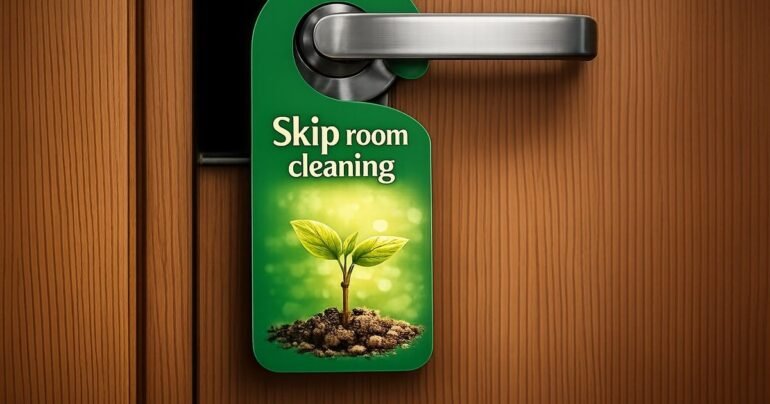
Hotels for Trees taps into that shift by giving guests the option to skip stayover cleaning in exchange for planting a certified tree on their behalf. The concept is simple, but the implications for hotel operations are significant.
Cleaning a room typically costs between €10 and €12 in markets like the Netherlands. Planting a certified tree costs around €5, and because donations are tax deductible, the net cost can fall to roughly €3.70. For owners and operators, that creates an immediate efficiency gain on the P&L while also supporting sustainability goals.
More importantly, it eases pressure on housekeeping teams – a department many hoteliers already struggle to staff adequately.
A model that benefits owners, teams and guests
The initiative has grown rapidly, with more than 250 hotel partners across 40 countries and close to 800,000 trees planted to date. But its real value isn’t just scale – it’s alignment.
Guests appreciate having a meaningful choice rather than a token gesture. Teams benefit from reduced workload and more manageable daily task lists. Owners gain both cost savings and stronger sustainability positioning – an increasingly important factor in business goals and employer branding.
As Floris explains, uptake depends heavily on how well the concept is embedded into the guest journey and the culture of the hotel. When leadership is engaged and teams are excited about the initiative, participation can reach up to 40% of eligible stayover guests.
That level of adoption is operationally meaningful. It allows housekeeping leads to better plan staffing levels, focus on quality where it matters most, and reduce burnout in high-occupancy periods.
Moving beyond the towel card
Most hotels already place a small environmental card in bathrooms asking guests to reuse towels. Those messages have been around for decades and often feel passive or symbolic.
The difference with an initiative like Hotels for Trees is that it creates a tangible outcome and a story guests can connect with. In one A/B test, guests were offered either a drink voucher or a tree planting for skipping cleaning. The tree option won – narrowly, but consistently.
This illustrates a broader shift in guest expectations. Increasingly, travelers want their choices to have purpose. Sustainability is no longer just a compliance exercise, but part of the overall brand experience.
Why housekeeping leads should pay attention
For housekeeping managers, any change to cleaning routines raises legitimate questions. Will this reduce hours? Add complexity? Create new admin?
In practice, the operational impact is minimal. Many housekeeping systems simply add an additional status button alongside “Do Not Disturb” – indicating the room was intentionally skipped in exchange for a tree. Over time, this creates more predictable workloads rather than sudden spikes.
Crucially, the initiative does not lead to job losses. Instead, it reallocates time. Fewer stayover cleans allow teams to focus on deep cleaning, quality checks and training – all of which elevate overall service standards.
Embedding sustainability into the guest journey
The strongest results come when optional cleaning is integrated across both digital and physical touchpoints. Guests can opt in during pre-arrival communication, online check-in or via in-room door hangers. Front desk teams can reinforce the message at arrival, and live dashboards can show how many trees guests have collectively planted.
This combination of analogue and digital touchpoints turns a simple operational choice into a visible part of the hotel’s identity.
It also aligns with broader tech trends. As hotels move toward more connected ecosystems, APIs and integrations make it easier to link guest preferences directly to housekeeping workflows and communications. The result is a smoother operation and a clearer guest promise.
A real competitive advantage
One of the most compelling points raised in the discussion is that the commercial upside of sustainable housekeeping isn’t always directly measurable. Event planners and corporate bookers rarely say they chose a hotel solely because it plants trees or offers optional cleaning. Yet they consistently ask about sustainability credentials during the selection process.
That signals a shift in evaluation criteria. Purpose-driven initiatives contribute to brand perception, staff engagement and recruitment appeal – especially among younger employees seeking meaningful workplaces.
For owners and general managers, this means sustainability initiatives should be viewed not just as cost centers or marketing tools, but as operational strategies that influence revenue, retention and reputation over time.
The future of housekeeping is choice
Looking ahead, Floris’ ambition is bold: one million trees planted per year. But the longer-term vision is even more transformative – making optional stayover cleaning the global norm rather than the exception.
For hoteliers, that vision aligns neatly with current industry realities. Labor shortages are persistent. Guests expect personalization. Owners need to balance margins with ESG commitments. Housekeeping sits at the heart of all three.
Rethinking cleaning frequency is not about lowering standards. It’s about aligning service with actual guest needs while empowering teams and protecting profitability.
Housekeeping is no longer just an operational necessity. It’s a strategic lever. And when approached thoughtfully, it can deliver a rare outcome in hospitality: a win for owners, teams, guests and the planet.