I’ve been in hospitality since 1995. I’ve seen fax machines, floppy disks, Delphi conversions, brand overhauls, OTA wars, and now AI eating the marketing funnel for breakfast.
And yet—despite all that change—vendors are still making the same mistake when selling into hotels.
They’re doing it wrong.
On a recent episode of the InnSync Show, I sat down with Celeste Berke—former on-property and above-property hotel leader turned hospitality sales strategist—to unpack why so many vendors struggle.
Celeste didn’t hold back. She says, “The bar is so low for vendors to be able to get the attention of those in hospitality.”
And still… most can’t close.
Let me explain why.
How to Sell to Hotels in 2026
You’re Talking to People Who Can’t Actually Say Yes
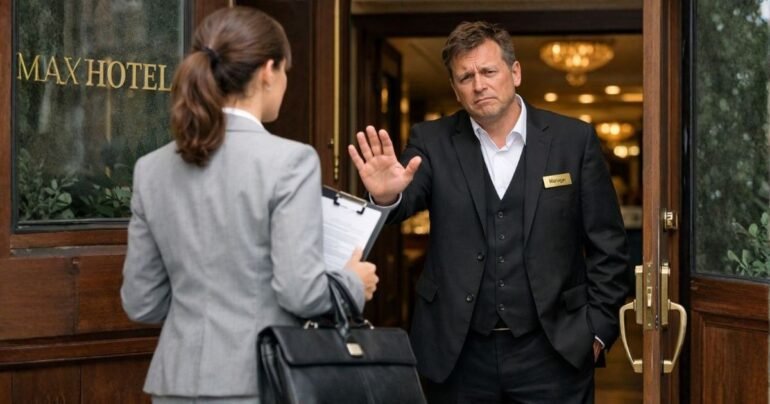
One of the biggest misconceptions I see is this: vendors believe the property can approve their product.
In most branded hotels, the general manager doesn’t have final authority. The executive housekeeper doesn’t either. Decisions roll up to a management company. That management company answers to ownership. Ownership protects the asset.
If you don’t understand that hierarchy, you’re wasting cycles.
Celeste says, “When you don’t understand the inner workings and the outer workings of a hotel, you are wasting your time.”
I’ve watched vendors show up at properties, dropping samples, pitching software, and pushing services, even though they’re not in the preferred vendor program. If you’re not approved at the management or ownership layer, you’re not selling. You’re interrupting.
Titles in hospitality don’t always translate to purchasing power. Influence? Yes. Authority? Often no.
If you don’t know where the decision actually lives, you’re not in the room … you’re in the lobby.
“We Save You Time” Is Not a Buying Strategy
Here’s another one that makes me wince.
“We help you save time and improve efficiencies.”
Celeste adds this: “Newsflash, most businesses deal with inefficiencies. It doesn’t mean that they’re going to spend money… when all you’re doing is talking about a surface-level problem.”
Exactly.
Time savings are table stakes. Efficiency claims are noise.
Hotels buy when something impacts:
This industry is risk-averse. I learned that early in my career. My mentor once told me, “in this industry of hospitality, you want to fly under the radar.”
At the time, I didn’t understand what he meant. Now I do.
There’s little upside for a GM if your product works perfectly. But there’s a lot of finger-pointing if it fails.
So when vendors show up with “revolutionizing hospitality” banners and feature-packed demos, I often think: you’re not factoring in onboarding risk, operational disruption, or political capital.
You’re not selling features.
You’re selling risk reduction.
Your Outbound Strategy Is Hurting You
I still see vendors pouring their entire budget into trade shows and outbound sales teams.
And I’m here to tell you: that’s not enough anymore.
So many vendors out there still think a pure outbound strategy will get them where they want to go.
It won’t.
Today’s buyers vet everything. Before they sign a five- or six-figure contract, they’re Googling you. They’re asking AI. They’re reading reviews. They’re looking for case studies.
I’ve seen deals stall because when the prospect went online, there was nothing that gave them a reason to pause and trust.
When they go to sign that five, six figure contract… they are going to vet you online.
If they find thin content, no testimonials, no proof, you lose.
Even word of mouth isn’t bulletproof anymore. I shared a personal example during the episode: I was referred to someone by a trusted friend. Before moving forward, I vetted them online. What I found changed my decision.
Referrals open doors. Digital proof closes deals.
If you’re not building credibility in a digital-first world, you’re invisible.
Do You Actually Understand Your Buyer’s Day?
Celeste shared something that stuck with me.
Her husband is a hotel GM. One day, he texted her during his “break.” What was he doing? He was stripping rooms because they had a call off for a houseman.
That’s hospitality.
Not dashboards. Not buzzwords. Not “cutting down silos.”
If you’ve never spent a day shadowing a GM, director of sales, or executive housekeeper, you should.
Celeste says, “You have to understand the day in the life.”
If your email sounds like a polished pitch deck while your buyer is flipping rooms to meet check-in times, you’re out of sync with reality.
And in hospitality, reality wins.
Hospitality Vendors … Stop Leading With Demos
This one is big.
Celeste said something every vendor needs to write on their whiteboard: “Do not pass go… until you unequivocally know what it is that you solve for at the business level.”
Not features.
Not integrations.
Not product updates.
Business problems.
Declining guest satisfaction. Sales pace gaps. Productivity issues. Brand penalties.
I’ve heard vendors say, “We have such a great product—if only more people knew about it.”
That’s a product-centric mindset.
Hotels don’t buy products. They buy solutions to business problems that keep executives up at night.
Celeste shared this stat, “Many companies are having below a 20% win rate, many below a 10% win rate. They are burning through leads.”
Why?
“We go right to a demo. Nobody cares about your product. We skip discovery.”
Discovery is where trust is built. Skip it, and you’re just another vendor talking about yourself.
Trust Is Built Before You Ever Get the Call
I talk a lot about content strategy because I see what works.
If you consistently deliver value—answering real questions, publishing relevant insights, sharing case studies—you build authority over time.
When prospects read something and think, “They get us,” that’s when momentum builds.
I’ve seen inbound leads literally quote something we wrote and say, “We’re struggling with that exact issue. Can you help?”
That’s not magic. That’s alignment.
“Nobody cares about your product,” Celeste says.
What they care about is whether you understand their world.
Selling to Hotels Is Different. Respect That.
Hospitality isn’t SaaS in Silicon Valley. It isn’t manufacturing. It isn’t retail.
Hotels churn customers every one to two days. Operational pressure is constant. QA standards matter. Guest satisfaction drives everything.
And procurement? It’s layered.
As Celeste explained: “The job titles do not translate to what the rest of the world thinks.”
If you’re not speaking the language of RevPAR, productivity per room, brand standards, and asset protection, you’re missing the mark.
Change is hard in this industry. System conversions are remembered for years. Risk lingers.
If you want long-term wins, you have to play the long game.
Nurture. Educate. Reduce perceived risk. Build credibility before you ever ask for a demo.
The Bottom Line When You’re Trying to Sell to Hotels
If you’re relying on:
You’re probably doing it wrong.
Hotels don’t buy products.
They buy clarity.
They buy confidence.
They buy reduced risk.
They buy partners who understand their business at a deeper level.
Everything else?
That’s just noise.
And in hospitality, noise gets ignored.
Ready to Sell Smarter Into Hospitality?
If this post felt a little too familiar, that’s a good thing.
Because the issue isn’t that you need more leads.
It’s that you need a better system.
At Lure Agency, we teach hospitality vendors how to align their sales and marketing around the way hotels actually buy. Not the way you wish they did. Through our WINS Method™ (Website. Intel. Nurture. Sell.), we help you:
-
Clarify the real business problem you solve
-
Identify where decision-making authority truly lives
-
Build digital proof that reduces perceived risk
-
Nurture long-cycle buyers before the demo ever happens
-
Close with confidence instead of chasing
Hotels don’t reward noise. They reward clarity and trust.
If you’re serious about increasing win rates, shortening sales cycles, and earning credibility in a risk-averse industry, it’s time to put structure behind your strategy.