What ancient mediterranean treasures await on an Istanbul to Athens cruise? The answer may surprise you.
Istanbul to Athens Cruise: the Only Way to Travel the Mediterranean
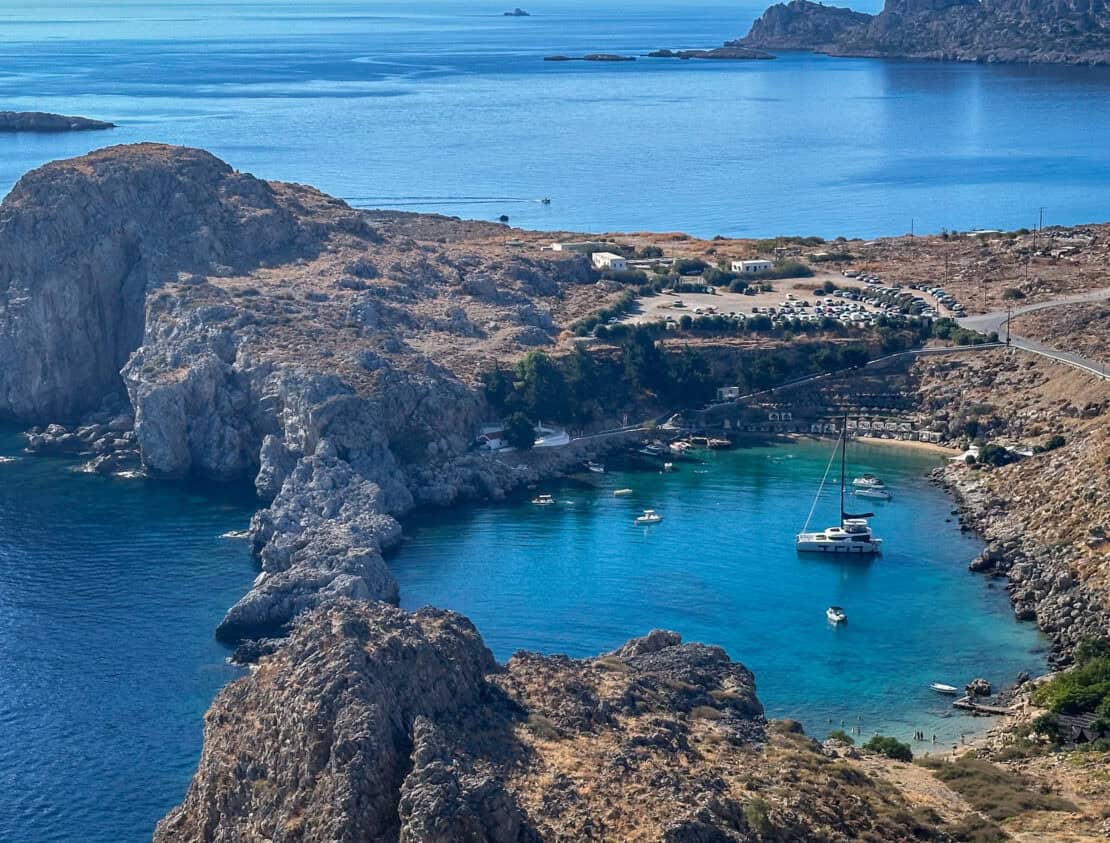
From the top of the mountain, I can see a heart shaped cove. Water twinkling, obligingly turquoise. Perfect for a dip, to wash off the red dust flecked to my feet by the three hundred or so rough steps climbed to reach the Acropolis of Lindos under the now midday sun.
It sounds rather poetic, doesn’t it, a setting from a story book.
And so, by now it is. In a way. And some rather famous books at that.
The cove, known as Agios Pavlos or St Paul’s Bay, kisses the shores of Rhodes, a Greek island which itself caresses the coastline of Turkey. And it’s at this point, I’ll give the metaphor some privacy.
St Paul landed here during his third missionary journey across the Mediterranean in around 58 AD, although it was to the Corinthians he wrote the famous passage about love. But even at that point he was a newcomer in the region when it came to famous landmarks and powerful stories.
Over thousands of years earlier came stories of the bloodthirsty bull headed Minotaur in Crete, centuries had passed since the birth of democracy in Athens, and even Caesar and Cleopatra had crossed the waves generations before.
Not to mention Troy – and the face that launched a thousand ships.
A Thousand and One Ships
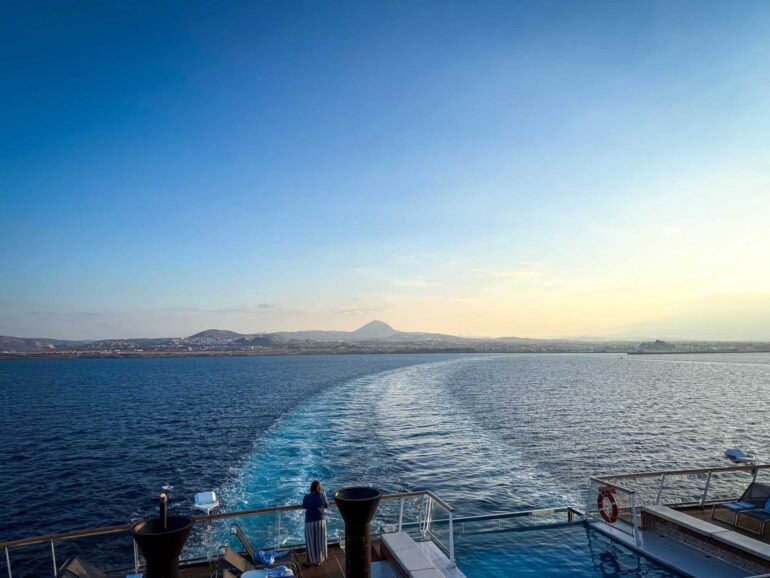
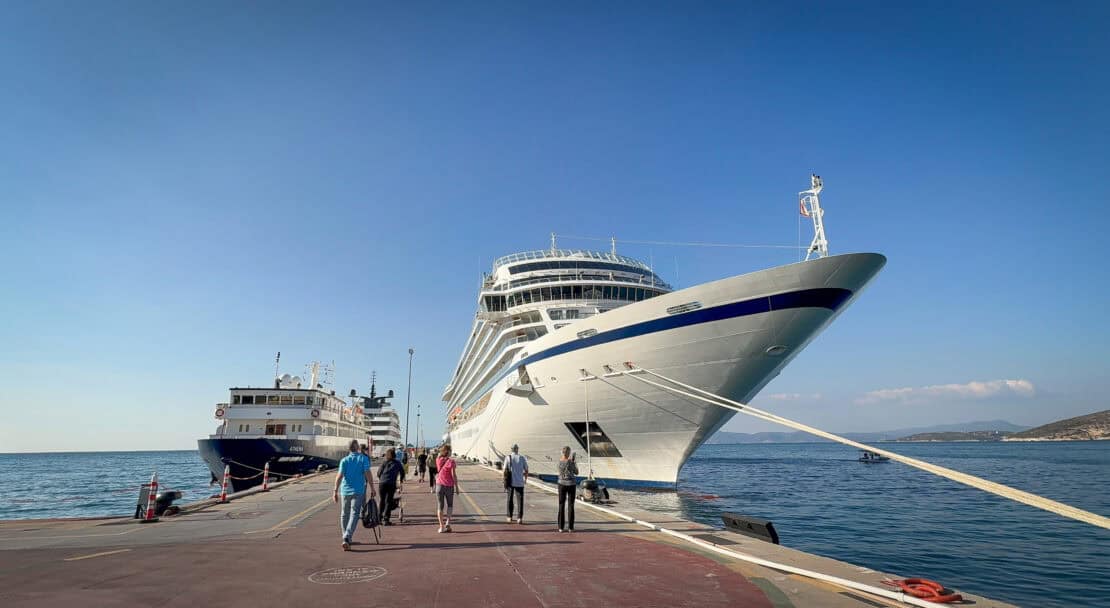
I’m on a ship, too, albeit a rather different one, than those enjoyed by Achilles or even Jason and the Argonauts. The latter may have had a golden fleece but on board the Viking Jupiter, I now have access to decent wifi, a state of the art gym and an ice filled floating Nordic spa. I think I have the better deal.
But some things remain the same: cruising between Istanbul and Athens, even after all these years, and that’s what makes it so very, very interesting.
Cloistered passageways, underground cities, secret mazes and timeless historical heavyweights, all served with a side of sunshine and a sparkling Aegean Sea.
And even a heart shaped cove.
Disclosure: I travelled on this cruise from Istanbul to Athens as a guest of the Viking cruise line for review purposes. As always, I kept the right to write what I like. Otherwise, what’s the point?
How to Cruise from Istanbul to Athens
The Ancient Mediterranean Treasures Journey begins in a distinctly not ancient place.
The modern port of Istanbul gleams with smooth white lines, a kind of Silicon Valley HQ, and right next to that is the modular Museum of Modern Art as well.
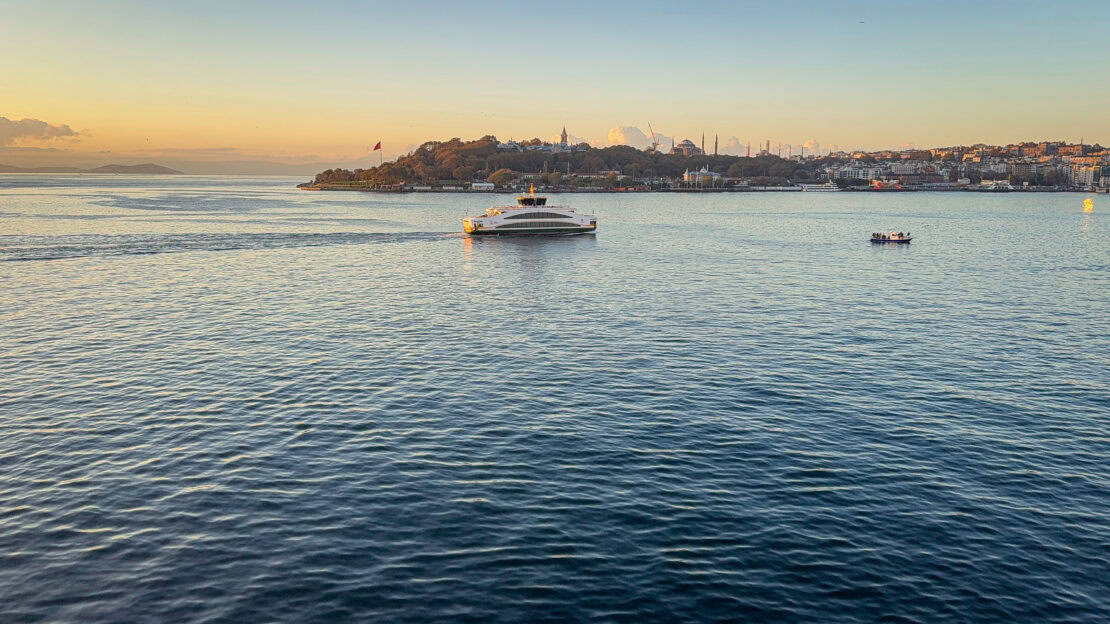
From the rooftop of both the ship and the museum, you can clearly see the older side of Istanbul. Its smoky lavender minarets, suspiciously long sunsets and photogenic flocks of birds decorate the skylines of both Galata and Sultanahmet.
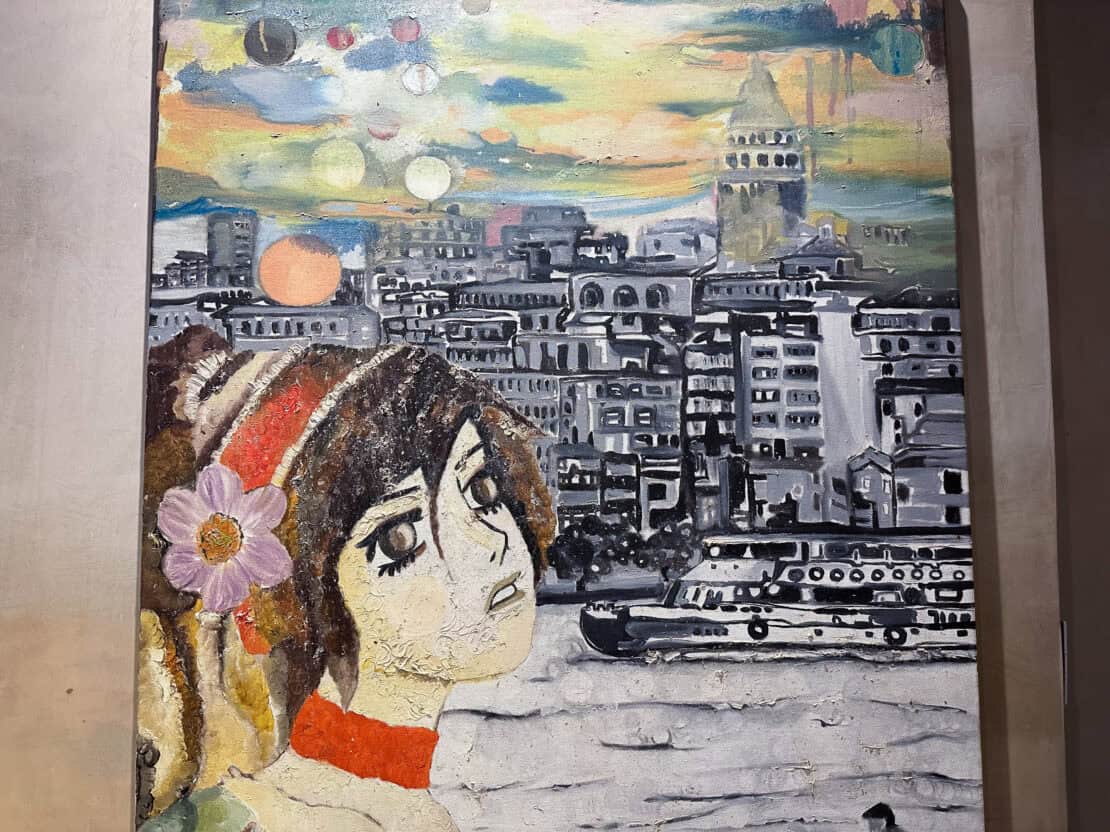
And I like this contrast, truth be told. I adore the stories and reminders of the past but there’s a thrill to be in a city that’s still very much alive and striding into its future.
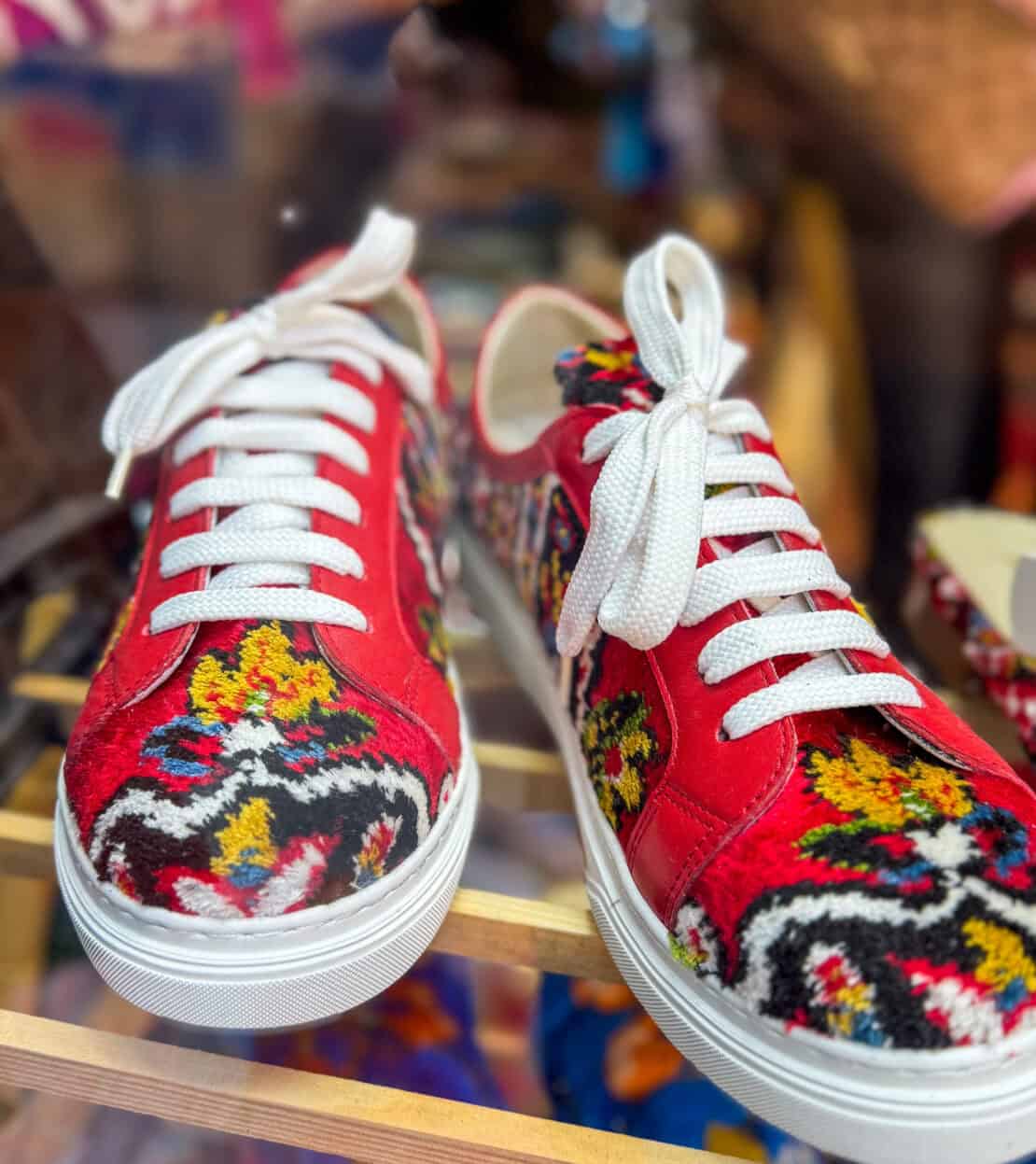
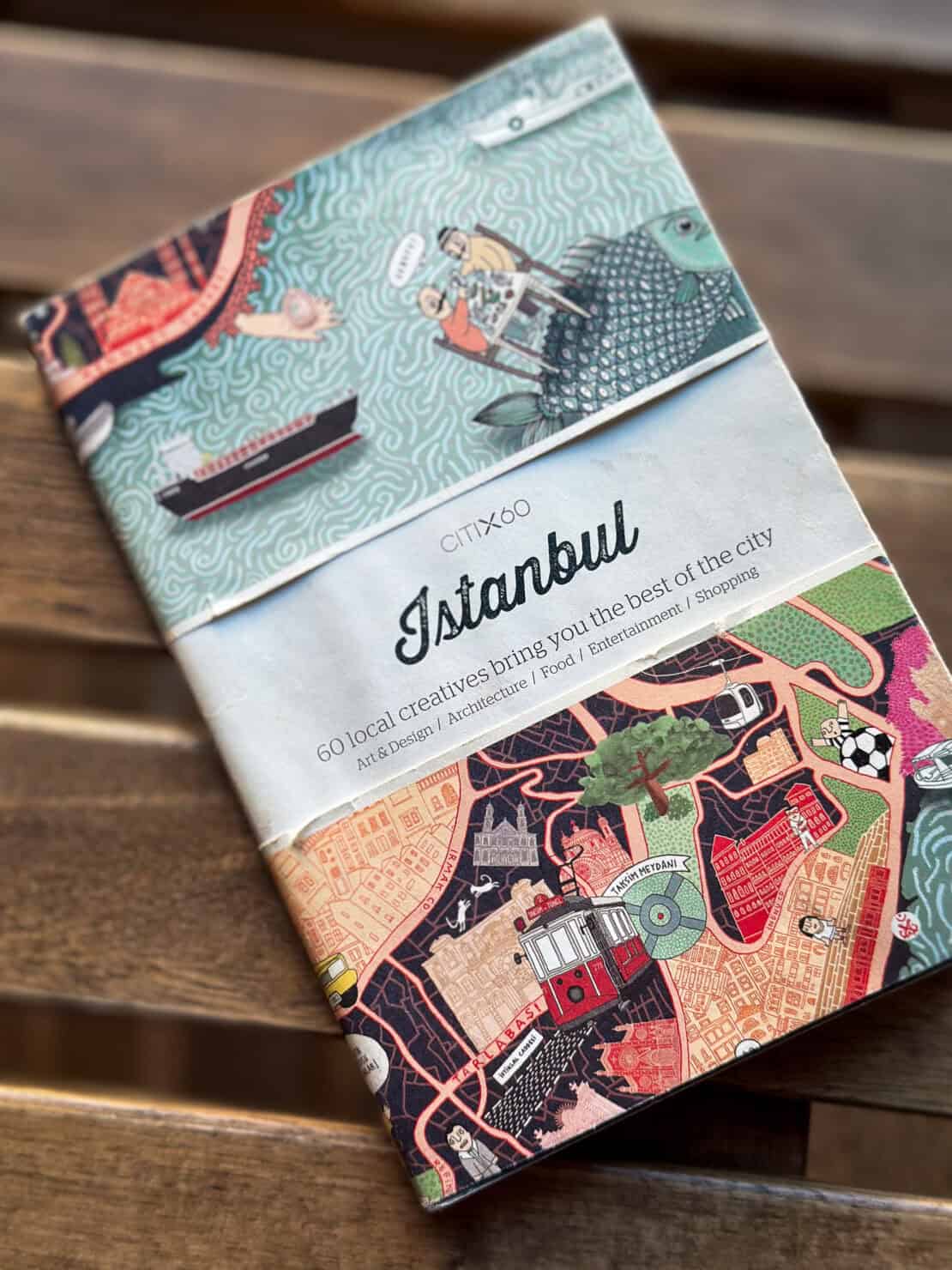
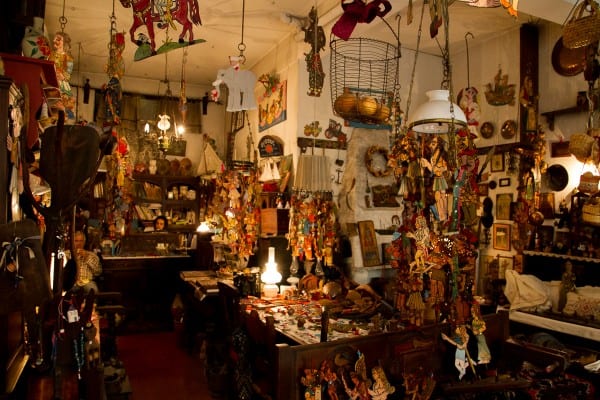
The port is also, handily, easily connected to the top sights in the city. It’s just a thirteen minute journey on tram T1 to Sultanahmet, and an even shorter walk to the steep streets of Galata, where you’ll find boutiques selling vintage vinyl, Turkish rug themed shoes, trips on nostalgic trams and antiques en route to the landmark Taksim Square.
Sultanahmet contains the big three: the Hagia Sofia, the Blue Mosque, and the Topkapi Palace.
And you absolutely must see them all.
Historic Sites from the Bosphorus
Built in 53, the Hagia Sophia stood for nearly a thousand years as the world’s largest cathedral before becoming an imperial mosque, then a museum, and now a mosque once more: its vast dome still appears to float on light.
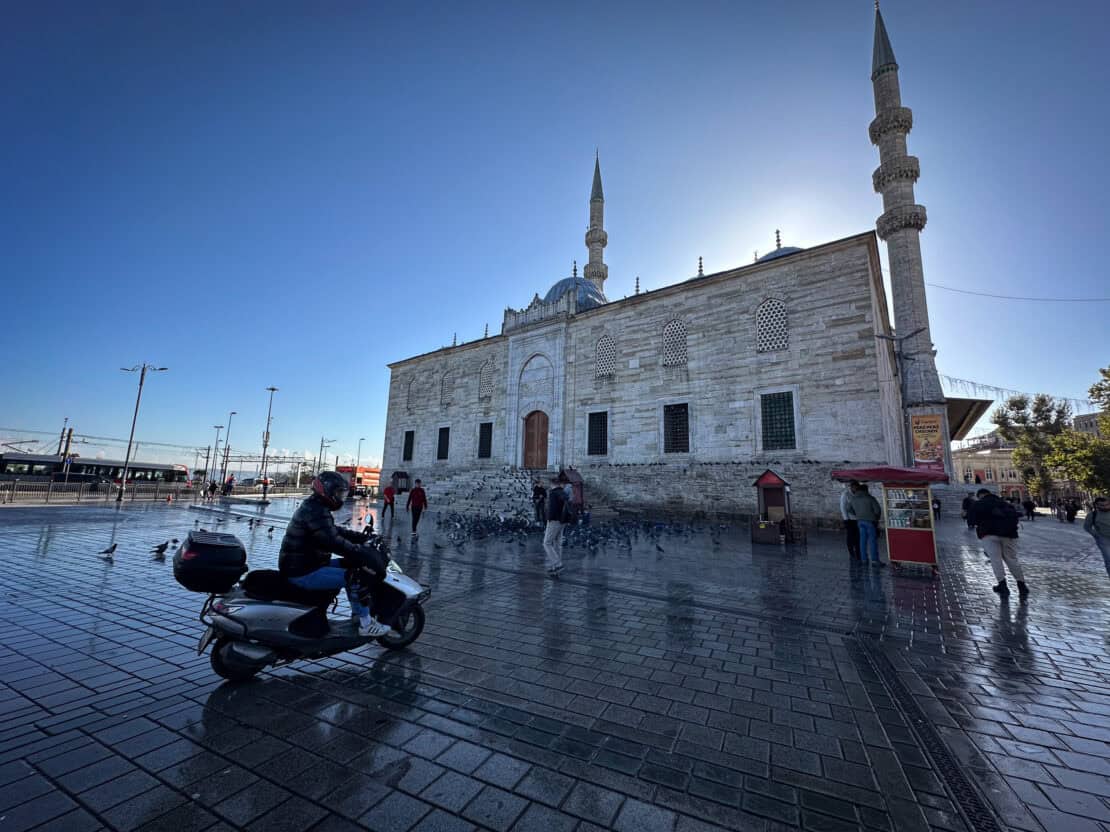
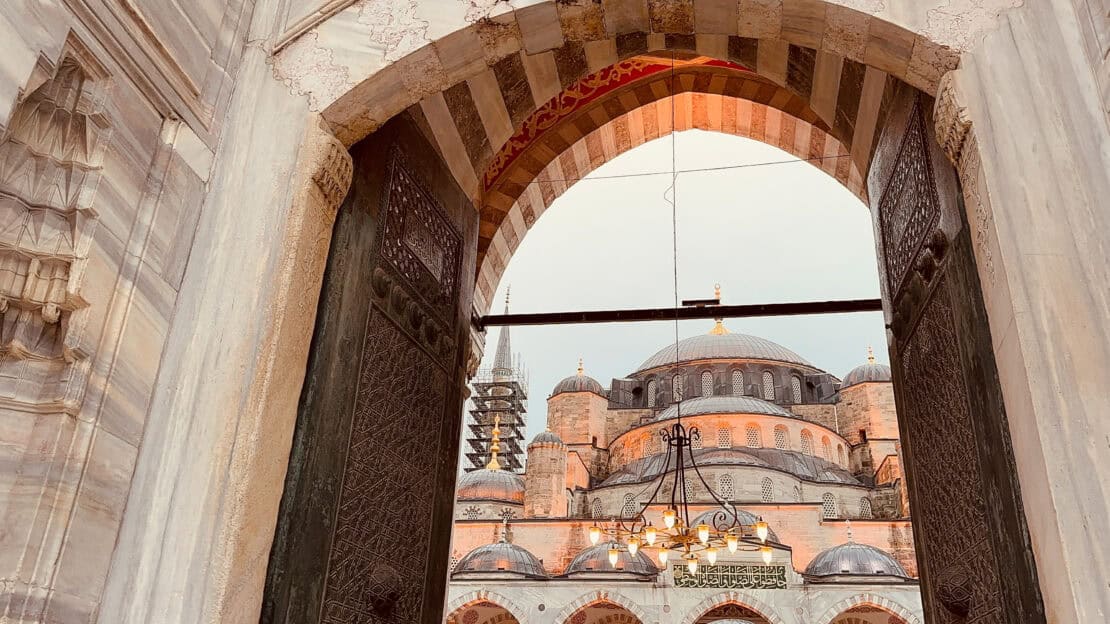
Just across the square, the Blue Mosque (Sultan Ahmed Mosque), completed in 1616, takes its nickname from the tens of thousands of İznik tiles that wash the interior in shades of blue, while its six minarets once caused controversy for matching those of Mecca.
Every time I visit, I am awed, quite seriously, by its exquisite design.
Then there’s Topkapi Palace, the heart of the Ottoman Empire for around four centuries. Home to the sparkling 86-carat Spoonmaker’s Diamond, it also once housed eunuchs, a harem and debating chambers for viziers, in addition to the top dog Sultan. All within spectacularly ornate walls.
Viking, naturally, include them in their excursions but I revisited them in my free day, leaving my included excursion to try somewhere new: the Rüstem Pasha Mosque and the offerings of the Spice Bazaar.
For more on the Grand Bazaar and where to find unique Turkish souvenirs in Istanbul, see our guide.
The Other Side of Istanbul and Another Legend
Tucked above a row of shops near the Golden Horn, the Rüstem Pasha Mosque is easy to miss, yet inside it offers one of the city’s most exquisite displays of 16th-century İznik tiles. Commissioned in 1563, while the Tudors in England were worrying about whom Elizabeth I should marry, it’s dedicated to Rüstem Pasha, grand vizier and son-in-law to Süleyman the Magnificent.
In other words, it hails from the time when the Ottoman Empire was at its peak.
Carnations, tulips and intricate geometric designs climb the walls. It’s a jewel box in shades of cobalt, jade and a cheeky cherry red: dedicated to a statesman with a rather unusual backstory.
Rüstem was forcibly recruited from the Balkans as a boy yet grew to be one of the most powerful men in the land. He also amassed a huge fortune and was the first Ottoman on record to use his wealth to benefit the people, building roads, granaries, baths, schools and hospices on his land.
He also built covered bazaars.
The Spice Bazaar
Just downhill, the air thickens with cinnamon and saffron as the Spice Bazaar (Mısır Çarşısı or Spice Market) spills colour and commerce into the streets through a deceptively underwhelming entrance.
Built in the 1660s to help fund the nearby Yeni Mosque, it was once the endpoint for goods arriving along Ottoman trade routes from India, Arabia and beyond and is a cornerstone of Turkish cuisine.
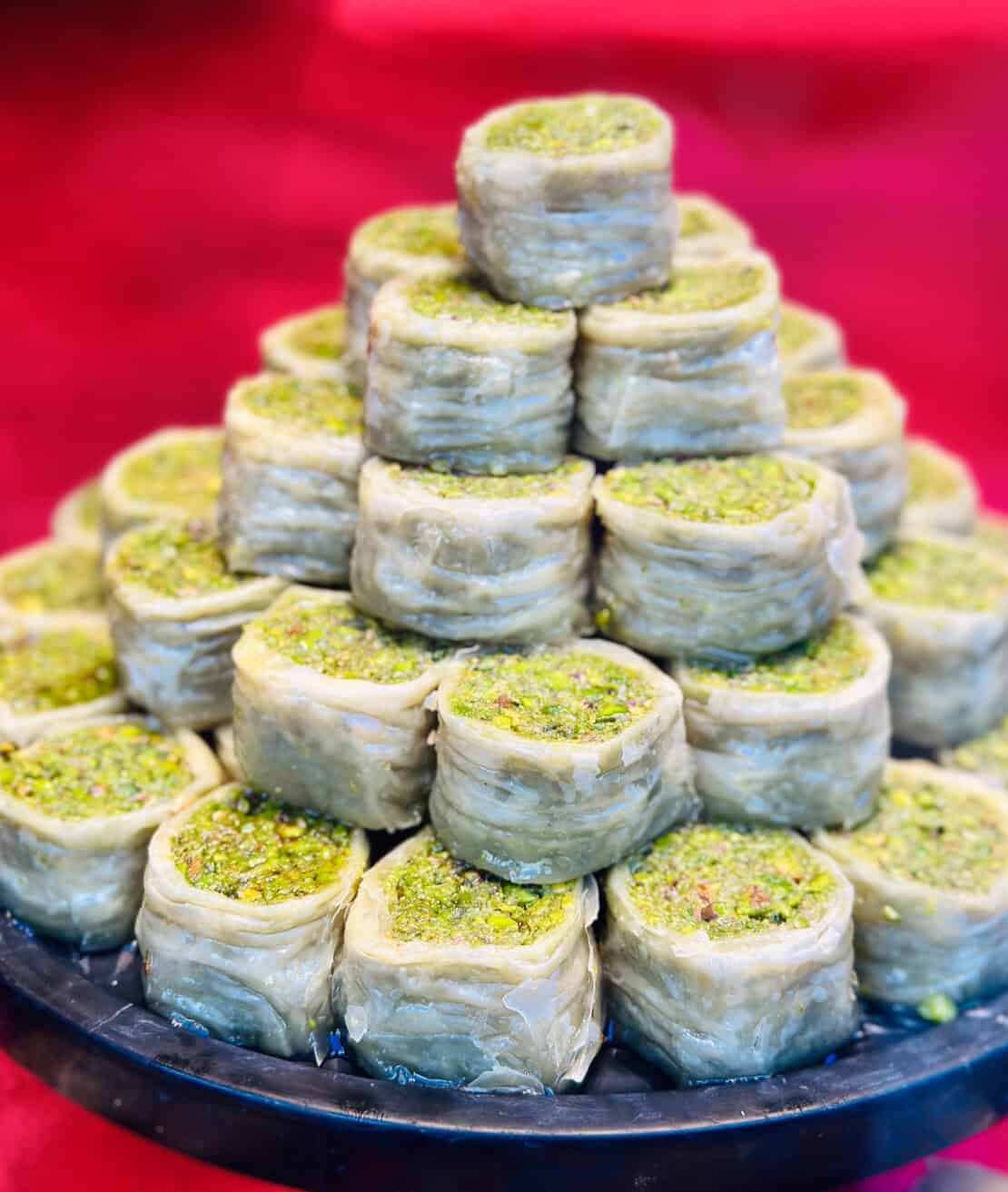
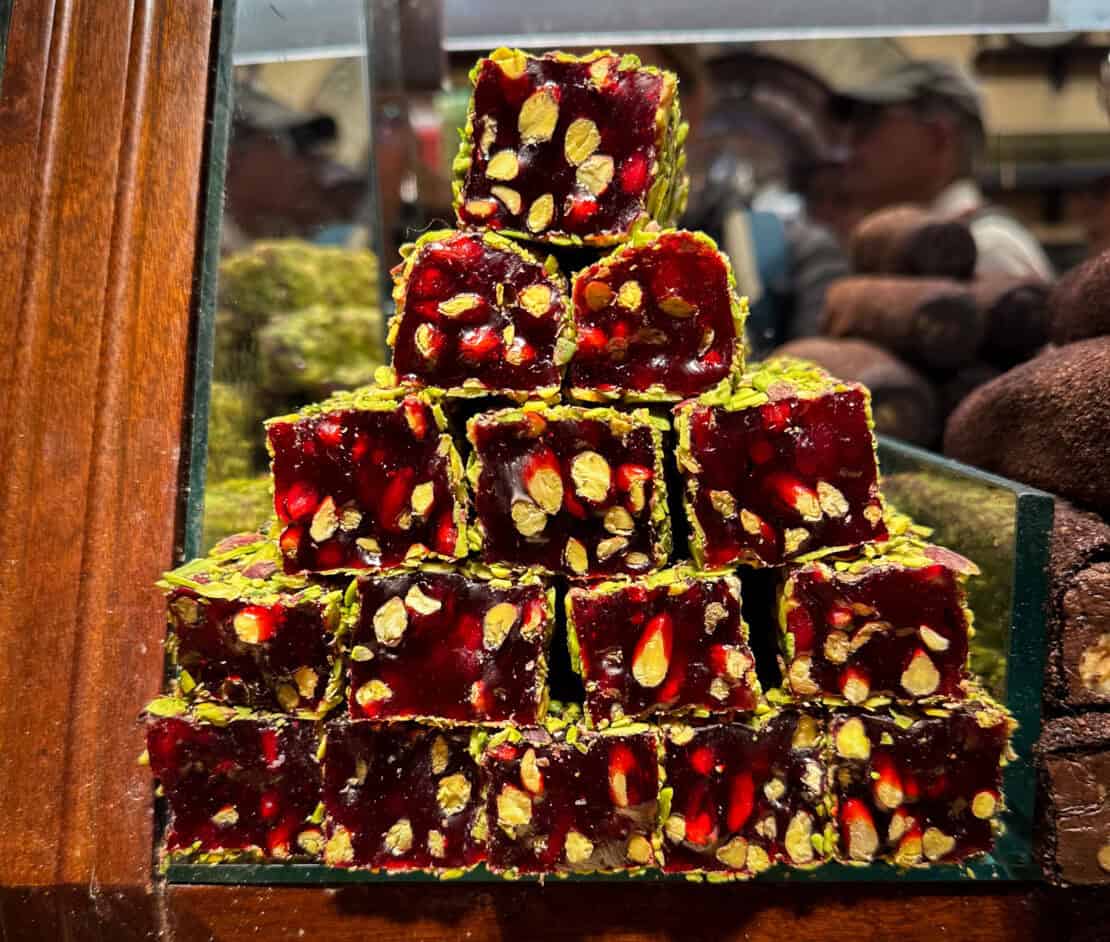
Today, pyramids of sumac and paprika sit beside lokum or Turkish delight, dusted in icing sugar and patterned with petals. Strings of dried aubergines hang overhead, and merchants offer glass bulbs of tea which promise to cure everything from digestion to devotion.
I wonder about a cure for sea sickness, before I embark on my first great ocean voyage.
But I needn’t have worried. I slept soundly as the ship slid through smooth waters, coming in to port in a place with its own ancient maritime legend.
Explore Ancient Troy
Schoolchildren throughout the ages will remember the story of Helen and the “face that launched a thousand ships.” Women of a certain age will remember the movie Troy and the men who launched a 497 million dollar movie, thanks to the hard work of the personal trainers of Orlando Bloom, Eric Bana and Brad Pitt.
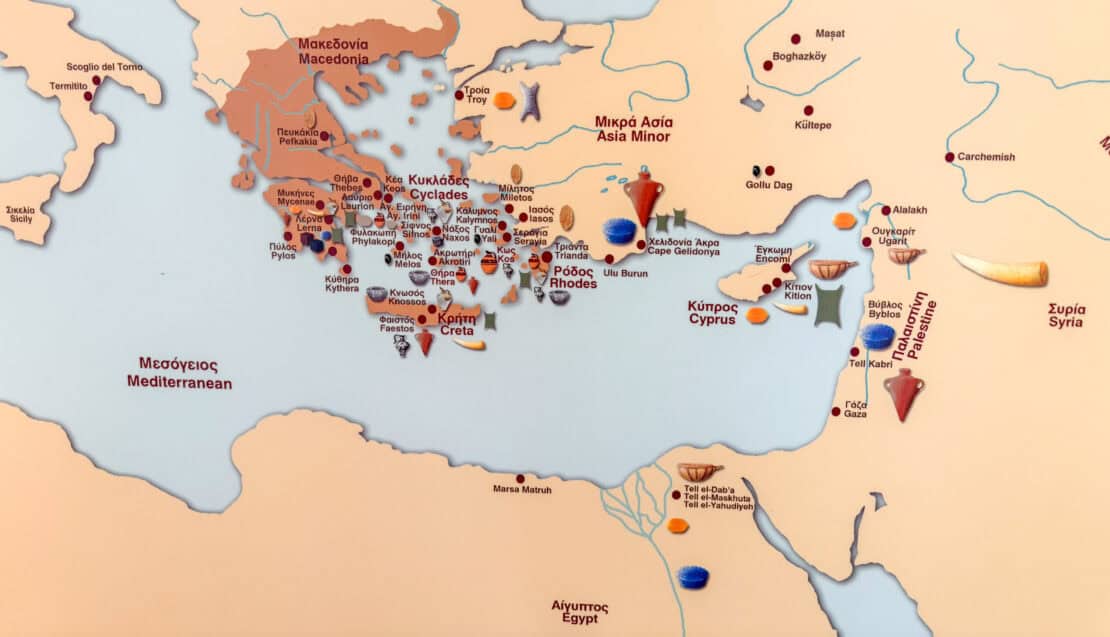
But whichever legend you know best, the story of Troy is likely one you’ve grown up with. A serious, established civilisation, a powerhouse in Asia Minor, flourishing and inviting guests like Alexander the Great long before democracy got going in Athens.
And brought down by a shockingly simple plan that took advantage of people’s better natures.
Three thousand years on and you still hear the phrase: beware Greeks bearing gifts.
But what of the real Troy, when all the storytelling is said and done?
Çanakkale
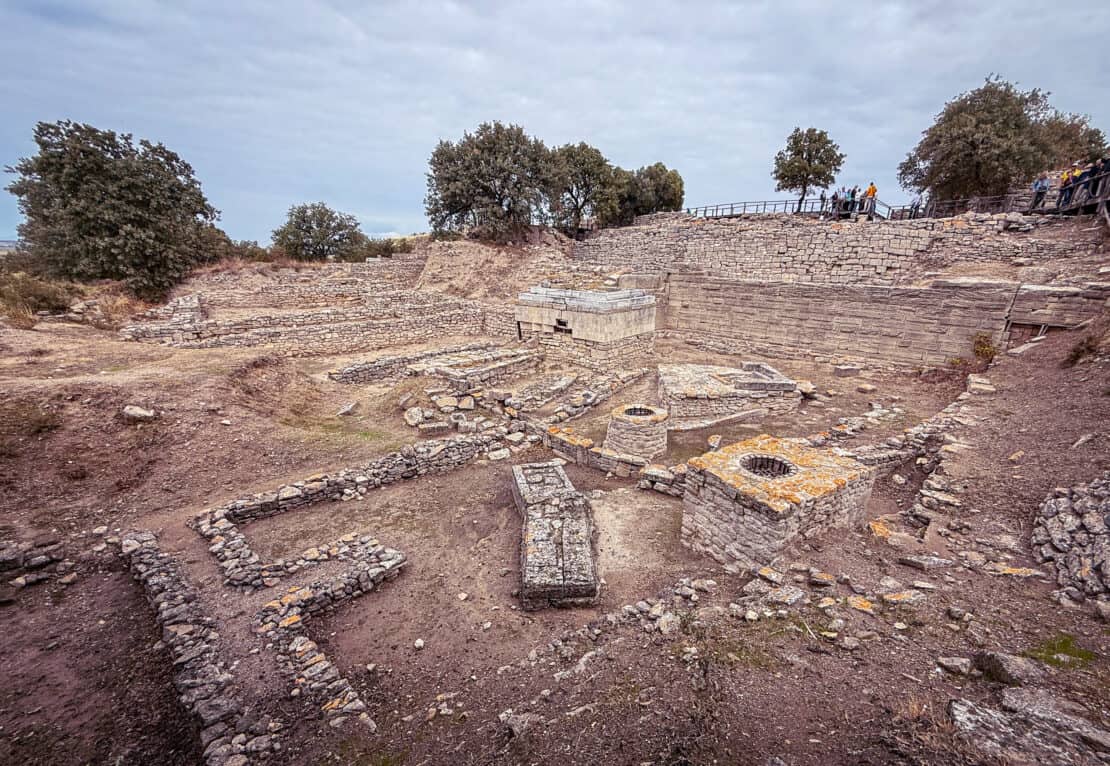
Well, revered archaeologists trace it to the ruins found outside Çanakkale, and the ruins are a fairly substantial bunch.
There’s nine layers, for a start, which shows a city built and rebuilt time and again. UNESCO inscribed it on the World Heritage Site list in 1998.
The only snag? It’s a bit of a faff to reach by land, being five to six hours by road from Istanbul.
From the sea, however, you can lie back and enjoy the voyage (or listen to lectures on antiquity or astronomy) and then, just as in the time of Achilles, it’s easy to get there from the shore once you disembark.
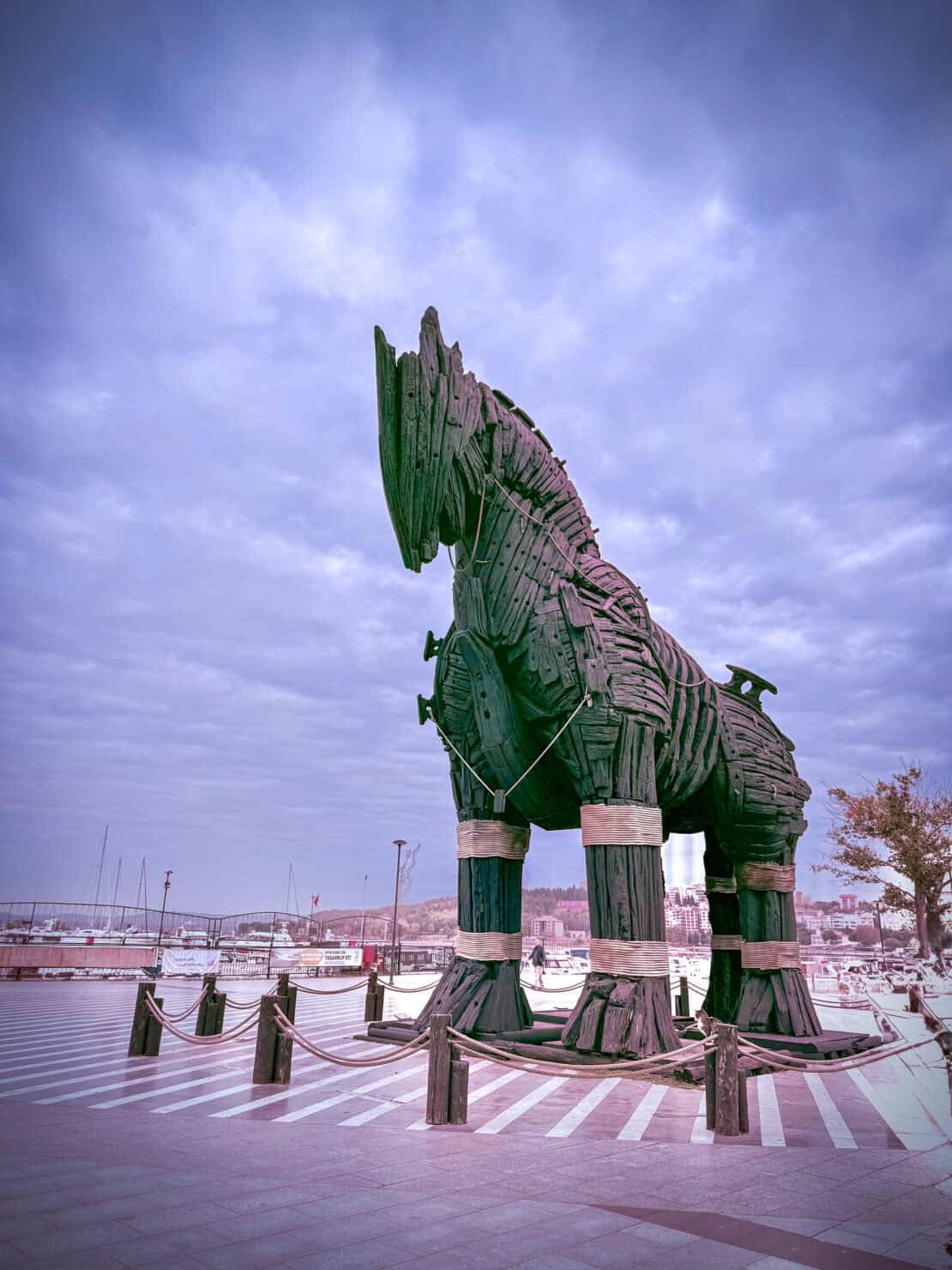
And to connect archaeology to Homer’s Iliad, the producers of the 2004 hit Troy donated the Hollywood horse to the city of Çanakkale, a core part of the city’s skyline.
It’s a stark, dark, almost burnt looking work of art. A reminder that behind the oft-repeated stories, this became a place of terror, destruction and suffering all thanks to the misbehaviour and short tempers of those right at the very top.
Is it me or does that sound familiar?
Ephesus – Kusadasi and the Story of Revenge
And so, we voyage to Ephesus, another place with themes of revenge, destruction and intrigue, although with a much more beautiful set of ruins to see along Turkey’s Aegean Coast.
Ephesus was the capital of Roman Asia, a major powerhouse with a 25,000 seat theatre, the Temple of Hadrian and home to The Temple of Artemis, one of the Seven Wonders of the Ancient World. Over the years it was visited by Alexander the Great, St Paul the Apostle, Cicero and even the Virgin Mary.
But the intrigue I’m going to talk about today involves Cleopatra’s sister.
Cleopatra’s Egypt was under threat form the rising superpower of Rome. In the kind of political shenanigans we rarely see these days, Cleopatra began an affair with Julius Caesar while married to her brother (it’s the former not the latter that was the scandal; we live in different times.) And then her sister raised an army against her.
Caesar took a vanquished Arsinoe away with him, back to Rome, to be paraded in defeat and then executed. But the sight of a teenage girl in chains didn’t go down too well even in ancient times, and, swayed by the feelings of the crowd, Arsinoe was exiled to Ephesus instead.
It was here that Arisnoe was brought and here that she died, with stories ranging from a mysterious poison, today’s arsenic, to a bloodthirsty execution on the steps of the Temple of Artemis at the hands of Cleopatra’s later lover, Marc Antony.
What Ephesus is Like Today
But Ephesus itself doesn’t reflect the tensions of desire, ambition, revenge.
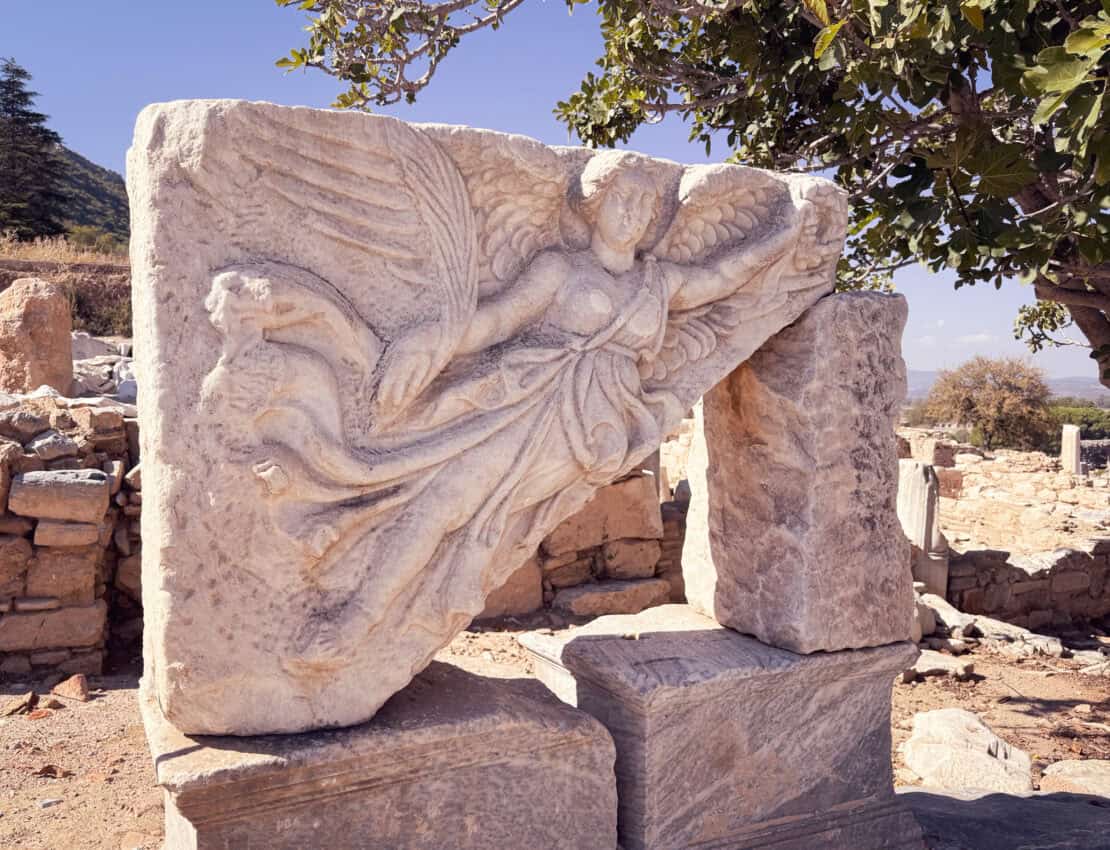
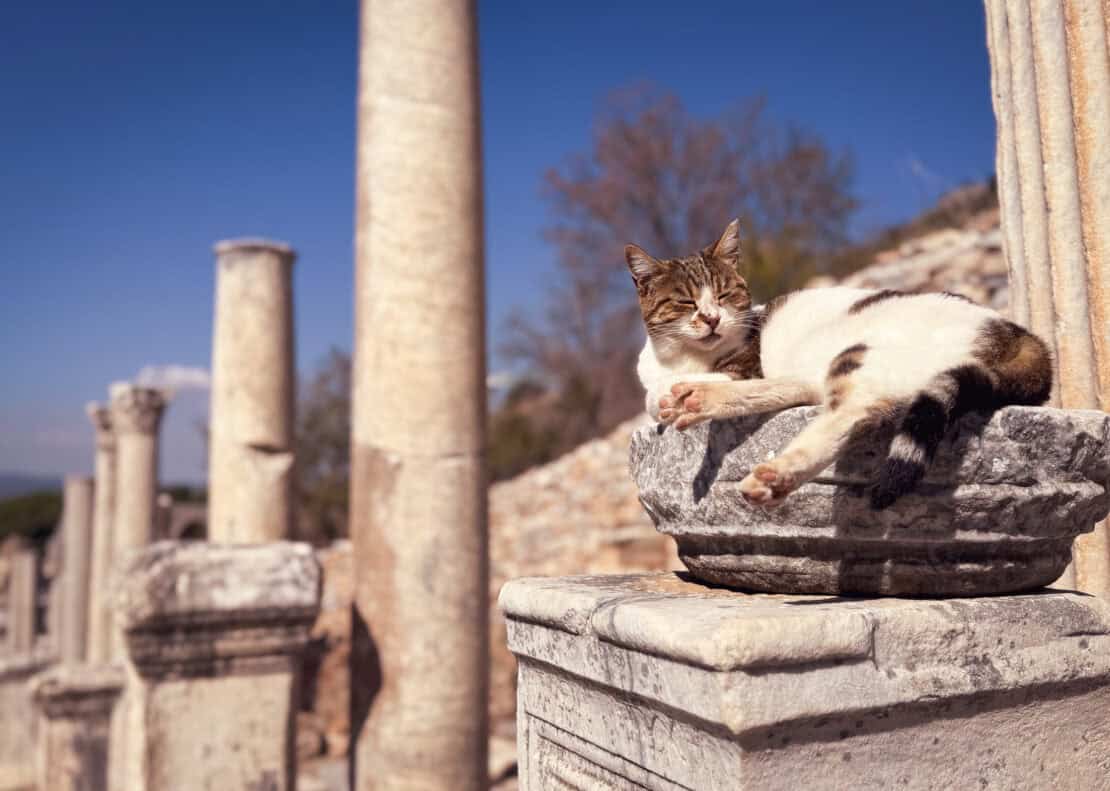
It relaxes in the splendour of its ruins, proud of its creamy, crumbling pillars and its countless sculptures that it knows visitors won’t have time to take in fully. It’s the Beyoncé of ruins, the best preserved city from the antiquities and it’s useful to have a guide because there is otherwise too much to see.
We’re gorgeous, we’re famous, it says. You should have known what we’re about before we got here. (And, well, maybe I should.)
Ephesus had one of the most advanced aqueduct systems in the world.
“Better than Rome,” our guide tells us, “because they were wise enough not to line their water with lead.”
Apparently, life expectancy in Ephesus was ten to twenty years longer than in ancient Rome, an observation that would fit with a ceramic rather than lead based drinking water system.
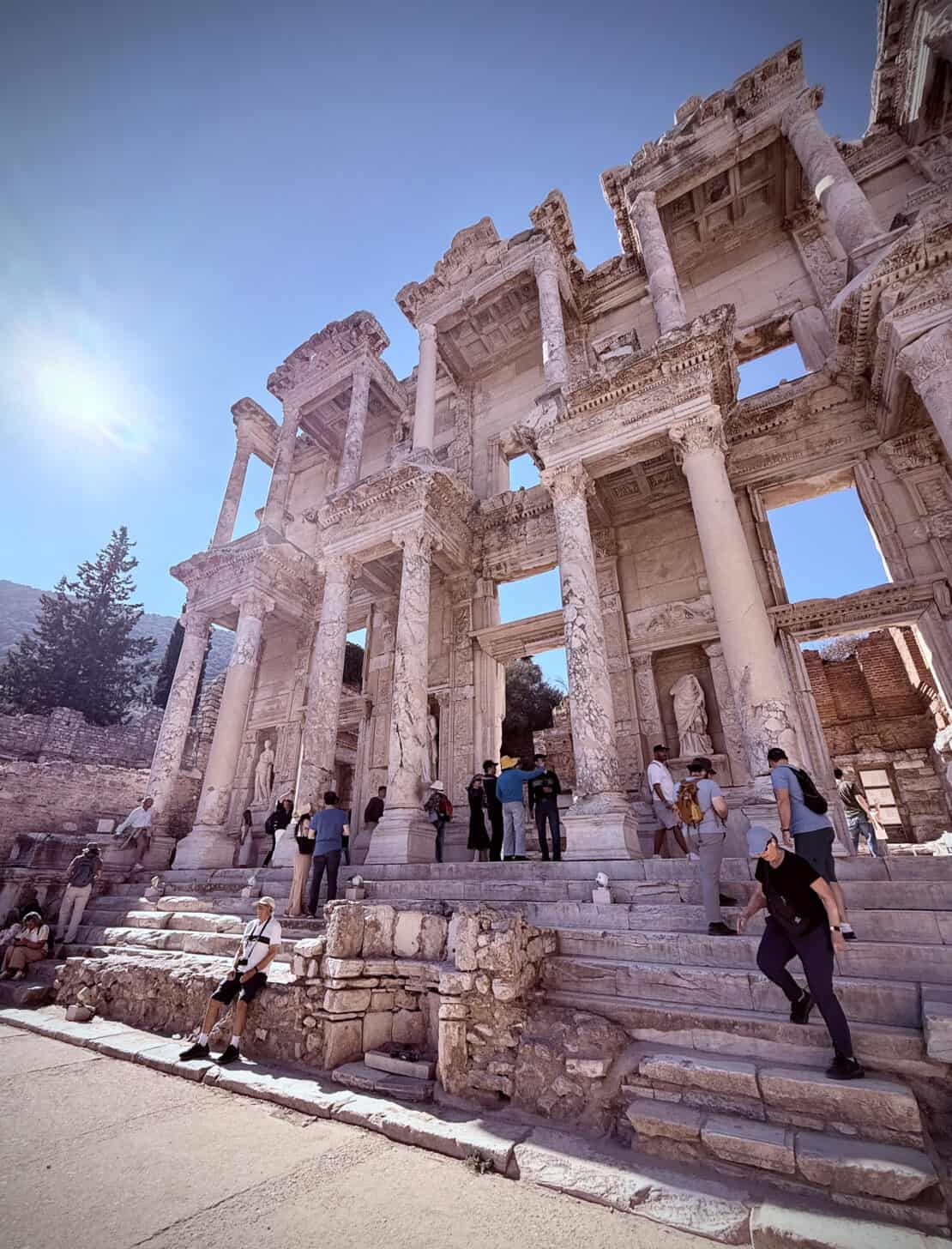
But the crowning glory, of course, is the entrance to the Library of Celsus at the bottom of the main thoroughfare. All columns rising into the air, piercing the blue Mediterranean sky, once the proud guardian of more than 120,000 scrolls.
It’s gorgeous. And while you can reasonably visit Ephesus as part of a land locked trip (I once saw someone propose here many moons ago) it is fitting to arrive here from the sea.
Just like Arsinoe.
Rhodes and the Beginning of the Greek Isles
The arrival in Rhodes marks our first crossing into Greece and yet you feel, in your bones, so close to Turkey. It’s only an hour by ferry to the Turkish coast, and somewhere between twelve and sixteen to reach Athens.
There’s a lot we could talk about when it comes to Rhodes, the largest island in the Dodecanese, but two things stand out immediately.
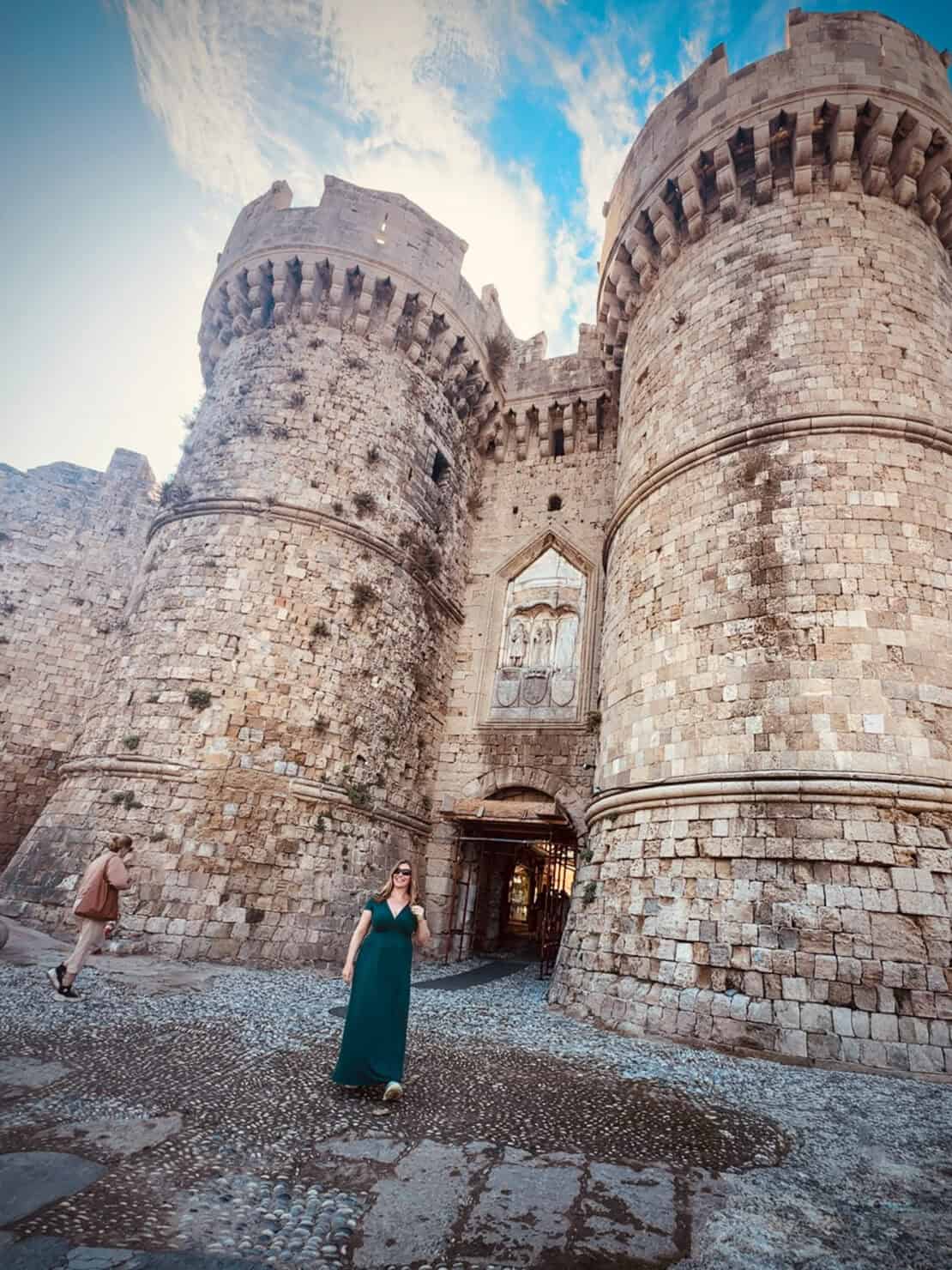
One is the world of the Knights of St John of Jerusalem, and their UNESCO World Heritage approved medieval city. After losing their foothold in today’s Palestine, they retreated across the water to Rhodes, building a fortified city with a ferocious sense of beauty and no hint whatsoever of a lack of self-confidence (the pinnacle is named The Palace of the Grand Masters.)
For over two hundred years, they withstood sieges, before finally falling in 1522. From then, churches switched to mosques, but you can still see plenty from the Knight’s age, especially along the Street of the Knights, which leads up to the palace.
Top tip: don’t miss the Archaeological Museum of Rhodes, where the setting is just as fascinating as the exhibits. Before it became a museum, the medieval building was used as the Hospital of the Knights, also known as Knights Hospitaller.
Splashing in the Mediterranean Sea
The second stand out feature in Rhodes, is the water.
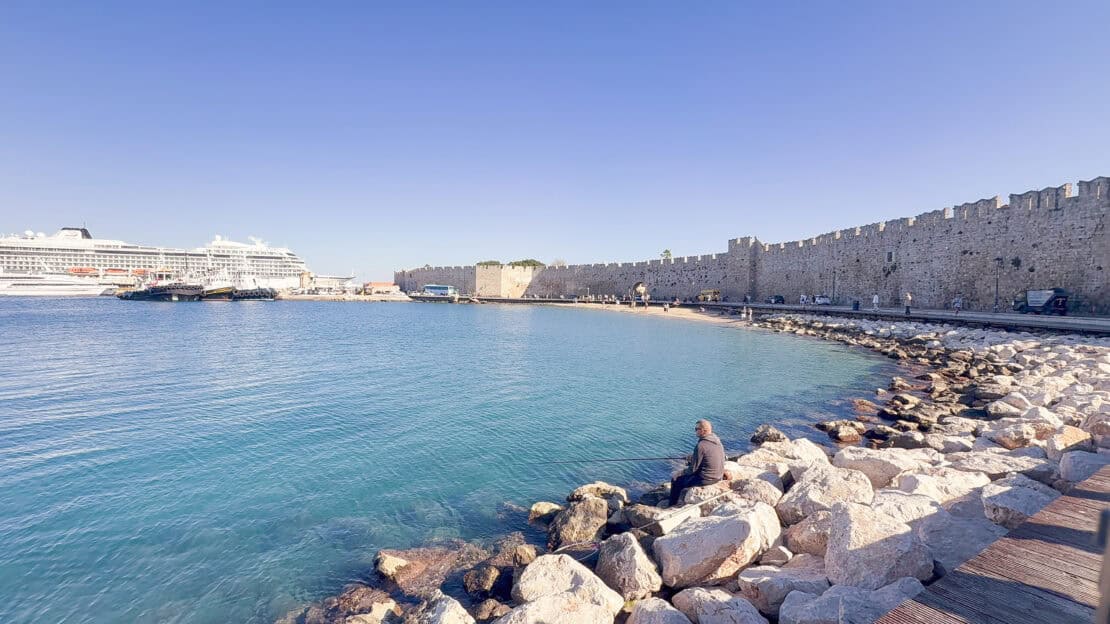
It’s just…right there. Right by the port. With a little sandy beach and inviting turquoise ripples, I saw not a soul who could walk past without kicking off their shoes and splashing in the chuckling surf.
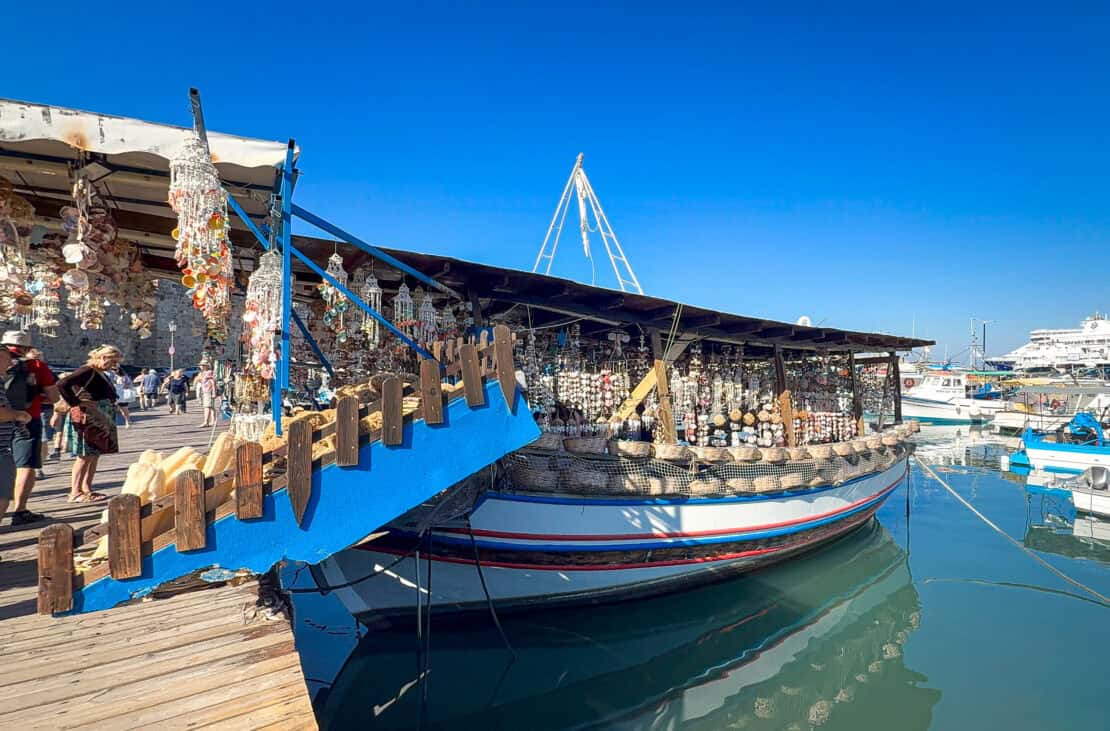
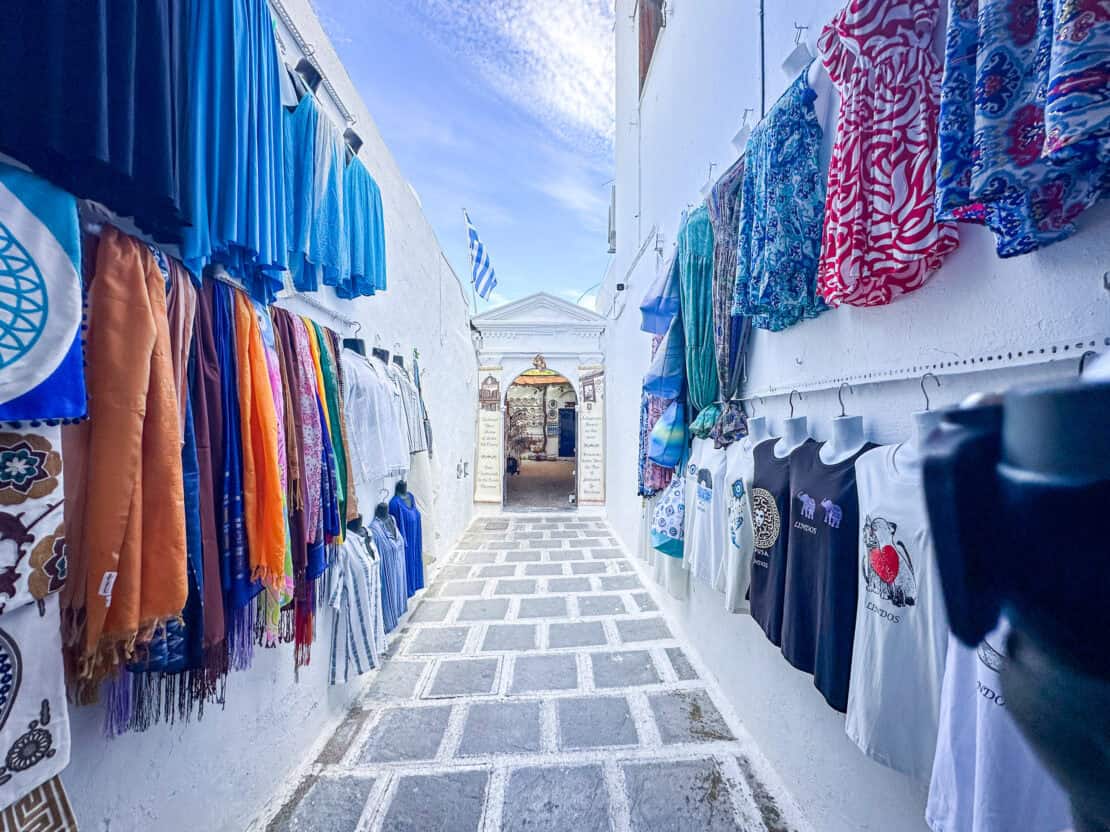
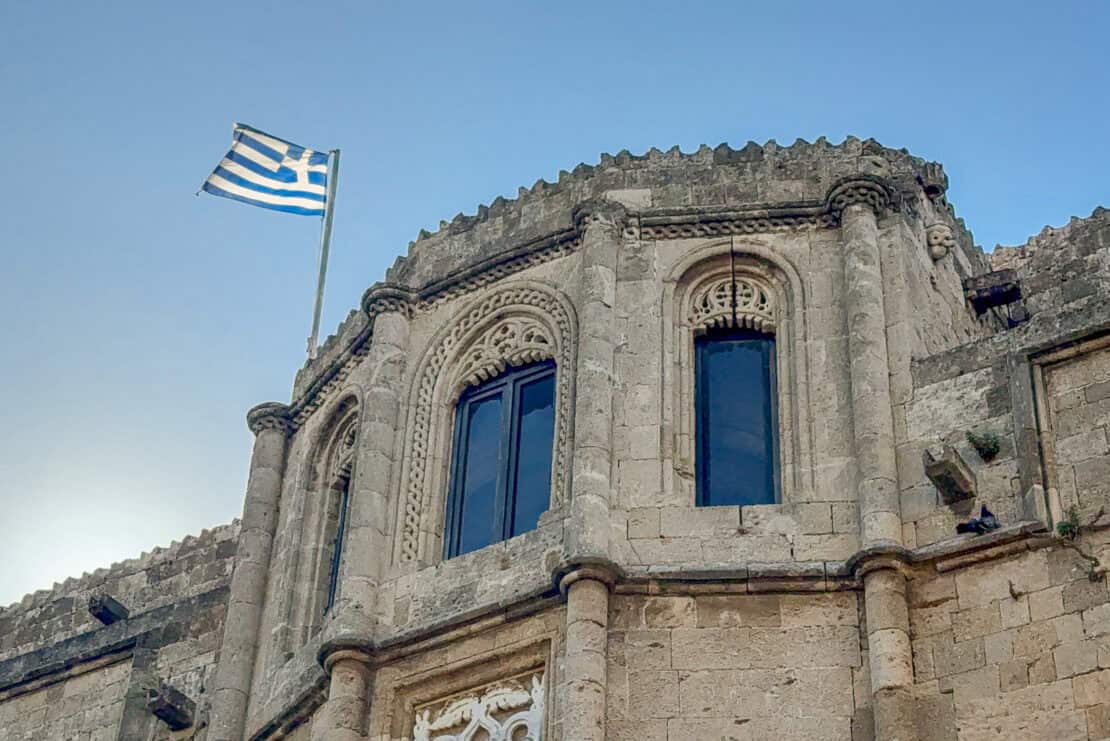
Rhodes has its touch of ancient Greece, of course. The Colossus of Rhodes, once one of the ancient Wonders of the World, may have fallen a long time ago but the Acropolis of Lindos, dedicated to Athena, still clings to rocks rising out of the sea. The climb winds through narrow lanes of whitewashed stone, flecked with the piercing blue of evil eyes.
You’ll pass crowded tavernas on steep cobbled streets, with hand painted signs for raki and souvlaki while tight, fat vine leaves spill onto plates for lunch.
In other words, you have definitely crossed into Greece.
The Minotaur’s Labyrinth in Crete
Just as you’ve found your feet in Greece, however, that all changes with Crete.
Now, technically, of course, Crete is very much a part of Greece and I’m not suggesting any other kind of geopolitical position. I’m merely passing on what I’ve heard from several Greek friends, from on the isle and off: that Crete is a place with its own character.
I’ve travelled around the island in my youth – one of my first ever trips at the tender age of eighteen, clinging to my boyfriend’s back as our motorbike climbed the pine fringed hills ,and tasting raki with villagers in hard to find places.
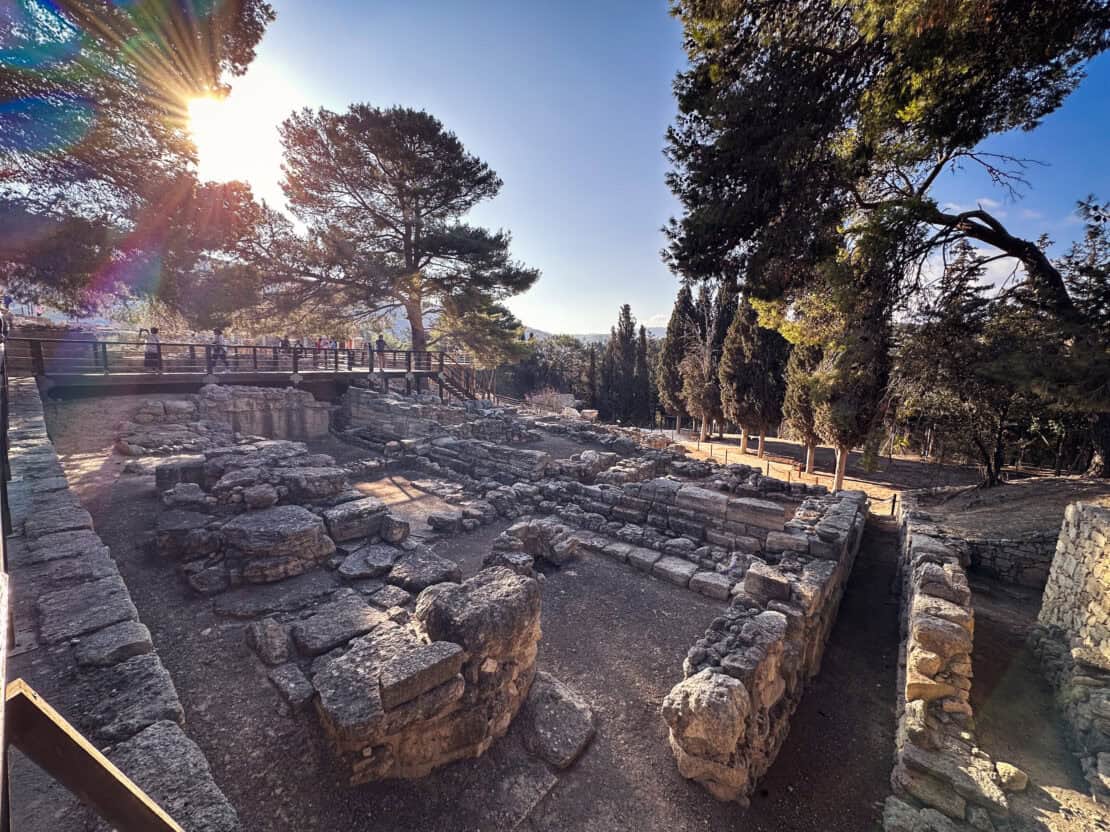
This time, though, I’m going back to the main attraction: the palace of Knossos near Heraklion.
Or, in other, more ancient worldly terms, the home of the Minotaur.
Like Troy, the story of this place is a mix in my mind of school assemblies and illustrated books, and that blend of fascination and terror, courage and make believe than can only come from learning a story young.
If you don’t happen to know the tale, it goes like this: a menacing creature, half man, half bull lived dark inside a labyrinth and feasted on human blood.
But the story begins earlier than that.
The Story of the Minotaur
The trouble began, as it so often does around here, with a bargain made at sea.
King Minos of Crete prayed for a sign of divine favour, and a magnificent bull rose from the waves: a gift from Poseidon, meant to be sacrificed in thanks.
Minos kept the bull instead. The gods noticed. And things began to go wrong.
Minos’ wife fell in love with the bull, giving birth to the Minotaur, the terrifying bull-headed child, who was hidden in a labyrinth on Crete for everyone’s safety.
Then, after Minos’ son was killed in Athens, Crete enacted its revenge by ship. Every nine years, fourteen Athenian youths, seven women, seven men, were sent across the sea as tribute, unloaded at Knossos, and fed to the monster in the dark.
Until one voyage did not return as planned.
In the end, for all the blood and terror, the solution was fairly simple. If the ancient myths do not involve the sea, then they involve love instead. Ariadne, princess and daughter of King Minos, fell in love with Theseus, a bright and bold Athenian, and gave him this straightforward trick: a ball of thread.
Theseus could enter the labyrinth, slay the minotaur (for whom I feel a bit sorry, to be honest) and then follow the thread back to daylight.
Like all good stories, this one has roots in the truth.
The Truth About the Minotaur
From excavations, archaeologists seem united on one front: the Minoan palaces did have a labyrinth, designed to confuse visitors and reduce the chance of a successful attack. They describe the Minoans as the oldest civilisation in Europe, making this the oldest city, with work on Knossos beginning around 1900 BCE.
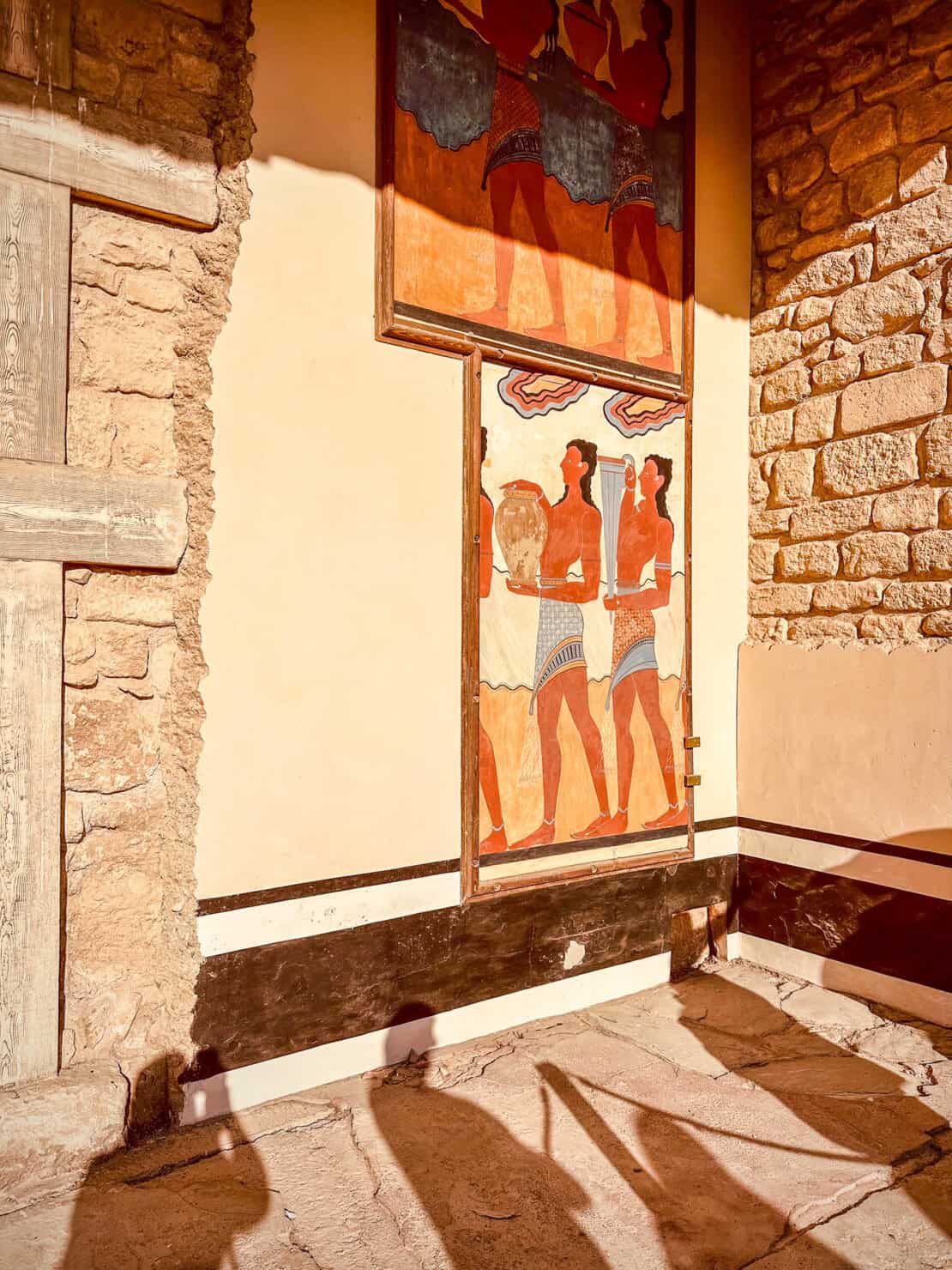
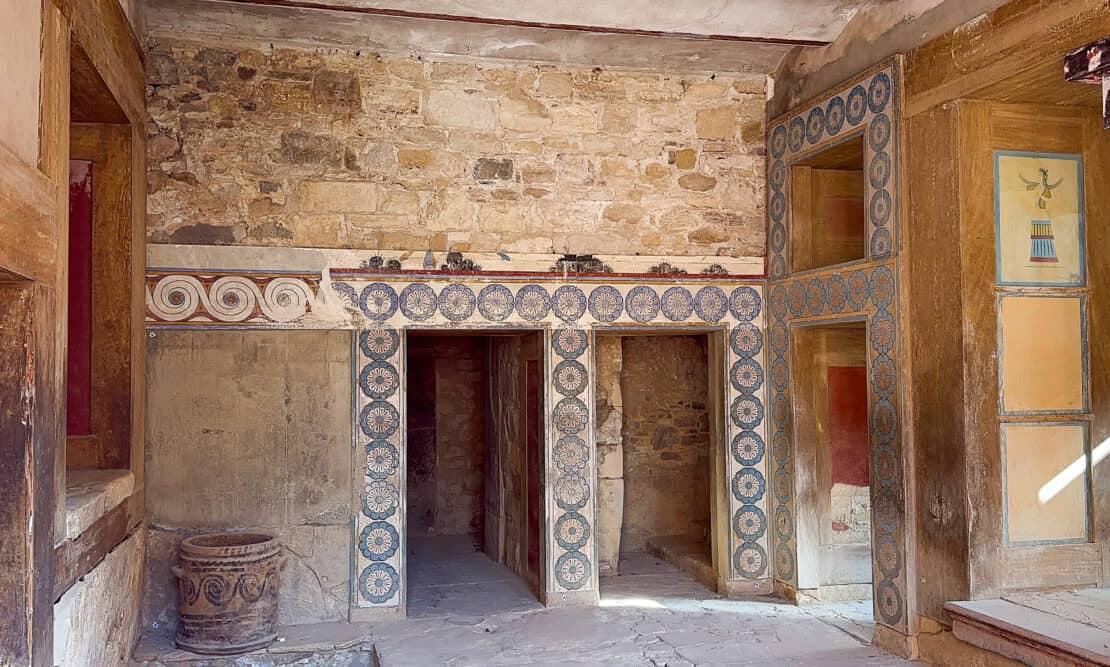
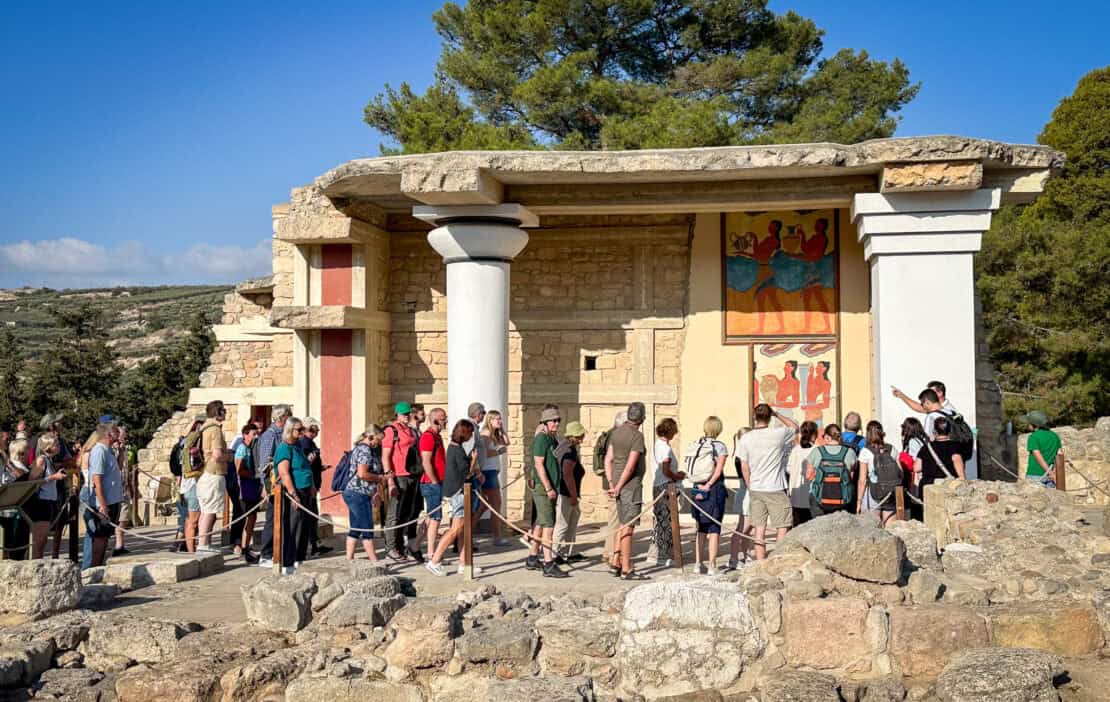
The core parts of the palace are exactly as I remember them: cream piles of stone, rust and ochre frescos of water carriers.
An image of bull.
But no actual minotaur.
But there is something new. And at first, I think it’s something I won’t really like.
The Viking excursion takes us to an artificial Cretan village, reconstructed to keep tourist hordes away from the real thing. Although, of course, the messaging is rather more polished than that.
In truth, it’s one of those things that challenges everything I think about travel.

Ancient Mediterranean Timeline
- 3100 BCE: Minoan civilisation appears in Crete, considered Europe’s oldest civilisation
- 1900 BCE: Palace of Knossos built
- 1400 BCE: Jason and the Argonauts
- Around 1190 BCE: 10 year Battle of Troy
- 600 BCE: “Birthplace” of democracy in Athens (although other city states have also introduced similar systems)
- 400 BCE: Construction of the Parthenon at the Acropolis in Athens
- 50-30 BCE: Caesar, Cleopatra, Marc Antony and Arsinöe conflicts
- 58: St Paul’s 3rd Mediterranean Mission lands in Rhodes
- 324: New Rome/ Constantinople founded
- Late 400s: Collapse of Western Roman Empire
- 523 – 527: Construction of the Hagia Sophia – the premier cathedral of the Byzantine Empire
- 532: Construction of the Basilica Cistern
- 1310 – 1522: Knights Hospitalier headquarter in Rhodes
- 1460: Topkapi Palace construction begins in Constantinople
- 1617: Consecration of the Blue Mosque
- 1930: Constantinople officially renamed as Istanbul
- 1974: Cyprus conflict between Greece and Turkey
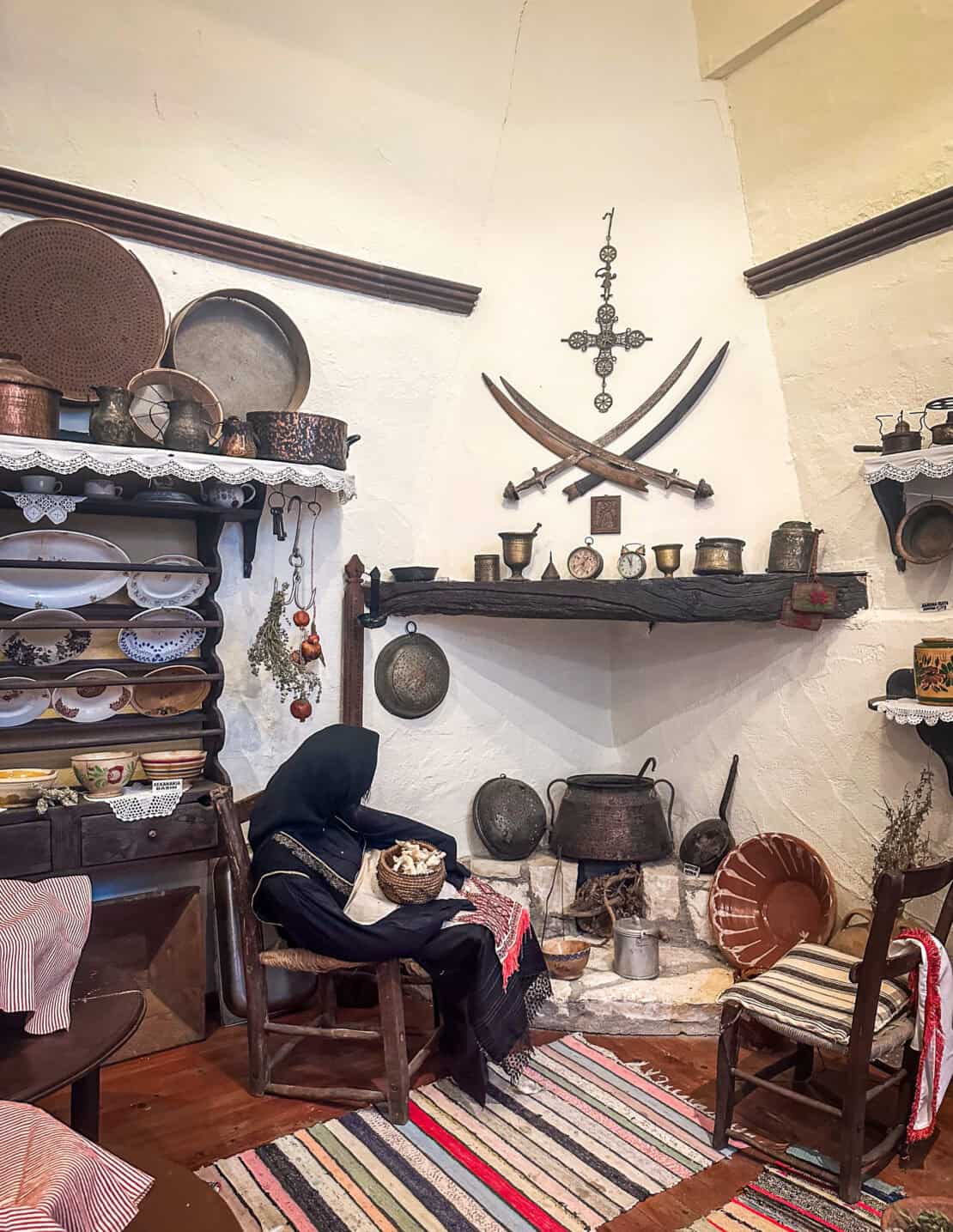
A Traditional Cretan Village?
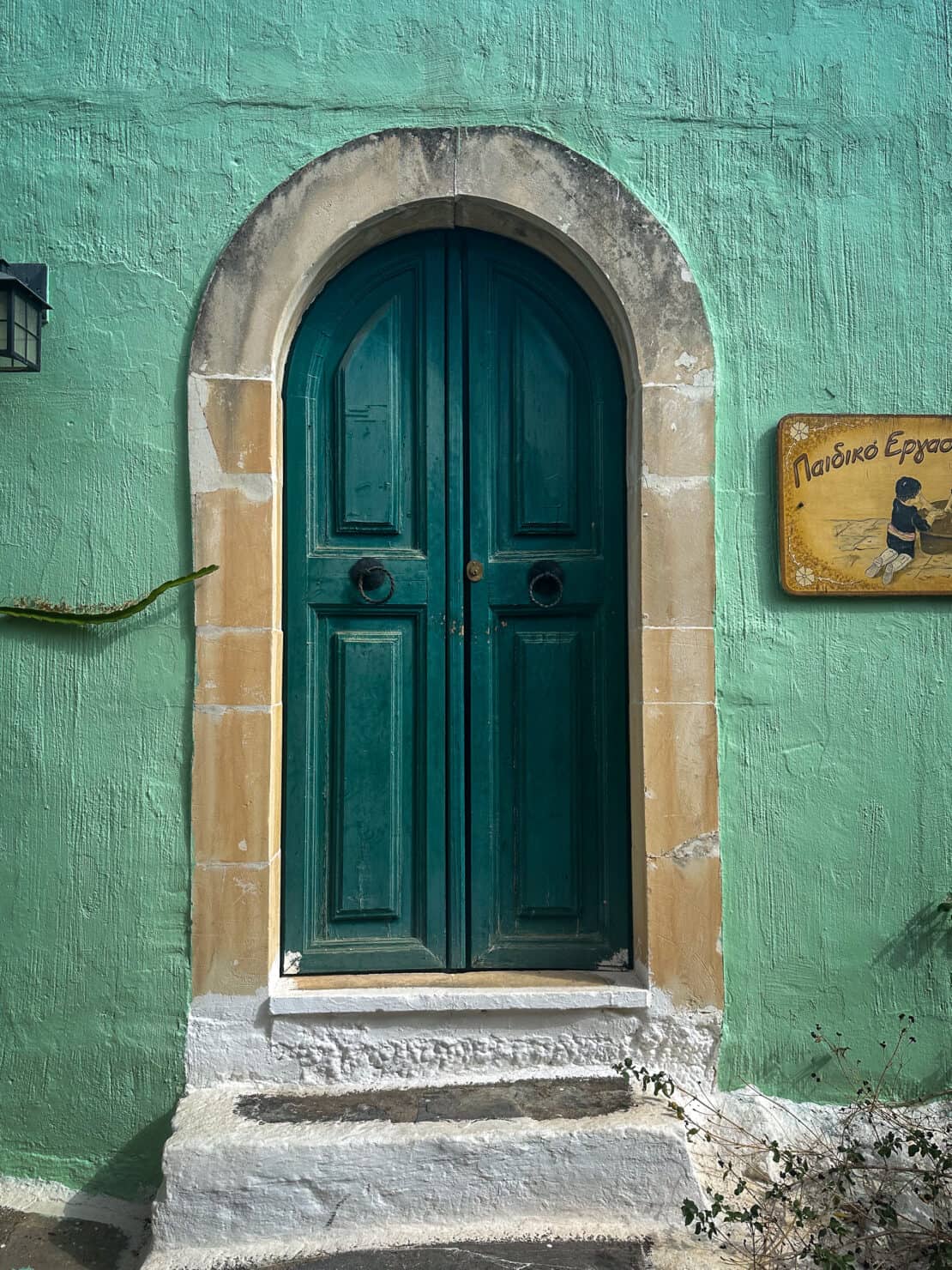
First of all,it’s beautiful, a cascade of tumbling flowers and mustard yellow streets, peppered with shop fronts of museums and traditional crafts. At the top of the hill, there’s a raki tasting, along with stuffed kalitsounia in a purpose built hall, all part of the Arolithos Museum.
Everyone we meet hails from Crete and seems keen to share their stories.
And so, it has me questioning.
What is authentic travel anyway? Is it better for hundreds of people to trample through a real village, peering into spaces where people are living their private lives, with new births and chemotherapy treatments, divorce and every other struggle going on?
Or is this the better solution? To invite visitors to see the space and to invite people who want to meet foreigners to turn up, on their terms, and share their traditions and stories?
The longer I stay here, and the more raki I try, the more this seems to be a better idea.
But still I wonder.
But any thought of small Greek villages is soon washed away as we sail into our final destination. The big hitter of the ancient world, a place that is no longer in ruins but a fully fledged capital and key player in geopolitics still.
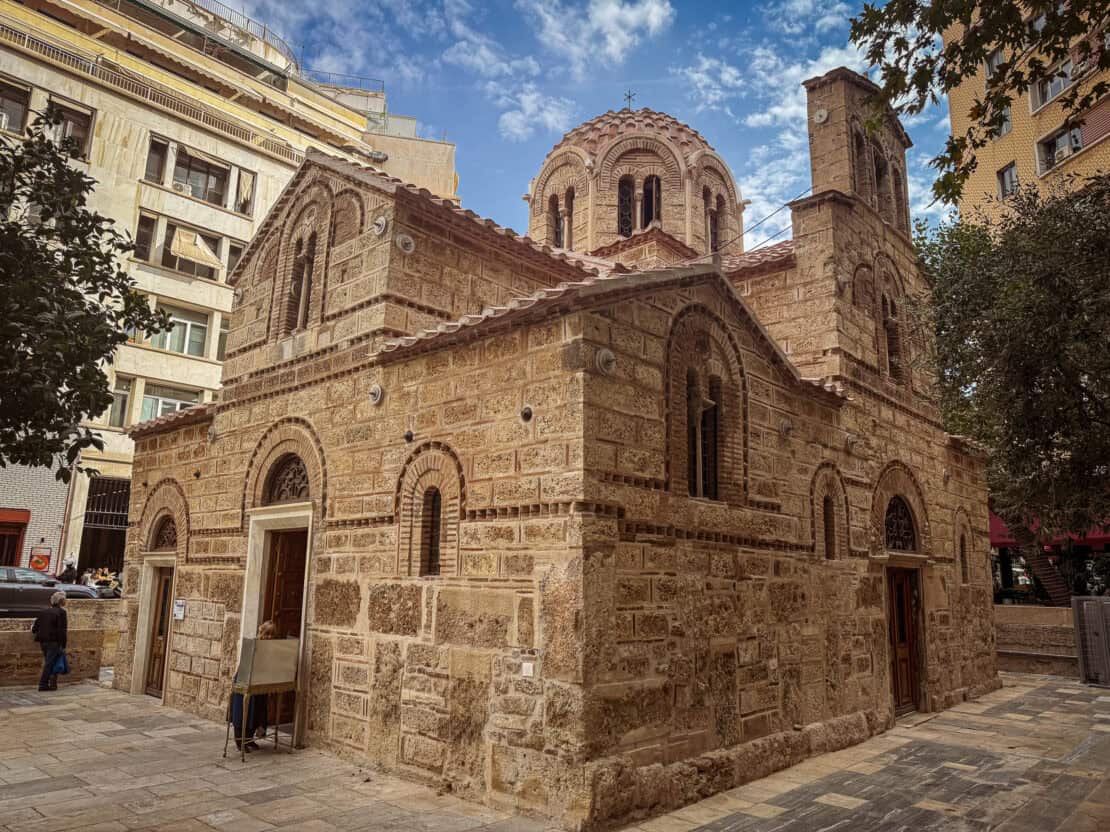
The Ancient City of Athens
If we’re going to wrap ourselves in ancient myths and legends and a misspent youth, then close your eyes to hear the music swell as when Russell Crowe reached ancient Rome in Gladiator.
Yes, even though it’s a different ancient Empire. This one came first.
After all, this is the city that gave the world democracy, if you don’t look too hard at the details. It was here that Aristotle tutored Alexander the Great, that Socrates influenced Plato, and where Hippocrates first put forward the idea that diseases resulted not as a punishment from the gods but as the logical consequences of a series of events.
There’s even a link to Pythagorus and his triangle.
And modern day Athens is exhilarating and pedestrian in equal measure, as perhaps all cities, dreams and lovers turn out to be.
See our inside food guide to Athens…
Modern Athens
Athens is a city I know well. She’s seen my carefree backpacker student days, my early days of travelling with a babe in arms and various reincarnations in between.
At this stage, we’re no longer roommates, nor dating, but well on our way to being an old married couple.
But the oldest of marriages in the 21st century are but a teenage romance when compared to the ancient civilisation which gave us no fewer than six words for love.
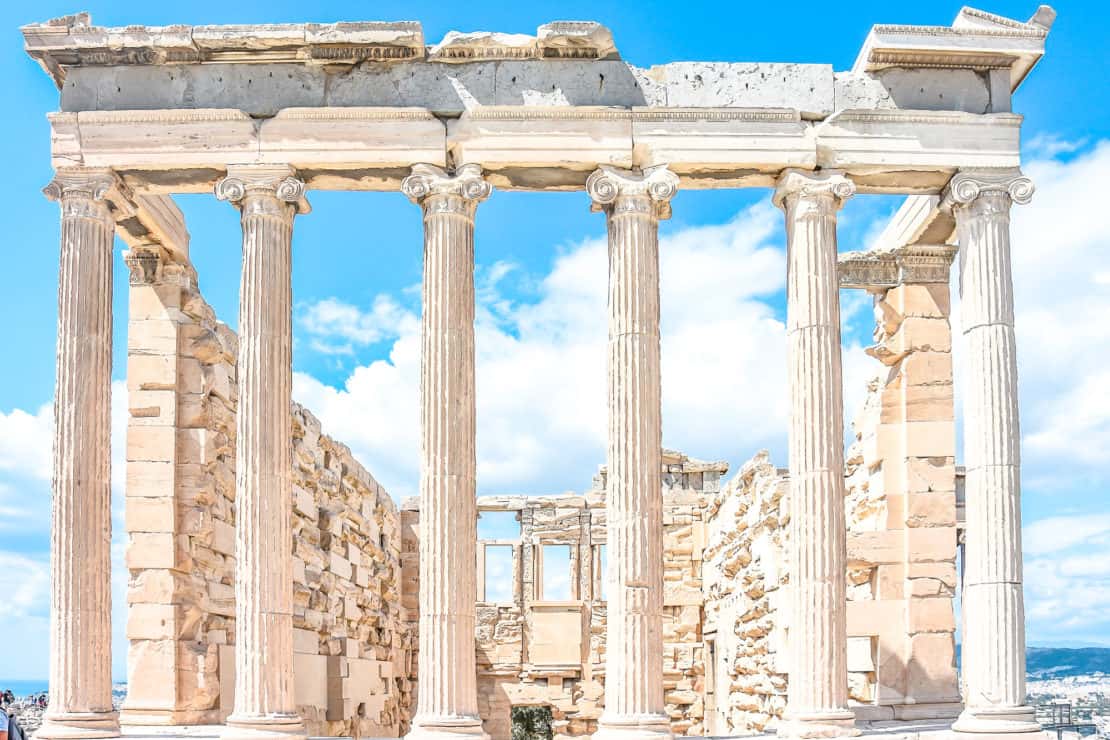
You can’t meet Plato, obviously, but you can visit the ruins of where he studied. You can stand in the shadow of the Parthenon, 2600 years after it was built, and see the silhouette of the Acropolis burn bright against a violet sunset sky.
Viking, of course, arrange excursions to all these and more of the places that make Athens worth visiting, from Delphi and the Oracle to Ancient Corinth.
I make my traditional pilgrimage to Varvakios Agora, where the the salty scent of fresh sliced fish mingles with cinnamon and shouting, and then leave the food market to try something new.
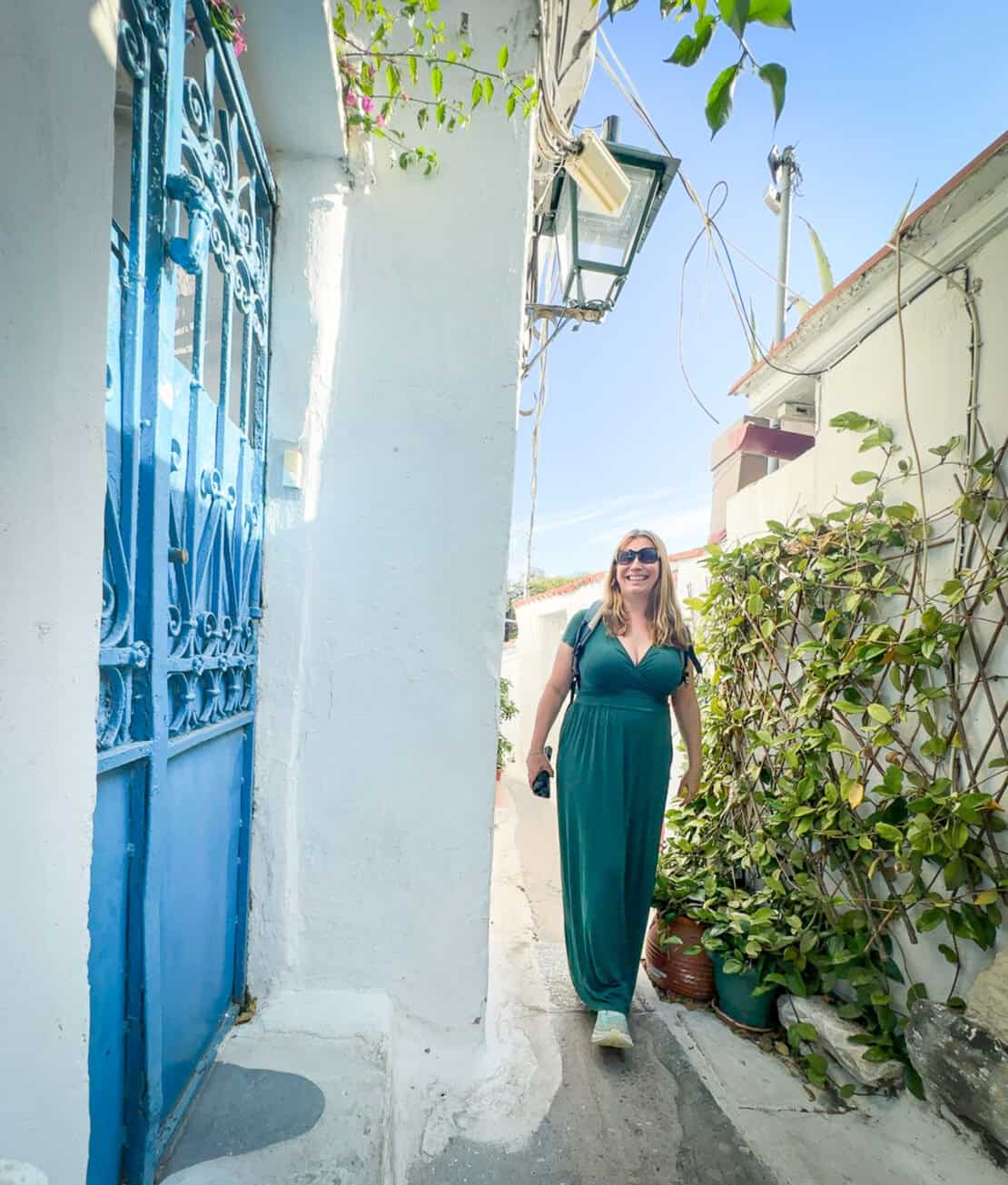
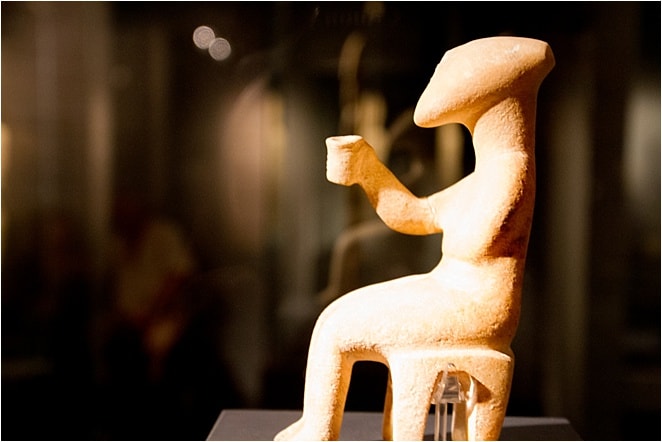
The treasure box Numismatic Museum, perhaps, which holds literally more than 500 000 coins and gems that date all the way back to 1400 BC? The narrow labyrinth of Anafiotika, where every single visit reveals a new twist or turn?
Or perhaps it is more fitting to return to where I started: at the edge of the sea.
The Final Stage
I travel back to the port at Piraeus as the golden sun slinks into sunset and find refuge on my ship.
Here, Nordic sculptures wait in granite amid the cool, clean lines inside. On both sides of the atrium, I can read about and see traditional Norwegian costumes, bathe in the artwork of Munch and relive the stories of the Norse God of War.
I love it all. Traditions, stories, legends. The tales that underpin our understanding of love, mathematics, engineering and even food.
But even older than the stories of mankind are the stories of the earth itself. And for that, I think of the rolling waves of the Mediterranean Sea. And the flawless curve of that heart-shaped cove.
How to Make Your Small Ship Cruise from Turkey to Athens Happen
- Itinerary overview: Witness the origin of civilisation as you cruise the fabled Aegean Sea. Spend two days in majestic Istanbul, with its treasures from Byzantine and Ottoman empires. Travel to the ruins of Troy, long steeped in myth and a UNESCO World Heritage Site. See historic sites in Ephesus and marvel at the gorgeous islands of Rhodes and Crete. Discover the architectural gems of ancient Athens during an overnight stay.
- Itinerary includes stops in: Athens (Piraeus), Crete (Heraklion), Rhodes, Ephesus (Kuşadasi), Troy (Çanakkale), Istanbul.
- Length of itinerary: 8 days/7 nights.
- Includes: Return flights from select UK airport, a 7-night voyage in a Veranda stateroom, in destination transfers, all on board meals including wine, beer and soft drinks with lunch and dinner (plus no corkage fee), included excursion in each port of call, Wi-Fi (connection speed may vary), gratuities, access to the Nordic Spa, evening entertainment, enrichment talks and 6 guided tours included as shore excursions..
- Prices: start from £2,495 per person for a 15-22 December 2026 sailing, based on current availability.
To book your next cruise please call 0800 319 66 60 or visit www.viking.com.
Viking Ocean Ships:
For more information about our Viking Ocean ships, including deck plans and staterooms go to: https://www.vikingcruises.co.uk/oceans/ships/index.html
A 360 tour of the ship can be found here: https://www.vikingcruises.co.uk/oceans/content/oceans-360/start.html
Practical Tips
Long before you board the ship, make sure you have your paperwork in order. While a Turkey cruise is designed to be a seamless glide across the Aegean, international borders still require care and attention.
Navigating the entry requirements for a dual-nation voyage requires a bit of digital legwork. For Turkey, many travellers now enjoy visa-free entry, but it is essential to check if your nationality requires an e-visa via the official government portal.
I recommend doing this at least 7 to 10 days before departure to account for any technical glitches, even though most are processed much faster.
If your situation is more complex, you will need to coordinate with the Turkish embassy well in advance. Don’t forget that by late 2026, the new ETIAS authorisation is expected to be active for entering the Schengen Zone in Greece.
When it comes to pricing and availability, the rule is generally the earlier, the better. To snag the best rates on boutique or luxury liners, aim to book nine to twelve months out. If you are looking for a deal, the shoulder seasons of May or September offer the best balance of manageable heat and slightly lower fares. See our guide on the best time to cruise the Mediterranean.
After disembarking in Piraeus, don’t rush straight to the airport. To transition from sea-legs back to land-life, book a night or two at a luxury hotel in Athens. The Hotel Grande Bretagne on Syntagma Square remains a classic choice; its rooftop views of the Acropolis are the perfect way to toast the end of your voyage.
Likewise, spend a few more days in Istanbul before you start, too.
Bookmark this post on travel from Istanbul to Athens for later…
More About Turkey and Greece
More About Cruises