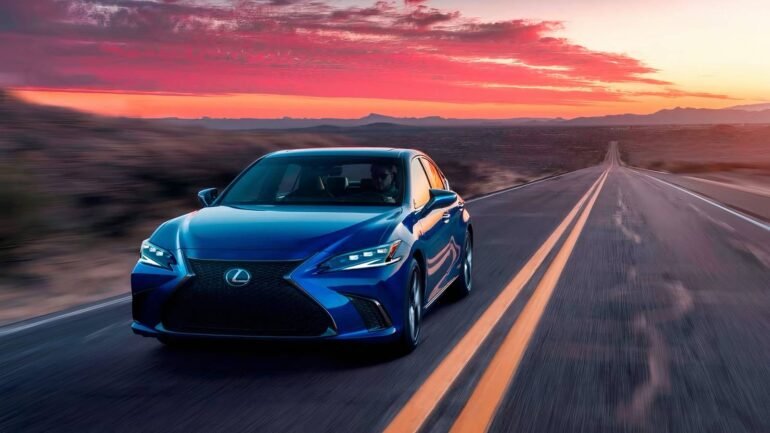
In the world of midsize luxury sedans, two names consistently rise to the top for buyers seeking refinement, comfort, and dependability: the Lexus ES and the Mercedes-Benz E-Class. These models represent two distinct philosophies: Lexus’s unwavering commitment to reliability and understated luxury versus Mercedes’ pursuit of cutting-edge innovation and performance-driven sophistication. Over the years, both sedans have evolved into polished, technology-laden executive cars, but when it comes to long-term peace of mind, one continues to hold a commanding edge.
-


- Base Trim Engine
-
2.5L I4 ICE
- Base Trim Transmission
-
8-speed automatic
- Base Trim Drivetrain
-
All-Wheel Drive
- Base Trim Horsepower
-
203 HP @6600 RPM
- Base Trim Torque
-
184 lb.-ft. @ 4000 RPM
- Base Trim Fuel Economy (city/highway/combined)
-
24/33/28 MPG
-


- Base Trim Engine
-
2L I-4 Hybrid
- Base Trim Transmission
-
9-speed automatic
- Base Trim Drivetrain
-
Rear-Wheel Drive
- Base Trim Horsepower
-
255 HP @5800 RPM
- Base Trim Torque
-
295 lb.-ft. @ 2000 RPM
- Base Trim Fuel Economy (city/highway/combined)
-
25/33/28 MPG
The Lexus ES has become synonymous with durability and low running costs, often topping dependability rankings by J.D. Power and Consumer Reports. Meanwhile, the Mercedes E-Class, though historically less consistent in reliability, has made impressive strides with its latest generation, narrowing the gap significantly. This comparison isn’t just about mechanical dependability—it’s about how each brand’s design philosophy shapes the ownership experience over years of daily use. From fault trends and maintenance costs to long-term owner satisfaction, the reliability duel between Lexus and Mercedes reveals which luxury sedan truly delivers confidence that lasts well beyond the showroom floor.
To give you the most up-to-date and accurate information possible, the data used to compile this article was sourced from various manufacturers and other authoritative sources.
Lexus ES: The Benchmark In Executive Class Reliability

The Lexus ES has long stood as the gold standard for executive sedan reliability. Built on Toyota’s proven platform and powered by naturally aspirated or hybrid powertrains, it avoids the complexity that often leads to mechanical issues in European rivals. Consumer Reports and J.D. Power consistently rate the ES near the top of their dependability studies, often exceeding 90 out of 100 in predicted reliability. Its powertrains, shared with the Toyota Camry and Avalon, are engineered for durability first, providing owners with confidence that the car will start every morning and age gracefully over hundreds of thousands of miles.
What sets the Lexus ES apart is how it blends luxury and reliability without compromise. The interior features high-quality materials that resist wear, soft-touch finishes that hold up over time, and a minimalist approach to electronics that minimizes failures. Lexus’ meticulous assembly standards and conservative engineering choices like avoiding forced induction or dual-clutch gearboxes translate to long-term peace of mind. The result is a sedan that feels premium without carrying the anxiety of potential repair bills down the line.
Keeping Buyers Satisfied For The Long Haul

Owners also praise Lexus’ after-sales experience. Dealerships consistently rank among the best for customer service and maintenance satisfaction, reinforcing the brand’s reputation for reliability not just in its vehicles, but in ownership experience as well. In an era where technology complexity often undermines dependability, the ES stands as a reminder that precision, not flash, wins over time.
Mercedes E-Class Making Strides, But Still Trails In Dependability

The Mercedes-Benz E-Class remains one of the most respected names in executive motoring, and in recent years, it has made substantial progress in reliability. The latest W214 generation benefits from improved quality control and simplified electronics, addressing some of the issues that plagued earlier models. According to J.D. Power’s 2024 Vehicle Dependability Study, the E-Class has climbed significantly, now scoring above average among German luxury sedans. Mercedes’ focus on modular architecture and better component sharing has also contributed to fewer systemic faults and improved long-term durability.
That said, the E-Class still doesn’t quite reach Lexus levels of bulletproof reliability. Its advanced technology suite, including complex air suspension systems and MBUX infotainment, introduces more potential failure points than the relatively restrained Lexus ES. Owners report occasional software glitches, electrical issues, and higher maintenance costs, all typical of German premium sedans. Even with extended service intervals and improved build quality, the E-Class remains a car that demands more attention and budget over the years.
Inconsistent Reliability Is Offset By An Unmatched Driving Experience

However, Mercedes compensates with dynamic excellence and technological leadership. The E-Class feels distinctly more engaging on the road, offering a sense of precision and sophistication that the Lexus doesn’t attempt to replicate. It’s a car that appeals to those willing to trade a bit of reliability for engineering ambition—a reflection of how German design prioritizes innovation over longevity.
There’s a level of substance in the way this car drives that makes it feel like a highly sophisticated machine. It’s so well sorted out that it actually makes you feel better after a long drive.
– William Clavey, TopSpeed journalist
Fault Profiles: Where Each Sedan Tends To Slip

Every car has its weak spots, and while the Lexus ES is known for its near-flawless dependability, it’s not entirely immune to issues. Most reported concerns involve minor electrical gremlins, such as infotainment system slowdowns or Bluetooth pairing inconsistencies. However, these problems rarely affect drivability or safety. Mechanical failures are rare, and when they occur, they’re typically related to normal wear-and-tear components like suspension bushings or hybrid battery cooling fans after long mileage. Lexus’ conservative approach to engine tuning ensures low stress on mechanical parts, which translates to minimal powertrain complaints.
The Mercedes E-Class, on the other hand, shows a more complex fault profile. Common owner-reported issues involve the adaptive air suspension, turbocharged engine components, and electrical malfunctions linked to its MBUX interface. Earlier models have also been known to suffer from transmission control module failures and premature brake wear. Mercedes has steadily addressed these issues, but the car’s reliance on sophisticated electronics means that even small glitches can lead to expensive diagnostic sessions.
Lexus’ Engineering Makes For Predictable Ownership

The key difference lies in predictability. The Lexus ES tends to age gracefully, with wear developing gradually and predictably. The Mercedes, however, can surprise owners with occasional high-cost failures, something luxury buyers increasingly weigh when choosing between Japanese reliability and German prestige.
Real-World Longevity: Miles, Years, And Owner Satisfaction

When it comes to long-term durability, the Lexus ES is nearly unmatched in its segment. Many owners report surpassing 200,000 miles with little more than routine servicing, and it’s not uncommon to find 10-year-old ES sedans still driving as smoothly as the day they were built. The hybrid variants, particularly the ES 300h, are renowned for their resilience. Toyota’s hybrid system has proven itself globally over two decades, and Lexus owners often cite the car’s quiet operation, consistent fuel efficiency, and low running costs as reasons they keep their vehicles for well over a decade.
The Mercedes E-Class, while capable of high mileage, typically requires more intensive maintenance to stay in peak form. It’s not unusual for a well-maintained E-Class to exceed 150,000 miles, but that journey often involves higher upkeep costs, especially for components like suspension systems, electronics, and cooling hardware. Enthusiasts accept this as the price of owning a sophisticated machine, but casual drivers often trade out earlier due to escalating service costs.

In owner satisfaction studies, both sedans score highly, but for different reasons. Lexus owners value serenity, predictability, and hassle-free longevity. Mercedes drivers cherish performance, craftsmanship, and prestige. Both cars deliver satisfaction, but the Lexus tends to sustain it longer, thanks to fewer mechanical and financial surprises as the years roll on.
Cost Of Ownership VS. Peace Of Mind: The True Value Equation

Over a 10-year ownership horizon, the Lexus ES proves significantly more economical to own. Maintenance intervals are simple, parts are affordable, and hybrid models deliver exceptional fuel economy, often surpassing 40 mpg. Insurance and depreciation costs are moderate, and reliability ensures fewer unplanned expenses. Lexus consistently ranks among the top brands in five-year cost-of-ownership studies, making the ES a smart long-term investment for drivers who prioritize stability over flash.
In contrast, the Mercedes E-Class commands higher running costs across the board. From pricier servicing and specialized fluids to higher repair bills for its sophisticated systems, it demands a more generous maintenance budget. Depreciation also hits harder; while Mercedes holds prestige value, it tends to lose a greater percentage of its original price compared to the Lexus over the same period. Extended warranties can mitigate risk, but they further add to total ownership costs.
Each Model Caters To A Certain Area Of The Luxury Market

Ultimately, the choice between the two sedans reflects a philosophical divide. The Lexus ES offers peace of mind, predictable costs, and quiet luxury that endures effortlessly. The Mercedes E-Class delivers unmatched prestige and dynamic brilliance but asks for patience and pockets to match its engineering ambition. Both are outstanding in their own ways, but for buyers who equate value with worry-free longevity, the Lexus remains the undisputed reliability leader.