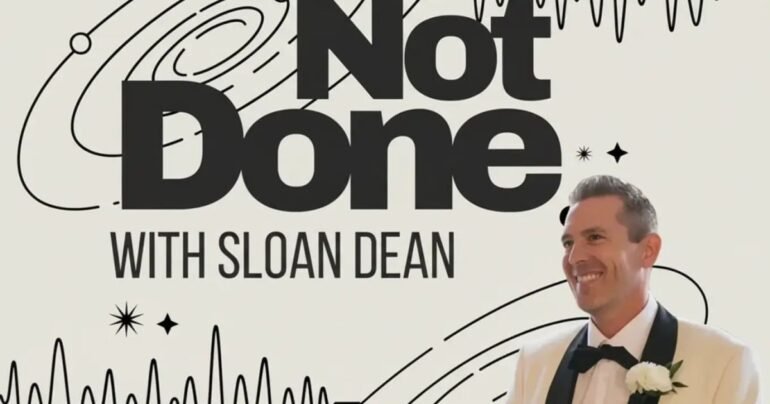
I sat down with Pat Pacious this week for what turned into one of my favorite conversations on the show. Pat is a US Navy veteran and a former management consultant (recovering, like me), and has spent 21 years at Choice Hotels—rising from strategy and technology all the way to the CEO seat. He’s running a company with over 7,500 hotels in nearly 50 countries across 20+ brands, and he brings a perspective that’s uniquely grounded in both technology and operations.
Here’s what stood out:
The Economy Segment Is Showing Green Shoots—And History Says Pay Attention. Pat made a point that I think every owner in the economy-to-midscale space needs to hear: occupancy is holding. As he put it, when occupancy and rate are dropping at the same time, you haven’t hit bottom. But when occupancy stabilizes and rate is still soft, you’re in the trough—and rate improvement follows. That’s how every cycle in this industry has played out. After the Great Financial Crisis, Choice went from flat-to-negative RevPAR years in 2009-2011 to posting +5, +7, even a +12 RevPAR year as the recovery took hold. Post-COVID, the economy segment was the first to recover. Meanwhile, midscale supply growth has been just 0.5% over the last five years. So you have a demand recovery setting up against a supply-starved market. Layer on tax relief hitting consumers in Q2, gas prices back to five-year-ago levels, FIFA World Cup across 11 US cities, the 250th anniversary of the country, and Route 66’s centennial driving road trip demand—and the catalysts for a meaningful summer are real.
The “Suits and Boots” Traveler. Choice has shifted its business travel mix from 70/30 leisure-to-business to 60/40—and it’s not coming from white-collar corporate accounts. Instead, they’re seeing traveling nurses, infrastructure crews, logistics workers, small business owners who restore furniture and need to hit the road to earn a living. Pat’s line was perfect: “Remember when nobody had toilet paper during COVID? The folks putting it on the shelves—they stay in our hotels.” AI will displace white-collar travel further. The people who can’t do their jobs from a laptop are Choice’s core customer, and that demand is structural, not cyclical.
Extended Stay Is the Bright Spot. Choice now has roughly 58,000 extended stay rooms across 550+ hotels. WoodSpring Suites is approaching 300 units. Some properties are running gross profit margins north of 50% with just 5-7 FTEs. Forty percent of Choice’s current pipeline is extended stay. The operating model is lean, the demand is real, and the exit multiples are proven.
AI as Equalizer, Not Threat. Pat broke their AI strategy into three layers: (1) customer acquisition—adapting to the zero-click, answer-engine world, (2) franchisee tools—turning backward-looking analytics into real-time recommendations, and (3) internal productivity—where engineers with two years of experience now perform at the level of nine-year veterans. His take: AI is primarily a benefit because it helps small business hotel owners compete more equitably with their larger-box competitors.
The Distribution Shake-Up. Pat drew a direct parallel between today’s AI disruption and the rise of OTAs twenty years ago. His North Star: protect what matters for the owner. Choice didn’t give away last room availability. They held the line on rate parity. Now, as answer engines replace search engines, the same discipline applies—don’t hand over your data without understanding what you’re giving up. As he put it: “If it’s going to compress margins because the cost of customer acquisition goes through the roof, that’s not what you want to be doing.”
Listen on Spotify or Apple.

Your competitor’s GM down the street just wrote her monthly owner report in 12 minutes. It was clear, financially precise, and addressed every variance before her asset manager could ask. She prepped for her ownership call by having AI predict the five hardest questions she’d face — and she rehearsed her answers before she walked in the room. She responded to an RFP that hit her inbox at 2 PM and had a polished, tailored proposal back to the planner by 3 PM. She did all of this from her phone, between walking the floor and checking on a VIP arrival.
She’s not smarter than you. She’s not working harder. She learned to vibe code.
Vibe coding means describing what you want in plain English to an AI tool — Claude (claude.ai) or ChatGPT (chat.openai.com) — and having it built for you in seconds. Documents, analysis, proposals, SOPs, training materials, emails. No programming. No IT tickets. Either tool costs $20/month for the pro version, and both have free tiers to start.
This isn’t a trend on the horizon. Shopify’s CEO told every employee that AI proficiency is now a baseline expectation before requesting additional headcount. Adidas piloted AI tools with 700 employees and reported a 50% increase in time spent on high-value creative work. Major hotel companies are actively building AI into their operations. The question is not whether this is coming to hospitality — it’s whether you’ll be ahead of it or behind it.
Five Use Cases That Change Your Week
The Sunday Night Owner Report. You know the feeling. It’s Sunday evening, you’re staring at the P&L, and you need to write a narrative that’s honest about the misses but confident enough that ownership doesn’t panic. Paste your key variances into Claude and say: “I’m the GM of a 250-room full-service Marriott. Rooms revenue was $45K over budget from a citywide. F&B was $12K under from a banquet cancellation. Labor was $22K over in housekeeping from overtime. Write a one-page owner narrative that’s transparent but confident. Don’t sugarcoat the labor miss.” You’ll have a strong first draft in 10 seconds. Edit it in your voice, and you’ve got your Sunday night back.
The RFP You Almost Didn’t Respond To. A planner sends an RFP at 2 PM for a 200-room block next quarter. Normally you’d flag it, mean to get to it, and watch the deadline pass. Instead, paste the RFP details into the AI with your hotel’s key differentiators, concessions you’re willing to offer, and your F&B minimums. Ask for a tailored proposal. You’ll have a polished draft in minutes. Add your personal note to the planner, send it, and you just won the first-mover advantage that closes group business.
The Asset Manager Call You’re Not Ready For. Before your next ownership meeting, paste in your trailing 3-month financials and say: “Based on these numbers, what are the five toughest questions my asset manager is going to ask, and draft strong, specific answers for each one.” Then rehearse. The GM who walks into that call having already anticipated the hard questions and prepared thoughtful responses owns the room. This single use case can change your relationship with ownership.
The SOP That Only Lives in Someone’s Head. Every hotel has critical processes that depend entirely on one person’s tribal knowledge. Describe that process to the AI — how your front desk handles a walk, how engineering prioritizes work orders, how your F&B team flips a ballroom between events — and ask for a formatted, step-by-step SOP. Then ask it to generate a 10-question training quiz with an answer key. You can build an entire department training library in a single weekend and eliminate the risk of losing institutional knowledge when someone leaves.
The Walkthrough That Writes Its Own Punch List. This is where it gets powerful. Open the Claude or ChatGPT app on your phone. Walk the property. Use voice: “I just inspected the third floor. Rooms 312, 318, and 325 all have wallpaper peeling near the bathroom entry. Draft a prioritized maintenance work order for my chief engineer and a short email to my RVP letting them know we’ve caught a pattern issue and are on it.” Take a photo of a banquet setup that doesn’t match the BEO and ask: “What needs to be fixed before the client walks in?” Photograph a competitor’s lobby, their signage, their rate on the marquee, and ask the AI to help you analyze it. Your phone is now your most powerful operational tool — and you can use it without ever sitting down at a desk.
What This Looks Like in Practice
The situation: You need to email your RVP about a labor overage.
What you say into your phone:
“I’m a hotel GM writing to my RVP. Housekeeping labor was $22K over budget last month. Root cause was a 3-day citywide that drove 98% occupancy Tuesday through Thursday, requiring overtime and 4 agency temps. We’ve since adjusted our agency staffing trigger from 95% to 92% forecasted occupancy to get ahead of it next time. Write a 4-sentence email that owns the miss but shows we’ve already fixed it.”
What comes back in 5 seconds:
“Hi [Name] — wanted to flag that housekeeping labor came in $22K over budget in October, driven by overtime and agency staffing during the downtown citywide that pushed us to 98% occupancy Tuesday through Thursday. While the revenue capture was significant, we weren’t positioned efficiently for the surge. We’ve already adjusted our agency activation trigger from 95% to 92% forecasted occupancy, which will let us pre-position temps before overtime becomes necessary. Happy to walk through the full detail on our next call.”
The Two Rules That Matter
Verify every number. AI is a brilliant writer and a mediocre accountant. RevPAR calculations, labor percentages, cost per occupied room — check every number before it leaves your hands. If you send an owner a report with wrong math, it doesn’t matter that AI wrote it. Your name is on it.
Protect sensitive data. Don’t paste guest credit card numbers, SSNs, or detailed PII into any AI tool unless your company has an enterprise agreement with that provider. Use sample or anonymized data when building templates. If you’re unsure what your management company allows, ask before you start.
Start This Week
Day 1: Download Claude or ChatGPT on your phone. Draft tomorrow’s department head meeting agenda by voice while you walk the property.
Day 2: Feed it last month’s top three P&L variances and ask it to write your owner narrative.
Day 3: Paste in your financials and ask it to predict the hardest questions your asset manager will ask — then draft your answers.
Have a great week!
Cheers,
Sloan