Within the next 10 years, the electric car and tech industry is set to witness landmark developments in energy storage technologies, with solid-state batteries currently leading the charge to be the next mainstream chemistry. Many experts are punting this move as the primary factor in what will finally elevate electric vehicles into the position of the new mainstream option for personal mobility. Modern lithium-ion technology has taken the industry very far in recent years, having more than doubled EPA-estimated range capabilities compared to older EVs using simpler chemistries.
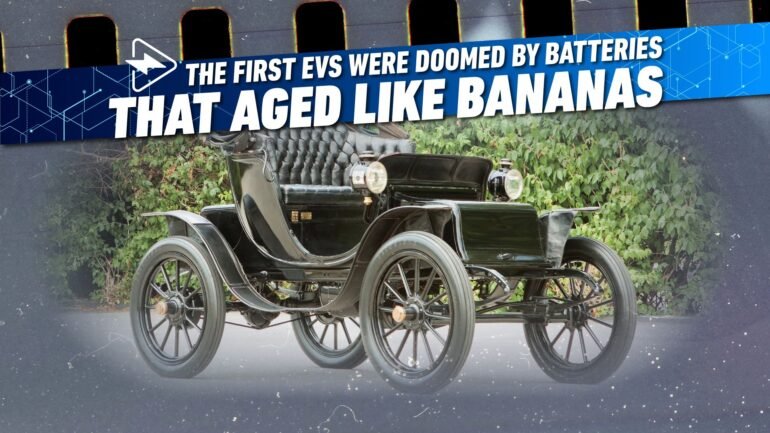
While the mainstream electric car industry is relatively young, the history of electrified vehicles stretches past well over 100 years. In the early 1900s, electric cars stood as serious contenders to steam and gasoline vehicles, offering quiet operation, easy starting, and zero emissions at a time when internal combustion engines were noisy and required hand cranking. These cars used lead-acid batteries and were marketed for their cleanliness and reliability, but limited range, slower speeds, and improving gasoline infrastructure eventually pushed them out of the mainstream by the 1920s, despite their technological elegance and ease of use. Veritasium tells us about some engineers who applied lithium chemistries to their battery packs and highlights why this was such a problematic route to take in the early years of energy storage solutions.
To give you the most up-to-date and accurate information possible, the data used to compile this article was sourced from various manufacturers and other authoritative sources, including Veritasium, Hyman, RM Sotheby’s, and Interesting Engineering.
The Dramatic Introduction Of Lithium In Early EVs
Initial Adoption Was Way Ahead Of Its Time
The goal of Veritasium’s video is to highlight how engineers struggled with applying lithium-metal battery packs
to early examples of electric vehicles, due to their high energy, resulting in extreme reactivity. Lithium reacts with standard liquid electrolytes, causing dendrite formation. These are tiny, tree-like lithium structures that develop from the source of the material as it becomes more unstable, resulting in puncture separators, spark shorts, and resultant fire risks. The video also shows us how chemistry and materials science finally got control over that behavior by modifying the electrode architecture. This introduces the nano-structured scaffold design with protective coatings, or three-dimensional frameworks, which help distribute charge evenly, thus drastically reducing stress points and thermal runaway risk.
This breakthrough centers on replacing or reformulating traditional liquid electrolytes. Researchers use advanced ceramic, polymer, and composite solid electrolytes that suppress dendrite growth while maintaining ion transport speed. Visuals depicted in the research-based video demonstrate how the battery now survives nail-puncture tests and high-temperature exposure without igniting. These tests highlight how stabilized lithium metal can finally behave safely under extreme conditions, representing a breakthrough shift in modern battery design. In today’s manufacturing climate, electric vehicle battery packs have shrunk in size, while bringing longer range and faster charging, resulting in better consumer confidence.
The Genius Of Solid Electrolytes

Solid electrolytes replace flammable liquid electrolytes with ceramic, polymer, or composite materials that conduct lithium ions while physically blocking dendrite penetration. Ceramics like garnet-type oxides offer high ionic conductivity and mechanical strength, while polymers improve flexibility and make for a simpler manufacturing process. Some designs layer multiple materials to combine advantages.
Electrodes use nano-structured scaffolds, which are tiny and precisely engineered frameworks that spread lithium deposition evenly across the surface, preventing the aforementioned hotspots that trigger dendrite growth. Materials like carbon nanofibers or porous metal foams create more uniform current density during charging.
Ultra-thin films of stable compounds coat the lithium metal surface. These act as artificial solid-electrolyte interphases, reducing unwanted side reactions with the electrolyte and enhancing cycling stability. Nail penetration, crush, and thermal exposure tests measure resistance to short-circuits and fires.
The First Examples Of EVs Were Interesting
And Surprisingly Successful Considering Their Flaws

Some of the earliest examples of electric vehicles include the Columbia Runabout, produced by the Electric Vehicle Company in 1901. This was capable of reaching a 15-MPH top speed while covering 40 miles of range on a single charge. The Baker Electric Model V from Ohio’s Baker Motor Vehicle Company became a status symbol for wealthy urban drivers, including Clara Ford, the wife of Henry Ford. Detroit Electric also built some of the most successful early EVs, achieving ranges of over 80 miles per charge and catering to doctors, socialites, and city professionals.
Bear in mind that all of these models featured lead-acid batteries, which are terrible at maintaining capacity between charging cycles, ultimately causing gasoline vehicles to rapidly take over as the mainstream fueling method due to their much more practical usability, longevity, and better performance. After just 500 charge cycles, the battery pack would have lost half of its capacity, making early EV adoption a truly impossible task, as they would need full battery pack replacements at least every two years.
The GM EV1’s Progressive Battery Technology
It Wasn’t The Best, But It Showed A Dramatic Improvement

Early adoption of electrified vehicles in the U.S. started with the cool but rather controversial GM EV1. This compact electric coupe was intended to fill a very niche spot in the new vehicle market, but the project was ultimately scrapped due to a lack of mass market feasibility, leading to all but one test unit being scrapped and crushed. The very first iteration of the EV1 featured a 16.5-kWh lead acid battery pack, which was enough to carry the peculiar EV for a full 55 miles before running out of juice. Towards the end of its development cycle, GM finally managed to get a 26.4-kWh nickel-metal hydride battery pack into the chassis, increasing its mileage claim to a much more impressive 142 miles.
GM EV1 Performance Specifications
| Powertrain | Single Induction Motor |
| Horsepower | 137 HP |
| Torque | 110 LB-FT |
| Transmission | Single-Speed Automatic |
| Driveline | Front-Wheel Drive |
| Battery | 16.5 kWh |
| Range | 55 Miles |
| Fuel Economy | 47 kWh/100 Miles |
| 0-60 MPH | 8.0 Seconds |
| Top Speed | 80 MPH |
The GM EV1’s drivetrain consisted of a single three-phase alternating current induction motor with an IGBT power inverter. This sounds like a fancy and technical configuration, but it was only enough to twist out 137 horsepower and 110 pound-feet, resulting in an eight-second 0-60 MPH time and 80 MPH top speed. GM approached Delco Electronics for the Magne Charge inductive charging paddle, which would take anywhere between six and eight hours to replenish the battery pack, depending on the output. While the GM EV1 was a considerable failure for the brand, we can’t deny that it was a considerable stepping stone, the fruits of which it got to experience a couple of decades later.
The Current Progress Of Solid-State Battery Technology

Over the last year or so, a lot of manufacturers have been investing heavily in getting solid-state battery technology ready for the new electric car market. This has been an uphill battle for many brands, but most have promised that the first production-ready examples will be launched globally by the end of the decade. At the moment, the Hyundai Group appears to be the front-runner of the development program, but Mercedes-Benz isn’t too far behind, as it already has a working prototype that’s been tested by some reviewers. Toyota has also been very vocal about getting solid-state battery technology right before opting to make the switch to a fully electrified catalog.
On the sidelines, a lot of power source developers have been investing a great deal of time and resources into alternative energy storage chemistries. Lithium batteries are currently the leading technology for almost every electric vehicle manufacturer in the industry today, but it is an ultimately flawed model, because it requires heavy and invasive mining practices to secure the necessary amount of rare earth materials. It also aggressively fuels the ongoing humanitarian crisis of modern slavery in the Congo, where many are being forced to work in grueling conditions for little to no pay, all through the means of gathering the material at a low cost to the manufacturer. Solid state and lithium sulfur programs at Toyota, QuantumScape, and Mercedes all bank on lithium metal, yet most companies are still fighting runaway dendrites that pierce solid electrolytes and cause thermal runaway.
Viable Solutions Are Being Discovered Across The Globe

There’s also a South Korean team at the Korea Research Institute of Chemical Technology that has developed a printing method that stabilizes ultrathin lithium‑metal anodes and more than doubles their lifespan compared to conventional lithium‑ion cells. The team focused on the dendrite formation by applying a protective layer via printing technology.
The dendrite formation is what impacts the chemistry’s safety and cycle life over time and with use. In pouch‑cell tests, the protected lithium‑metal anodes maintained 81.5 percent of their original capacity after 100 percent charging and discharge cycles and achieved a Coulombic efficiency of 99.1 percent. The Coulombic efficiency in batteries refers to the ratio of charge extracted during discharge to the charge inserted during charging. This represents more than double the stability of unprotected lithium cells. Even under extreme conditions via charging and discharging in just nine minutes, the cells retained 74.1 percent capacity, showing exceptional resilience under rapid and high‑rate usage.