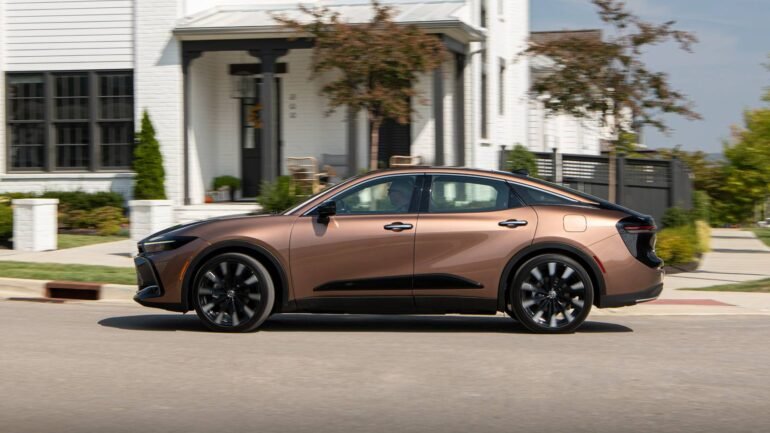
Mainstream sedans live in the shadow of the premium crowd. Buyers who want comfort and versatility have moved on to crossovers, leaving potential sedan buyers to pay a premium to move up to luxury brands. The desire for bigger cabins with smaller cash outlays has forced buyers who want the elegance of a sedan to move upstream, where they also get better tech and nicer materials.
But the notion that you need a luxury badge just to get an elegant, serene, well-appointed ride is not always correct. Savvy buyers know that the “badge tax” is real and inflationary when you factor in depreciation, costs for insurance, and long-term maintenance. Luckily, some automakers have figured out that there’s an audience for comfortable sedans of substance, and there’s perhaps no better example than this one.
The 2026 Toyota Crown Is The Mainstream Sedan With Luxury Traits But Not The Badge

Because of its size, equipment list, and its very price, the 2026 Toyota Crown is positioned as the brand’s sedan flagship in North America, and some feel it should wear Toyota’s luxury crest. A flagship sedan, at its core, is about space, composure, and amenities that don’t feel compromised, and true to those expectations, the 2026 Crown’s aim is to deliver a high-end driving environment with the practicality and price sensibility people expect from a mainstream brand.

The 2026 Toyota Crown’s efficient hybrid power, standard AWD, and roomy cabin are what many mainstream buyers consider essentials. The high-tech interior and the tall-roof sedan profile give it a character all its own, adding a distinctive, crossover-ish look on the road. By its very design, the Crown is Toyota’s way of showing that you can have a premium sedan without stepping up into Lexus territory.
Mainstream Interior Practicality Aligns With Flagship Luxury In The 2026 Toyota Crown

The 2026 Toyota Crown makes a strong first impression. Toyota went heavy on soft-touch materials, stitched surfaces, and sound-deadening, and the payoff is a cabin that stays impressively hushed (a Lexus quality from the very beginning in 1989). Seats are clothed in leather, front seats are power adjustable, all seats are heated, the steering wheel is heated—these are all amenities normally reserved for luxury brands, and they’re all standard on the mainstream Crown.
While I remain skeptical of the efficacy of the elevated ride height, it does make getting in and out of the car easier to do—especially for older people. What’s more, the Crown’s interior layout is spacious, comfortable, and pleasing to the eye.
– Lyndon Conrad Bell, TopSpeed Journalist
Yet, the newest Crown has the roomy rear seat for the extended family and friends, adaptability to carry longer cargo alongside a passenger or two, storage bins that are sensibly large and strategically placed, controls that don’t try to be clever, and connection points and drink holders for everybody—hallmarks that go into a sensible straightforward mainstream car, but one that feels a notch above the everyday, and better than some brands that trade on prestige.
The 2026 Toyota Crown Rides Above The Crowd

Visibility in the 2026 Toyota Crown is strong thanks to its slightly elevated, almost crossover-like stance. On the road, the Toyota Crown’s suspension and chassis tuning favor comfort and composure: you get a smooth, controlled ride over imperfect pavement, minimal cabin noise, and a sense of weight and solidity beneath you. It “glides over life’s irregularities, unruffled by untoward occurrences.”

Compared with typical family sedans like the Toyota Camry, the Crown feels significantly more settled and refined—with less road harshness and better overall composure. Versus Lexus models, it doesn’t hit the absolute sweet spot of plushness or isolation, but it closes much of the gap between the two brands, making the Toyota Crown a compelling “almost-luxury” choice without the luxury badge and price.

Here’s How The Toyota Crown Stacks Up In Terms Of Reliability
Toyota’s flagship sedan may be the most underrated hybrid, but it carries over with Toyota’s iconic reliability.
The Toyota Crown Is The Bridge Between The Toyota And Lexus Sedan Lineups

The Toyota Crown fills the gap between the brand’s bread-and-butter sedans and Lexus’s entry-level luxuries. It carries Toyota’s no-nonsense ethos but sprinkles in enough elegance to satisfy someone who wants a refined daily driver with a hint of prestige. It sits at the crossroads of practicality and indulgence—something few mainstream sedans today manage to pull off convincingly, especially since the demise of the Chrysler 300 and Buick sedans.
Toyota And Lexus Sedan Spec Comparison
|
2026 Toyota Camry |
2026 Toyota Crown |
2025 Lexus ES300h |
|
|
MSRP Range |
$29,000–$36,725 |
$41,440–$54,990 |
$43,540–$49,835 |
|
Powertrain |
2.5-liter inline-4 + 2 motors |
2.5L I-4 or 2.4L turbo I-4 + 2 motors |
2.5-liter inline-4 + 2 motors |
|
Transmission |
Continuously variable |
CVT or 6-speed auto |
Continuously variable |
|
Power |
225–232 hp |
236–340 hp |
215 hp |
|
Torque |
163 lb-ft |
163–400 lb-ft |
163 lb-ft |
|
Driveline |
Front- or all-wheel drive |
All-wheel drive |
Front-wheel drive |
|
Range |
559–663 miles |
435–594 miles |
581 miles |
|
Efficiency City |
43–52 mpg |
29–42 mpg |
43 mpg |
|
Efficiency Highway |
43–49 mpg |
32–41 mpg |
44 mpg |
|
Efficiency Combined |
43–51 mpg |
30–41 mpg |
44 mpg |
|
Passenger Volume |
99.9 cubic feet |
96.5 cubic feet |
97.4 cubic feet |
|
Trunk Volume |
15.1 cubic feet |
15.2 cubic feet |
13.9 cubic feet |
How The Toyota Crown Pushes Past The Camry

The Toyota Camry has long been the dependable middle child of the Toyota sedan lineup, and the face of the Toyota family vehicle, providing a good ride, decent features, and a strong reputation for value and longevity. The Crown elevates the family status, without receiving the glory. Its materials are richer, the cabin is quieter, the powertrains are more diverse, and the overall package carries a sense of calmness that Camry doesn’t quite match.
How The 2026 Toyota Crown Stacks Up To The 2025 Lexus ES

The Lexus ES has traditionally been the luxury answer to the comfort-focused midsize Camry, but the Crown nips at its heels. In some configurations, the Crown offers more standard tech, better powertrain options, and comparable rear-seat room. The Lexus bests the Crown on pure plushness—more robust sound insulation and even smoother suspension tuning—but the gap isn’t nearly as wide as the badging suggests, and the Crown gets the affordability nod.

The Japanese Hybrid That’s Quietly Becoming A Used Bargain
Hybrids depreciate more slowly, especially from brands known for reliability, so it’s hard to find used-hybrid bargains, but this one’s getting there.
The Toyota Crown Continues A Tradition Of Quiet Flagships

The Toyota Crown heritage dates back to the 1950s, often serving as Toyota’s premier sedan, especially in markets like Japan, where it’s been synonymous with comfort, respectability, and executive-level refinement. By the time it left the American market in 1973, it had run its course atop a lineup of compact sedans, and the recently enlarged Toyota Corona Mark II (later, Cressida) took over. Cressida grew steadily through the 1980s and was replaced by Avalon in 1995.

Avalon was always the comfortable, quiet, big-cabin sedan for buyers who didn’t want more than a Camry but didn’t want to move up to a Lexus. It offered generous room, a smooth ride, and mature styling. Yet despite delivering genuine flagship comfort, the Avalon (like the Crown that replaced it for 2023) never commanded great attention. It was the flagship in function, not in brand perception. Buyers who knew, knew, but the rest of the market saw it as simply a larger Camry.
The Toyota Crown Took Over Flagship Duties From The Toyota Avalon

The 2023 Toyota Crown could have been the next-gen Avalon, had Toyota decided to keep the name, but the name change conveyed a different role for the flagship to not only bridge the gap between Camry and the Lexus ES, but to also blur the line between sedan and crossover. Where the Toyota Avalon Hybrid was a traditional large front-wheel-drive sedan, built for comfort and efficiency over performance, the Crown balances efficiency with increased performance and a more imposing contemporary profile.
Toyota Crown And Avalon Spec Comparison
|
Toyota |
2023 Crown |
2022 Avalon Hybrid |
|
MSRP Range |
$39,950–$52,350 |
$37,350–$43,650 |
|
Current Value |
$28,048–$34,204 |
$28,576–$33,269 |
|
Powertrain |
2.5L I-4 or 2.4L turbo I-4 + 2 motors |
2.5-liter inline-4 + 2 motors |
|
Transmission |
CVT or 6-speed auto |
Continuously variable |
|
Power |
236–340 hp |
215 hp |
|
Torque |
163–400 lb-ft |
163 lb-ft |
|
Driveline |
All-wheel drive |
Front-wheel drive |
|
Range |
435–594 miles |
568–581 miles |
|
Efficiency City |
29–42 mpg |
43 mpg |
|
Efficiency Highway |
32–41 mpg |
43–44 mpg |
|
Efficiency Combined |
30–41 mpg |
43–44 mpg |
|
Passenger Volume |
96.5 cubic feet |
103.8 cubic feet |
|
Trunk Volume |
15.2 cubic feet |
16.1 cubic feet |
The Toyota Crown Is More Than A New-Generation Avalon

Where the Toyota Avalon stayed conservative, the Crown goes bold. Its higher stance, sleeker design, hybrid-only strategy, and richer interior cues help distinguish it from Camry in a way that Avalon never quite managed. Toyota didn’t just update the hybrid flagship sedan formula; it reimagined it in a way that put definitive borders between it, Camry, and Lexus ES. The three may still look somewhat alike (especially the incoming Lexus ES 350h), but the 2026 Toyota Crown finally makes Toyota’s flagship sedan feel like something special.

This 3-Year-Old Toyota Hybrid Proves Buying New Is Overrated
This is the Toyota hybrid sedan with the highest depreciation, and it’s the model that will make you think buying brand new is overrated.
The 2026 Toyota Crown Stands Out As A Flagship Sedan Without The Badge Cachet

Unlike previous Toyota flagship sedans, nothing about the Crown screams “mainstream rental car.” The 2026 Toyota Crown delivers a powertrain and ride balance that’s unusually refined for a mainstream sedan, and indeed closer to luxury-class crossover territory, with its elevated stance that really doesn’t exist in any other sedan, mainstream or luxury. Pull it all together, and the 2026 Toyota Crown is a great value, landing in that rare space between mainstream sensibility and prestige comfort, with its thoughtfully upscale cabin, slick hybrid performance, impressive room and versatility, and Toyota’s reputation for durability and ease of ownership. You get presence without pretense, and though there are other brands with upscale flagship-status sedans at mainstream prices, Crown takes the … well, crown.
The 2025 Subaru Legacy Touring XT Edges Close To Luxury Territory

The 2025 Subaru Legacy Touring XT is one of the last traditional AWD mainstream sedans left, and reigns as Subaru’s flagship sedan at the top of its midsize sedan lineup. It’s roomy, competent, and surprisingly refined—loaded up with comforts like Nappa leather, a well-insulated cabin, a massive portrait-style touchscreen, a compliant ride, Subaru’s famous symmetrical AWD, and a punchy turbocharged engine that is not as efficient as some competitors. It plays above its station and edges close to luxury territory.
2025 Subaru Legacy Performance Specs
|
MSRP |
$40,110 |
|
Powertrain |
2.4-liter turbo H-4 |
|
Transmission |
Continuously variable |
|
Power |
260 hp |
|
Torque |
277 lb-ft |
|
Driveline |
All-wheel drive |
|
Passenger Volume |
104 cubic feet |
|
Trunk Volume |
15.1 cubic feet |
The 2026 Hyundai Sonata Is A Different Breed Of Flagship Sedan

The 2026 Hyundai Sonata N is a different take on flagship status—sporty, sharply styled, and leaning toward the enthusiast side of the near-luxury field. The interior is driver-oriented, and Hyundai loads it with big screens, upscale materials, and a confident, planted ride. In typical Hyundai fashion, you get a lot of kit for the dollar, but it’s not as cushy as the Crown. It is larger, though, and costs over $6,000 less than the cheapest Crown.
2026 Hyundai Sonata Performance Specs
|
MSRP |
$35,900 |
|
Powertrain |
2.5-liter turbo inline-4 |
|
Transmission |
8-speed dual clutch automatic |
|
Power |
290 hp |
|
Torque |
311 lb-ft |
|
Driveline |
Front-wheel drive |
|
Passenger Volume |
104.4 cubic feet |
|
Trunk Volume |
15.6 cubic feet |
Sources: the EPA, Kelley Blue Book, Car and Driver