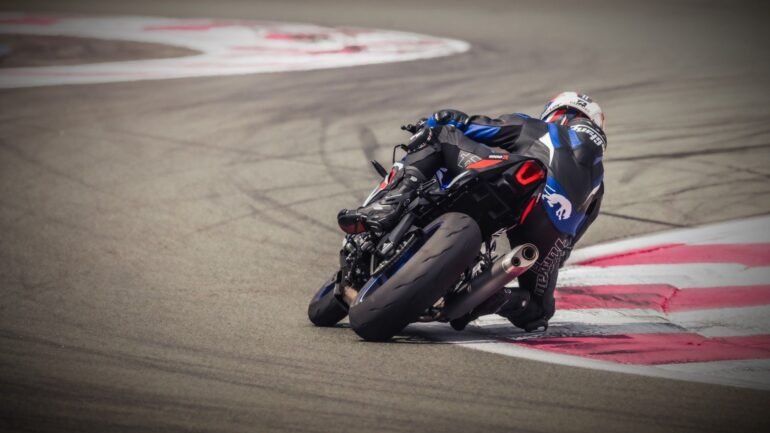
Ever since the YZF-R1’s debut, the flagship Yamaha sports bike has been a dream for many. But over the years, the price has consistently risen year after year. In fact, in 2025, it is one of the priciest liter bikes from Japan today. The MSRP starts from $18,999–a sizable $600 more than the 2024 model. That’s actually pricier than the $18,995 S 1000 RR. So what do you do if you want something like the YZF-R1 but still save some essential moolah? Well, we’re telling you just that.
Yamaha YZF-R1 Key Specs
|
Engine |
998cc, inline-four |
|
Power |
197 HP |
|
Torque |
83 LB-FT |
|
Transmission |
Six-speed |
The Suzuki GSX-R1000 Is Comparable To A Yamaha R1 Without The Price Tag
Price: ~$17,000

If you want a liter bike cheaper than the YZF-R1, your options all come from Japan. Out of all those, it’s the GSX-R1000 that hits the nail on the head. Why? Because it’s around $2,000 cheaper than the YZF-R1 while getting you similar performance, racy underpinnings, and comparable electronics. It is also the newest of the lot, courtesy of the recent update for MY26. Yes, the MSRP of the 2026 Gixxer is TBA, but even with a price hike over the 2025 model, it should be considerably cheaper than the R1.

Coming to the other two considerations, the cheapest option is the Honda CBR1000RR. Mind the number of Rs and don’t mistake this as the RR-R SP. The RR is one of the friendliest liter-class superbikes you can buy. That’s down to its docile four-pot mill, compact dimensions, and relatively relaxed ergonomics. This somewhat works against it, too, though. And this is why we didn’t pick it here. After all, the YZF-R1 is anything but docile or friendly.

Next in consideration was the Kawasaki Ninja ZX-10R. It’s the most expensive YZF-R1 alternative from Japan, priced at almost $18,000 without the ABS. Add ABS, and the MSRP is just $200 less than the YZF-R1. So it gets discounted due to the small price difference. Oh, and the ZX-10R is also one of the friendly liter bikes out there. It misses the punch offered by the CP4 engine, which the GSX-R somewhat matches due to its MotoGP-derived VVT tech.
Yamaha YZF-R1 Alternatives
- Suzuki GSX-R1000
- Honda CBR1000RR
- Kawasaki Ninja ZX-10R
- BMW S 1000 RR
The Suzuki GSX-R1000 Has A Refreshed Inline-Four Engine
Peak Power: 193 HP

*GSX-R1000R shown
The GSX-R1000 just underwent a refresh for 2026. Much of that is down to the engine, as it gets the necessary changes to be Euro 5 compliant once again. There are several notable changes, mainly around the engine internals. These include new crankshafts, crankcases, wider cam chain, and head gasket.
Suzuki has also bumped the compression ratio to 13.8:1 from 13:2. Aside from this, you get a new titanium exhaust. Suzuki claims this titanium exhaust is mounted high for good ground clearance at high lean angles. The muffler size has gone from 8.3 to 5.5 liters, too. Finally, the peak power is 193 horsepower and 81 pound-feet, all sent to the six-speed transmission.
Key Engine Changes
- New crankshaft with thicker journals
- New crankcases
- Wider cam chain
- New head gasket
- New piston circlips
- Revised head gasket shape
- New single-stage funnels for first and fourth cylinder
- Higher compression ratio
2026 GSX-R1000R Power And Torque
|
Capacity |
1000cc |
|
Layout |
Inline-four |
|
Power |
193 HP @ 13,200 RPM |
|
Torque |
81 LB-FT @ 11,000 RPM |
|
Transmission |
Six-speed |
Proven Showa Suspension And Brembo Brakes Ensure The GSX-R Shines On The Track
Chassis: Aluminum Perimeter

Since this is a refresh and not an overhaul (just like the 2025 YZF-R1), the underpinnings are largely unchanged from the previous model. An aluminum perimeter frame takes center stage here, which joins hands with Showa balance-free forks and a BRFC monoshock. Each of these has full adjustment (spring preload, rebound damping, plus high- and low-speed compression damping). This is topped with 17-inch alloy wheels, each wrapped in Bridgestone RS11 tires.
Slowing you down are Brembo monobloc calipers. No, these are not your fancy Stylemas (present on the R1) or Hypure units (as seen on the Panigale V4), which bum us out quite a bit. This is a missed opportunity, certainly. Luckily, the weight hasn’t gone up much from the previous generation, so at least the brakes don’t have extra work on their hands. Oh, and if you encounter the famed Gixxer brake fade, there are plenty of solutions by now.
2026 GSX-R1000R Underpinnings And Dimensions
|
Chassis |
Aluminum perimeter |
|
Front suspension |
43 mm Showa balance-free forks |
|
Rear suspension |
Showa BFRC monoshock |
|
Wheels |
17/17-inch alloys |
|
Brakes |
2x 320 mm disc (front)/ single disc (rear) |
|
Weight |
447 pounds |
|
Seat height |
32.5 inches |
|
Wheelbase |
55.9 inches |
|
Ground clearance |
5.1 inches |
Revamped Electronics Make The GSX-R1000 More Modern Than Ever Before
Instrument Cluster: LCD

The YZF-R1 is one of the most advanced Japanese liter-class superbikes today. So the Gixxer is simply inferior here. But you still get all the necessary niceties you’d expect on a modern-day motorcycle, all of which have been reportedly fine-tuned by Suzuki for 2026. A new six-axis IMU allows traction control (10 modes), wheelie control, and roll-torque control. All three, along with the launch control system, have been refined for 2026. A two-way quickshifter completes the package. Our only gripe here is the absence of a TFT. Suzuki has lazily left the negative LCD from 2017 as is.
Key Features
- 10-mode traction control
- Launch control
- Lift control
- Roll-torque control
- Rear lift control
- Quickshifter
- Cornering ABS
- LED lights
Finally, touching on the design, the GSX-R1000 looks similar to the previous generation. Yes, there are minor tweaks (gray crank case, revised bodywork), but much of it is still the same. While design is subjective, the new colors–Pearl Vigor Blue and Pearl Ignite Yellow–are certainly more impressive than the YZF-R1’s basic Team Yamaha Blue and Metallic Black options. Oh, and if you like your bikes without the aerodynamic shenanigans, the Gixxer ticks that requirement, too.