
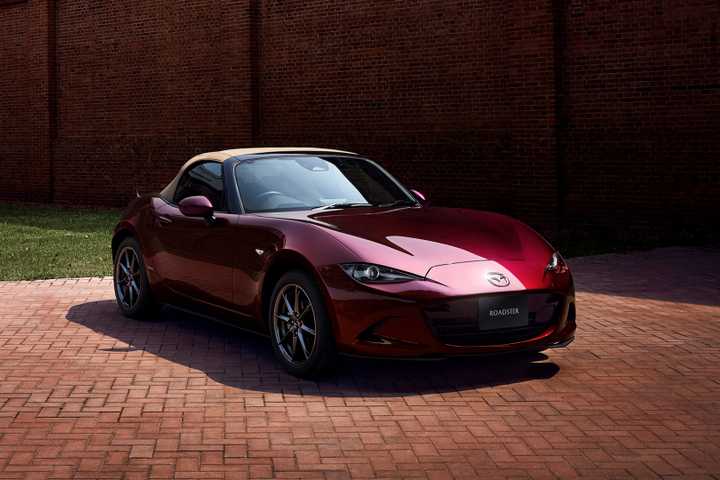
Few cars capture the spirit of driving joy like the Mazda MX-5 Miata. For more than three decades, it has stood as a symbol of lightweight engineering, precise handling, and pure connection between driver and machine. Yet according to a recent iSeeCars study, the beloved Miata has also earned a surprising new distinction: it’s America’s least driven used car. With owners averaging just over 5,000 miles per year, the Miata spends more time tucked away in garages than tearing up twisty backroads.

- Base Trim Engine
-
2.0-Liter I4
- Base Trim Transmission
-
6-Speed Manual
- Base Trim Drivetrain
-
Rear-Wheel Drive
- Base Trim Horsepower
-
181 HP @ 7,000 RPM
- Base Trim Torque
-
151 LB-FT @ 4,000 RPM
- Make
-
Mazda
- Model
-
MX-5 Miata
- Segment
-
Sports Car
This trend raises an intriguing question: why is one of the most celebrated sports cars in the world also one of the least used? The answer lies in the Miata’s unique role in American car culture. It’s not a commuter car or family hauler—it’s a weekend indulgence, a reward for good weather and open roads. From its impractical two-seat layout to the way it’s lovingly preserved by enthusiasts, every aspect of Miata ownership helps explain its surprisingly low mileage.
To provide the most accurate information, this article uses data sourced from various manufacturers authoritative sources.
Weekend Warrior: Why Miata Owners Barely Hit The Daily Commute

The Mazda MX-5 Miata has long been celebrated as one of the most fun and accessible sports cars on the road. Yet a recent study by iSeeCars reveals that Miata owners drive remarkably little, on average, just about 5,073 miles per year. That’s less than half the national average for three-year-old used cars, which brings into sharp relief the idea that Miatas are being treated as “weekend toys” rather than commuter vehicles.

What’s behind this behavior? For many Miata owners, the appeal lies in its role as a pleasure car, something to be savored on sunny afternoons, winding back roads, or spirited drives, rather than utilitarian everyday transportation. The two-seater layout, minimal cargo space, and focus on driving experience make it less practical for daily errands, family duties, or harsh-weather commutes. In short, many owners already have a more conventional vehicle for everyday use, so the Miata becomes the fun secondary car, and by default accumulates lower mileage.
The Cost Of Fun: How Low Mileage Drives High Cost Per Mile

At first glance, low annual mileage sounds like a benefit: less wear and tear, longer life, and lower risk of mechanical issues. But for owners and potential buyers alike, low usage introduces a hidden cost: cost per mile. A car with high fixed costs: insurance, maintenance intervals, depreciation, storage, or garage costs, but low annual driving means each mile is disproportionately expensive. If you buy a Miata intending to drive it often but then only use it on weekends, your cost per mile becomes steep.

Beyond cost per mile, there’s also the question of value retention and resale. With low-mileage Miatas now marked by studies as the least-driven vehicles in America, the market may treat them as enthusiast collector cars rather than daily drivers. That might help retain value, but it can also push asking prices higher, which further elevates the cost of ownership relative to usage. For buyers, this means you might pay a premium for the “rarely used” status, but unless you use the vehicle even less, your cost per mile could remain painfully high.
A Two-Seater Dilemma: Practicality Vs. Passion

The Miata’s identity is rooted in driving purity: lightweight, rear-wheel drive, minimal frills, and a convertible (or soft-top) roof that invites open-air motoring. That driving focus is precisely what endears it to enthusiasts, but it also creates the “two-seater dilemma.” With only two seats and limited cargo space, the Miata is seldom the go-to choice for everyday commuting, ride-sharing, grocery runs, or family duties. It’s built for fun, not for hauling the kids plus soccer gear.

That stark trade-off between practicality and passion helps explain the low mileage. Owners who buy a Miata know it’ll shine on weekends, not as a full-time workhorse. They may already own a sedan, SUV, or crossover for daily duties. Thus, the Miata gets tucked away, reserved for that drive when the weather’s right, the mood is right, and traffic’s light. The consequence: mileage stays low, which, from a usage perspective, is atypical in a country where most cars log 10,000+ miles annually.
Preserving The Legend: Low Usage And Long-Term Reliability

Paradoxically, low mileage can also be a strength, especially for the Miata, which has earned a strong reputation for reliability, simplicity, and longevity. Because many owners only use their car occasionally and often only in favorable conditions, these cars can remain in excellent mechanical health. A Miata with 5,000 miles per year means many components may still feel fresh years in. This is especially interesting in the used-car market, where low-driven sports cars often become pieces of an ownership experience rather than just a commuting tool.

However, low usage does present its own risks: cars left idle can suffer issues such as dried-out seals, old tires, stagnant fluids, corrosion from moisture, and battery degradation. For Miatas used only occasionally, it becomes critical that storage and upkeep be appropriate, including:
- Covered parking
- Regular startup and warm-up
- Fluid checks
- Tire care
But for the right owner, the result is a Miata that has largely lived a gentle life: the roof may still open smoothly, the manual gearbox crisp, the engine responsive.
Buying Smart: What The Miata’s Minimal Miles Mean For Used Car Shoppers

If you’re in the market for a used Miata, the low-mileage narrative offers both opportunity and caution. On the opportunity side, you may find a Miata in excellent shape, with fewer miles than typical cars of the same age, and a driving experience that feels nearly fresh. That can translate into a car with years of potential left, and perhaps a higher fill-rate for fun than many lightly-used sedans. But it also means you’ll likely pay a premium—or at least face higher asking prices—since the low miles are now a visible feature in the market. Expect sellers to reference the “under-5,000 miles/yr” stat.

On the cautious side: low mileage alone doesn’t guarantee condition. You’ll want to inspect service records, verify storage history, check rubber and fluid condition, and look for signs of long idleness (tires flat-spotted, hinges creaky, battery weak). Also, consider usage habits: a Miata with low miles might have been used only in ideal conditions, but what happens when you actually take it out more often? Ensure the car has been maintained, not just minimally driven. And for future value, consider that as Miatas become ever more cherished for low usage, the pool of available “used, lightly driven, enthusiast-owned” examples may shrink and retain value strongly.