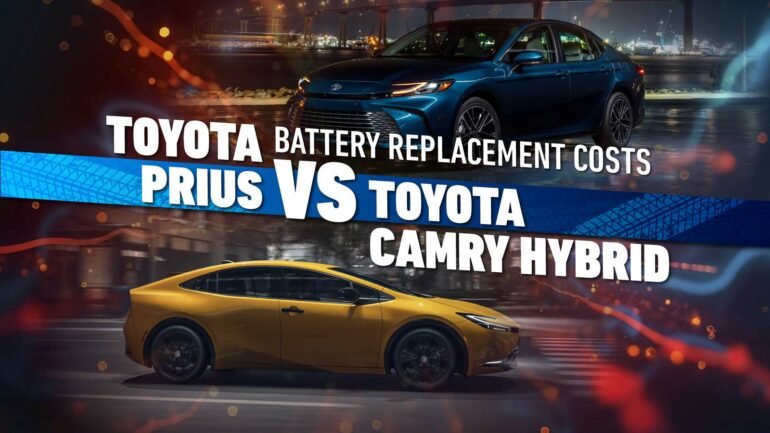
When it comes to hybrid cars, no one can deny that Toyota sits at the very forefront of the market. This is thanks to a series of timely investments and development cycles that it has contributed towards the technology ever since it launched its first mass-production gasoline-electric HEV a little over three decades ago. The Toyota Prius has always been a niche offering in its expansive line-up, but the moniker has always been its most advanced and efficient hybrid offering, introducing technologies that have filtered down into the brand’s more popular offerings. The Toyota Camry is a prime example of this, with the current-generation model being the first of its kind to adopt a hybrid-only configuration. Toyota will be taking this route with the next-generation RAV4 as well, which is due to hit the market in the coming months for the 2026 model year.
-
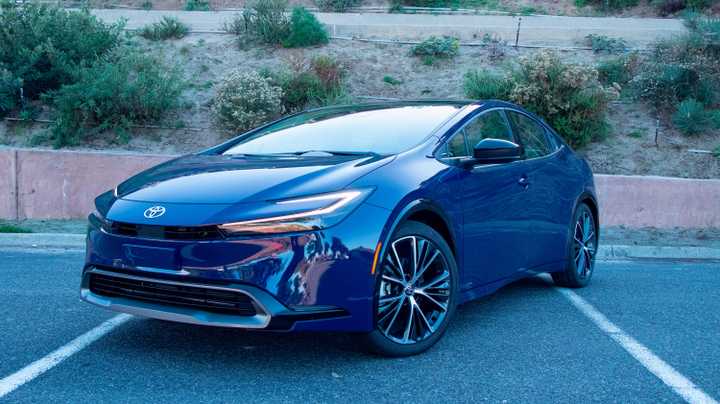

- Base Trim Engine
-
2L I4 Hybrid
- Base Trim Transmission
-
2-speed CVTi-S CVT
- Base Trim Drivetrain
-
Front-Wheel Drive
- Base Trim Horsepower
-
150 HP @6000 RPM
- Base Trim Torque
-
139 lb.-ft. @ 4400 RPM
- Base Trim Fuel Economy (city/highway/combined)
-
57/56/57 MPG
-
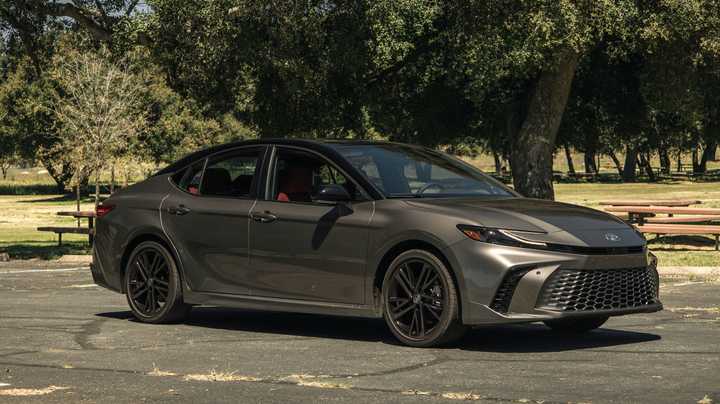
- Base Trim Engine
-
2.5L Dynamic Force I4 Hybrid
- Base Trim Transmission
-
CVT
- Base Trim Drivetrain
-
Front-Wheel Drive
- Base Trim Horsepower
-
184 HP @6000 RPM
- Base Trim Torque
-
163 lb.-ft. @ 5200 RPM
- Fuel Economy
-
53/50/51 mpg (best: LE FWD)
The Toyota badge benefits from its impressive reliability standards, but eventually you are going to need to have the supplementary hybrid battery pack replaced. Unfortunately, this is an inevitable job that will have a relatively high price attached to it compared to all the other work you’d need to conduct after extensive usage. Thankfully, it’s nowhere near as much as it would have cost you around 20 years ago, thanks to substantial developments made in the energy storage industry. This is how much you’ll spend to have both the Prius and Camry’s batteries replaced.
To give you the most up-to-date and accurate information possible, the data used to compile this article was sourced from Toyota and other authoritative sources.
How Much You’ll Spend On A New Battery For The Prius
You’re Unlikely To Have To Replace It For A Good 15 Years

Although Toyota USA has a comprehensive online parts catalog for the Toyota Prius range, it fails to list the replacement battery pack for the HEV system. The system features a compact 0.91-kWh lithium-ion battery pack. The pack consists of around 34 individual cells, but you have to replace the entire unit once it has reached the end of its lifespan.
Experts indicate that you can expect to spend anywhere between $2,000 and $8,000 on a new battery pack, depending on the severity of the wear, damage, and the labor required to exchange it. This is based on current values, so the amount you’ll pay when your battery pack eventually expires around 15 years from now will likely be very different. Brand-new replacement packs for the previous-generation model currently cost $2,450 before labor.
The Prius’s Class-Leading Efficiency Returns

The current-generation Toyota Prius is the best option for you to consider if you want a hybrid that benefits from low fuel costs and high estimated range capabilities. The most frugal of the lot is the front-wheel-drive base trim model, which is on a city/highway/ combined cycle and covers 644 miles on a single tank. You can expect to save as much as $4,500 on fuel over five years and $850 a year on fuel.
Fuel economy has always been the big lure of the Prius, and that continues for the 2025 model year… There are also drive modes of Eco, Normal, and Power, so you can choose just how much you want to tone down performance in the name of fuel economy.
– Nicole Wakelin, TopSpeed Journalist.
This model will also cost you $1.42 to drive 25 miles and $37 to fill up the 11.3-gallon tank. The XLE and Limited’s larger wheels worsen consumption to 52/52/52 MPG and reduce range to 588 miles. Your five-year fuel cost savings will decline to $4,000, while your annual fuel cost increases to $950. A 25-mile drive will have you spending $1.56 on fuel.
2025 Toyota Prius EPA Estimates
If you upgrade to the optional all-wheel-drive configuration, you can expect the drivetrain to return 53/54/54 MPG and cover 567 miles on a single tank, partly because this model adopts a smaller 10.5-gallon tank to make space for the additional rear motor. The XLE and Limited models suffer from the worst consumption and range estimates, but they are still pretty impressive by hybrid vehicle standards. You can expect these to return 49/50/49 MPG and cover 514 miles on a single tank. Expect to save $3,750 in fuel costs over five years and spend $1,000 on gasoline every year, or $1.65 to drive 25 miles.
The Camry’s Similar Battery Replacement Cost

Unfortunately, Toyota also does not list the 2025 Camry‘s replacement battery pack, so there’s no way for us to tell you how much this part will cost you directly from the manufacturer. Based on online testimonials and information provided by some dealers, there’s an understanding that you can expect to pay somewhere around $3,000 to have the HEV’s smaller 0.6-kWh battery pack replaced when the time comes.
Bear in mind that Toyota’s HEV systems last for years, with some owners declaring their packs to still be going strong after well over 15 years or 150,000 miles of driving. Toyota covers the Camry’s entire HEV battery pack
for any manufacturer-related defects over a 120-month or 150,000-mile period, while all related systems will be covered for 96 months or 100,000 miles, reflecting the Japanese brand’s commitment to its tired-and-tested gasoline-electric hybrid drivetrain technology.
Competitive Efficiency Returns Across The Range

As per the EPA’s official fuel consumption estimates for the 2025 Toyota Camry, the front-wheel-drive LE is the most attractive model for you to consider, with its 53/50/51 MPG fuel consumption on the city/highway/combined cycle. Thanks to a 13-gallon tank and compact battery pack, you can expect this to cover 663 miles in-between gas stations. This will also save you $3,750 in fuel costs over the course of five years and cost you $950 to keep refueled throughout the year. You can also expect to pay $1.54 for every 25 miles driven and $41 to fill up the tank.
The car’s electrified drivetrain is not only smooth and quiet, but it delivers excellent fuel economy and provides all the performance you could really ever need from a family-friendly car.
– Craig Cole, TopSpeed Journalist
Upgrading to the all-wheel-drive configuration worsens consumption to 51/49/50 MPG and range to 650 miles on a tank, which is still an impressive set of figures. Your fuel savings and costs remain more or less the same as well.
2025 Toyota Camry EPA Fuel Consumption Estimates
| FWD LE | AWD LE | FWD SE/XLE/XSE | AWD SE/XSE | AWD XSE | |
| Gas Consumption (city/highway/combined) | 53/50/51 MPG | 51/49/50 MPG | 48/47/47 MPG | 46/46/46 MPG | 44/43/44 MPG |
| Range | 663 Miles | 650 Miles | 611 Miles | 598 Miles | 572 Miles |
| Five-Year Fuel Savings | $3,750 | $3,750 | $3,500 | $3,250 | $3,250 |
| Annual Fuel Cost | $950 | $950 | $1,000 | $1,050 | $1,050 |
| Cost To Drive 25 Miles (EV/Gas) | $1.54 | $1.57 | $1.68 | $1.71 | $1.79 |
| Cost To Fill The Tank | $41 | $41 | $41 | $41 | $41 |
| Tank Capacity | 13 Gallons | 13 Gallons | 13 Gallons | 13 Gallons | 13 Gallons |
If you consider the SE, XLE, or XSE trims, you’ll be subject to a 48/47/47 MPG consumption and 611-mile range estimate. This trim saves $3,500 in fuel costs over five years and will cost you $1,000 to refuel every year and $1.68 to cover 25 miles. The all-wheel-drive SE and XSE models return 46/46/46 MPG and cover 598 miles on a tank, resulting in you saving $3,250 in fuel costs over five years and spending $1,050 on fuel a year, and $1.71 to drive 25 miles.
The top-of-the-range XSE with the optional all-wheel-drive configuration returns the worst set of consumption results, but they are still pretty impressive at 44/43/44 MPG. This model will also cover a 572-mile range in-between refueling. Again, your fuel savings and expenses don’t change that much from the lower-specification models.
Toyota’s Warranty Has You Covered
In The Event Of Any Production-Related Faults

On the reliability front, Toyota’s Atkinson-cycle system benefits from impressive reliability, but it is a relatively new powertrain, so long-term dependability is difficult to ascertain, even with the brand’s bulletproof reliability reputation. Having said that, these models have not yet been subjected to any recalls relating to core mechanical components. In the long run, it’s likely to cost much less than a conventional EV, mainly because you don’t have to deal with an expensive battery pack replacement after about 15 years of regular use.
2025 Toyota Hybrid Standard Warranty
| Full Warranty | 36 Months/36,000 Miles |
| Powertrain Warranty | 60 Months/60,000 Miles |
| Maintenance Warranty | 24 Months/25,000 Miles |
| Roadside Warranty | 24 Months/25,000 Miles |
| Corrosion Warranty | 60 Months/Unlimited Miles |
| Federal Emissions Performance | 24 Months/24,000 Miles |
| Federal Emissions Defect | 36 Months/36,000 Miles |
| Seatbelt And Airbag Warranty | 60 Months.60,000 Miles |
The Toyota hybrid range comes standard with the company’s comprehensive warranty package. Toyota also covers all hybrid components for 96 months or 100,000 miles, while the battery features a class-leading coverage of 120 months or 150,000 miles. You have the option of extending the basic warranty package up to 10 years or 125,000 miles via Toyota, but pricing depends on the dealership that you take the extension out with.
J.D. Power holds the 2025 Prius in very high regard, with its 75/100 quality and reliability, 76/100 driving experience, and 90/100 resale value scores, resulting in a 79/100 consumer-verified overall ranking. The same publication issues the Camry with an 83/100 consumer-verified overall score, which includes 86/100 for quality and reliability, 78/100 for the driving experience, 85/100 for resale, and 78/100 for the dealership experience.
Source: the EPA, J.D. Power, Greentecauto.