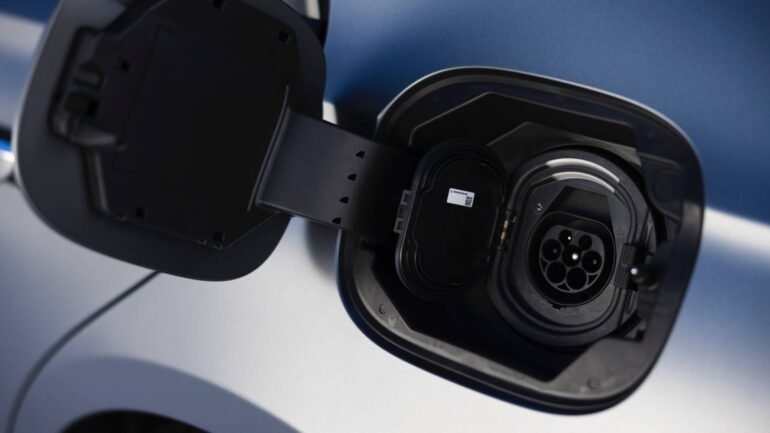
You might not be surprised to know that Toyota sold a robust 46 percent of the hybrid-electric vehicles in the third quarter in the U.S., but there’s another statistic that is bound to catch auto industry watchers off guard.
Care to guess which automaker has the biggest chunk of the (admittedly small) plug-in hybrid market? Toyota would be a good guess, but they’re actually third with 12 percent market share, behind Jeep (14 percent).

I Really Didn’t Expect This Plug-In Hybrid To Be This Good
The auto industry has released a slew of competitive plug-in hybrids in recent years. But I did not expect this one to be this good.
Mercedes-Benz Is Tops In PHEV Sales
But the top seller of hybrid cars with a plug was Mercedes-Benz. The tri-star accounted for 18 percent of the plug-in hybrid market in the third quarter, based on a sales analysis by Cox Automotive.
Mercedes says it offers 12 models with plug-in hybrid powertrains, including the GLC and GLE 4Matic SUVs, S-Class 4Matic sedan and nine AMG models that include the E-Class wagon, GT coupe and SL convertible.
Toyota Is Actually 3rd In PHEV Sales

What we don’t know is exactly how many PHEVs Mercedes-Benz has sold because the automaker doesn’t report sales numbers for specific model variants.
But apparently it’s enough to top Toyota and Jeep, along with Mazda and BMW, which can claim 11 percent and 8 percent of the PHEV market, respectively.
Perhaps Higher Price Is No Problem

It makes sense that a luxury brand would lead in PHEV sales because Mercedes customers might not flinch at the higher cost of a plug-in hybrid, while also appreciating the environmental benefits of all-electric driving for short jaunts around town. The GLC PHEV, for instance, claims 54 miles of all-electric range.
With that kind of range, a Mercedes owner who has a short drive to the office, the carpool lane or the grocery store could avoid a lot of gas stations by merely plugging in to a conventional wall socket in the comfort of their own garage. A Level 2 charger is not necessary, but it will charg your Benz faster than a standard 120-volt outlet.
If You Buy It, Why Not Plug In?

The sad truth about plug-in hybrids is that they are not very popular because most buyers know they won’t take the time to plug in.
Overall, Cox says plug-in hybrids accounted for a mere 1.8 percent of all new vehicles sold in the U.S. in the third quarter — a number actually representing a slight decline from the three previous years.
Since 2022, PHEV sales have hovered between 1.5 percent and 2 percent of U.S. sales while the share for standard hybrids has nearly doubled to 12.8 percent over the same period. Likewise, the share of battery-electric vehicles has nearly doubled over the same period to 10.3 percent, Cox reports.

Reasons To Buy A Plug-in Hybrid Vehicle Over An EV You Shouldn’t Overlook
Discover how plug-in hybrid vehicles offer a seamless blend of modern electric and traditional gasoline power across these key factors.
Still, 75% Of New Cars Are Non-Hybrid ICE
That growth can mean only one thing for the sale of new vehicles powered solely by conventional internal-combustion engines: contraction.
The Cox report says about 88 percent of new cars were ICE-only in 2022, and now that figure has shrunk to 75.1 percent. That’s still three-quarters of the market that isn’t EV or some form of hybrid — and don’t be fooled by the scale of the graphic above. Those blue columns should be much longer but were shortened to emphasize the growth of hybrids and EVs.
Honda Is No.2 With Its Hybrid Share

You have to look more closely at the hybrid sales trends to find vehicles selling at truly high volume. Toyota (including Lexus brand) sold more than 892,000 hybrids of all stripe through September this year, improving on the prior year by 26 percent.
While nearly half of everything Toyota is selling this year is a hybrid, the step down to the rest of the hybrid field is considerable. Honda is No.2, with hybrids accounting for 18 percent of its U.S. sales in the third quarter, according to Cox, followed by Ford (10 percent), Hyundai (9 percent) and Kia (6 percent).
Source: Cox Automotive