While everyone was clutching pearls about overtourism and writing Europe’s economic obituary, something unexpected happened: The continent’s travel sector didn’t just survive — it thrived.
Eighteen months ago, the narrative was irresistible. Europe was drowning in red tape (Digital Markets Act, take a bow), suffocated by new visa requirements, shadowed by geopolitical instability, and overrun by influencers mobbing the Trevi Fountain with the same chaotic energy I once brought to Hallmark stores during Beanie Baby drops. Neither of us should be proud.
Meanwhile, 2026 was meant to be America’s year, with the Semiquincentennial expected to keep U.S. travelers patriotically exploring their own backyard.
We’re certainly excited for America250, but luxury travelers are doubling down on Europe.
While Italy remains the heavyweight champion, there’s a massive pivot toward “coolcations” and the Eastern Renaissance. Slovenia’s bookings were up 473 percent year-over-year heading into last summer, according to Virtuoso data. The wealthy aren’t avoiding Europe; they’re outsmarting the crowds, trading scorching July heat in Seville for the temperate glamour of the Baltic coast and swapping predictable circuits for markets we once thought were too close to conflict.
As I walked the halls of the Americas Lodging Investment Summit in Los Angeles last month, this cognitive dissonance was palpable. While domestic developers murmured about “soft landings” and interest rate spreads, the executives with heavy European exposure were practically glowing.
The IHG Doctrine
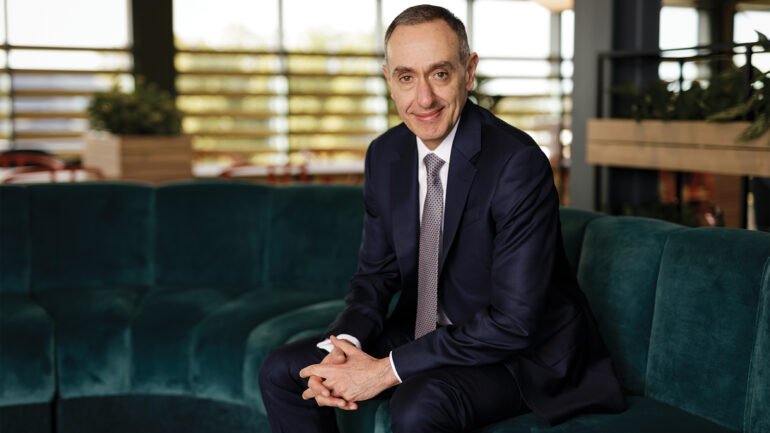
When I sat down with IHG Hotels & Resorts CEO Elie Maalouf, he quickly dismantled my premise that developers were merely seeking safety in European certainty. Rather than a safety play, it’s about chasing structural growth across a vast, diverse network.
“Europe has strong hotel performance with high rates,” Maalouf explained, “but as a percentage of unit growth, it’s a bit lower than further east, just because populations are younger and penetration is lower.”
He’s talking about the broader European, Middle East, Africa, and Australasia footprint, a sprawling 100-country network where IHG sees the real opportunity.

(Six Senses Rome )
It’s hard to beat IHG on the ultra-luxury front in this part of the world these days. The Carlton Cannes, a Regent Hotel, brings as much star power to the Cannes Film Festival each year as Julia Roberts. Six Senses Rome offers a hushed wellness sanctuary amid the capital’s bustle, and the soon-to-open Six Senses London will extend that ethos to the U.K. Both brands are pushing deeper into the Middle East, where infrastructure investment is rewriting the hospitality map.
“GDP growth is higher, infrastructure development is higher,” Maalouf continued. “The middle class is growing faster. You put all those things together, and you just have higher rates of GDP growth and higher rates of travel growth.”
The skeptics worry about proximity to conflict. Maalouf waved off the concern with directness: “Heck, we’re still open in Ukraine. We’re still open in Kyiv.”
The geographic breadth, from Fiji to Cape Town to London, allows IHG’s portfolio to absorb volatility that would cripple a more concentrated operator.
North America remains IHG’s biggest market, but this diversification strategy is central to IHG’s EMEAA play. While Western European markets deliver premium rates and steady performance, the growth engine also roars in Eastern Europe, the Middle East, and beyond. Poland’s growing prosperity, the Gulf states’ infrastructure boom, Southeast Asia’s rising luxury demand — IHG is positioned to capture it all.
Some of that EMEAA energy is making the journey west. The same day we spoke in Los Angeles, IHG announced it was bringing Ruby, its recently acquired “lean luxury” brand, stateside for the first time, with Chicago as the debut U.S. market. Turns out Europe still has a few things to teach America about hospitality after all.

(© Carlton Cannes Elise Quiniou)
The Silver Economy
But geography alone doesn’t explain the resilience. Maalouf is betting big on demography, specifically the “silver economy,” a structural, long-term theme driven by an aging population that’s wealthier, healthier, and far more adventurous than previous generations.
“When you’re 70, 60, you probably don’t want more things,” Maalouf observed. “You have all the things that you need. You just want to have experiences, things you do with people that become memorable.”
He shared a telling anecdote about his own mother, who at 93 traveled cross-country for a wedding — something that “very rarely” would have happened with nonagenarians 30 years ago, Maalouf noted. Today, this demographic is healthier, more mobile, and fueling demand for high-yield luxury that’s less sensitive to price fluctuations.
For luxury travel advisors, this is the insight that matters: Your clients aren’t just weathering economic uncertainty; they view travel as a non-negotiable investment in their well-being.

(Kimpton BEM Budapest)
The data backs up what advisors are seeing on the ground. That 473 percent booking surge in Slovenia is a signal. Luxury travelers are discovering what locals have known for decades: Ljubljana’s charm rivals Prague’s, without the crowds. The Croatian coast offers Amalfi-level glamour at a fraction of the chaos. The Baltic states deliver Nordic cool with a fraction of the price tag.
After several brand additions in recent years, IHG is strategically positioned to capture this moment. The company’s portfolio allows it to enter these emerging markets with the right product for the right traveler. Kimpton brings boutique cool to previously overlooked capitals. InterContinental anchors gateway cities with flagship gravitas. And as these markets mature, the ultra-luxury tier follows with Six Senses and Regent.
According to CoStar hotel data, luxury hotel rates in Europe increased nearly 9 percent last year, while overall luxury hotel performance rose by nearly 11 percent. Luxury outperformed the upper upscale segment by nearly double and the economy segment by five times.
“It’s one of the first times hospitality, and partly luxury hospitality, beat the cycle,” Agnès Roquefort, Accor’s chief development officer for luxury and lifestyle, told me in Los Angeles.
That optimism, shared by other IHG competitors beyond Accor, only means the competition for Europe is likely to heat up.
The world is filling up with individuals who have the financial well-being to travel, and the industry is just beginning to tap into the potential of longevity and health, as Maalouf summarized. The 93-year-old crossing the country for a wedding isn’t an outlier anymore. Instead, she’s the vanguard of a demographic revolution that will reshape luxury travel for decades.

(Ruby Chicago)
On the geographic front, there’s a similar restyling. Europe didn’t die. It evolved. And for those paying attention, the opportunity isn’t in the tired circuits of overtouristed hotspots. It’s in the coolcations, the Eastern Renaissance, the Middle Eastern gateways, and the far-flung corners of a global network where the next generation of luxury travelers is already booking their next escape.
It isn’t so much the broader EMEAA moment is getting started; it’s that the opportunity found across the entire IHG network is coming into focus.
Related Stories
Six Senses Plots a Utah Desert Escape
Virtuoso Awards “Best Brand Hotel” to Regent Hong Kong
Six Senses Coming to Bangkok’s Historic Silom District in 2028