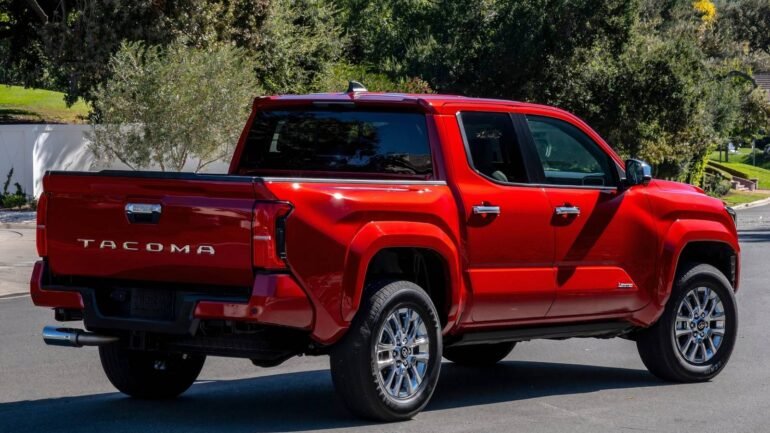
The midsize pickup segment has never been more competitive, and in 2025, two names continue to define what it means to blend practicality with personality — the Honda Ridgeline and the Toyota Tacoma. Both trucks appeal to different types of drivers, yet they share a common goal: to deliver everyday usability without sacrificing toughness. The Tacoma has long been the go-to choice for those who prioritize off-road capability and classic truck durability, while the Ridgeline has carved out its own niche as the smarter, more refined option for buyers who value comfort, technology, and versatility over brute strength.
This year, the competition between the two has reached a new level. The 2025 Tacoma debuts with a full redesign, boasting turbocharged and hybrid powertrains, an upgraded interior, and serious trail-ready engineering. Meanwhile, the Ridgeline refines its formula of SUV-like smoothness and thoughtful practicality, offering a driving experience few rivals can match. So, when it comes to choosing between Honda’s polished pickup and Toyota’s rugged workhorse, which is truly the smarter buy? Let’s break down how these two trucks measure up across the key areas that matter most.
Performance And Powertrains: Two Paths To Midsize Muscle

In 2025, the Honda Ridgeline and Toyota Tacoma take two very different approaches to performance. The Ridgeline sticks with its tried-and-true 3.5-liter V6 engine, now rated at 280 horsepower and 262 pound-feet of torque, paired with a refined nine-speed automatic transmission. Its power delivery is smooth and immediate, giving it a distinctly SUV-like driving experience. Built on a unibody platform shared with the Honda Pilot, the Ridgeline prioritizes on-road comfort and composure over brute-force ruggedness.
By contrast, the all-new 2025 Toyota Tacoma enters the scene with a completely reengineered lineup, including a 2.4-liter turbocharged four-cylinder engine available in multiple outputs. The top trims, like the TRD Off-Road and Limited, deliver up to 278 horsepower and 317 pound-feet of torque, significantly more twist than the Ridgeline. Toyota also introduces an optional i-Force Max hybrid powertrain for even greater torque and efficiency, redefining what a midsize pickup can do.

While the Ridgeline’s V6 offers naturally aspirated smoothness and proven reliability, the Tacoma’s turbocharged and hybrid options give it the performance edge in both power delivery and fuel economy. The Ridgeline drives more like a crossover, while the Tacoma feels every bit a truck. Buyers who prioritize refinement will appreciate the Honda’s polish, but those seeking power and versatility will likely lean toward the Toyota.
Towing And Off-Road Capability: Utility Meets Adventure

When it comes to towing and off-road ability, the Toyota Tacoma continues to hold the upper hand. The 2025 model’s maximum towing capacity of up to 6,500 pounds and payload rating approaching 1,700 pounds place it among the strongest contenders in its class. More importantly, Toyota has gone to great lengths to expand the Tacoma’s off-road credentials with advanced 4WD systems, a new multi-link rear suspension, and trims like the TRD Pro and Trailhunter, built specifically for overlanding. With features such as crawl control, terrain-select modes, and an electronic locking rear differential, the Tacoma remains a top choice for adventure-seekers.
The Honda Ridgeline, on the other hand, offers a maximum towing capacity of 5,000 pounds, adequate for light trailers, boats, or small campers, but not class-leading. Its all-wheel-drive system performs impressively on slippery or gravel surfaces, but it lacks the low-range gearing and ground clearance of a traditional 4×4 truck. Instead, Honda optimized the Ridgeline’s chassis for pavement performance, where it outshines most rivals. It’s the pickup that feels most at home on long commutes, highway runs, and light-duty hauling.

In short, the Tacoma is still the rugged workhorse, while the Ridgeline serves as the sophisticated utility vehicle. Toyota’s truck can take you deep into the wilderness; Honda’s is the ideal companion for everyday practicality and weekend leisure. The right choice depends entirely on whether your version of “utility” involves mountain trails or suburban driveways.
Interior Quality And Everyday Comfort: Where Work Meets Family Duty

Step inside the Honda Ridgeline, and you’ll find one of the most refined interiors in the midsize truck segment. Honda’s unibody construction pays dividends in cabin comfort, with minimal vibrations and an almost SUV-like sense of quietness. The materials are upscale, the seats are supportive, and the layout feels intuitive. Rear-seat space is generous, easily accommodating adults, while clever storage touches like the lockable in-bed trunk make it uniquely family-friendly. For those using their truck as both a daily driver and family hauler, the Ridgeline offers the best balance.
The Toyota Tacoma, meanwhile, has made significant strides in 2025. Its redesigned cabin finally ditches the utilitarian plastic-heavy look of previous generations in favor of a modern, premium design inspired by the larger Tundra. Higher trims now feature soft-touch materials, digital instrumentation, and available heated and ventilated front seats. However, the Tacoma’s seating position remains higher and more upright than the Ridgeline’s, and rear legroom, especially in Double Cab models, still trails Honda’s.

Ultimately, the Ridgeline is the more comfortable and spacious truck for everyday life, while the Tacoma feels more traditional and upright, reflecting its off-road priorities. If your truck doubles as your family’s main vehicle, Honda’s approach is simply more accommodating. But if you crave a cabin that feels rugged and adventurous, the Tacoma’s interior delivers that authentic pickup character.
Tech And Connectivity: Smarter Trucks For The Modern Driver

Both trucks take technology seriously in 2025, but their execution differs. The Honda Ridgeline offers an upgraded 9-inch infotainment system with crisp graphics, wireless Apple CarPlay and Android Auto, and a user-friendly interface. Honda’s cabin tech has always leaned toward simplicity and reliability rather than flash. The updated system is smoother and more responsive than before, and models like the RTL-E and Black Edition add a premium audio setup that enhances long-distance comfort.
Toyota’s new Tacoma, however, steps ahead with a cutting-edge 14-inch touchscreen on higher trims, one of the largest in its class. It integrates Toyota’s latest multimedia software, voice assistant, and seamless smartphone connectivity. A fully digital instrument cluster and optional head-up display complete the high-tech package, giving the Tacoma an edge in digital sophistication. Moreover, Toyota’s off-road technology suite, including multi-terrain monitor cameras and adaptive suspension settings, is far more advanced than anything offered on the Ridgeline.

For everyday usability, the Ridgeline’s system feels intuitive and less distracting, making it the better choice for casual users. Yet for tech enthusiasts or off-road adventurers who love configurable settings and large digital displays, the Tacoma offers a richer and more advanced experience overall.
Safety And Driver Assistance: Confidence Behind The Wheel

Safety is an area where both Honda and Toyota excel, and in 2025, neither truck disappoints. The Honda Ridgeline continues to come standard with the Honda Sensing suite, which includes adaptive cruise control, lane-keeping assist, forward-collision warning, and automatic emergency braking. Its car-like chassis and well-calibrated driver aids make it one of the most confidence-inspiring trucks to drive, especially for those new to pickups. The Ridgeline’s excellent visibility and predictable handling further enhance driver confidence in urban and suburban settings.
The Toyota Tacoma now offers the latest Toyota Safety Sense 3.0, bringing a similarly comprehensive list of driver-assist technologies. This includes improved lane-tracing assist, proactive driving assist, and intersection support systems fine-tuned for real-world traffic situations. Additionally, the Tacoma’s stronger frame and advanced airbag design contribute to robust crash protection. However, the higher ride height and off-road focus make it feel slightly more cumbersome in tight city environments compared to the Honda.

Both trucks deliver peace of mind, but the Ridgeline edges ahead for those prioritizing ease of use and comfort-focused safety systems. The Tacoma, meanwhile, provides more robust protection for those venturing off the beaten path. In the end, each truck proves that safety doesn’t have to come at the expense of capability, only that their definitions of “confidence” are shaped by different roads.