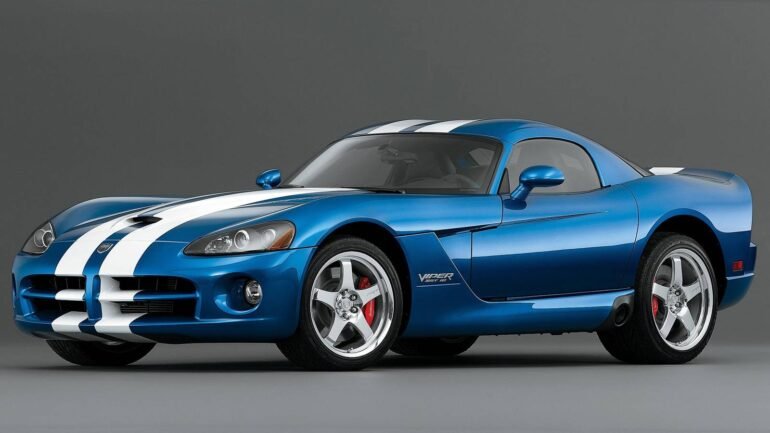
The ’90s and 2000s were the golden age of automotive styling because the ’90s followed the ugly, box-shaped ’80s, while the 2000s were followed by the bland uniformity that still blights our roads. Some would suggest that the ’30s, the ’50s, or the ’60s were the golden ages of car styling. While these three decades did produce some outstanding car designs, these were often the more expensive or exotic brands.
All design, not only automotive, reflects its zeitgeist, literally the spirit of the time. The fall of the USSR in ’91 created a sense of optimism, fear, and war banished. The economies of the major carmakers were roaring, and continued to do so until the realities of the Great Recession really started to bite in 2009.
New technology and manufacturing gave designers the freedom to move beyond the utilitarian box shapes that dominated the previous two decades. At the same time, the safety and emissions that would stifle later designs did not exist, or were not as strict yet. Design freedom fostered a drive back to brand identity, which led to wild concept cars making it to production. And cars were still mainly analog, with no screens to distract the designer, or other tech to define proportions.
New Directions In Styling Unleash The Design Potential

The mid-’70 petrol crisis forced carmakers to make smaller, lighter, more aerodynamic cars, losing much of the chrome detailing and wild shapes that made earlier cars attractive. A box is efficient to make and to drive, and cars became boxes on wheels. The early ’90s saw new design tools like CAD and more advanced manufacturing processes. The box gave way to more rounded shapes, better looking and more aerodynamic. Cars became more organic in shape, while great attention was placed on pleasing or challenging proportions.
The ’90s And Japanese Innovation Explosion

While the ’90s produced great designs like the BMW E36 and the Dodge Viper, the decade was dominated by the Japanese. A car like the Mazda Miata was created to replace the old British two-seaters, but became an instant hit in its own right. Another iconic Mazda was the rotary RX7, while the Nissan 300ZX, Mitsubishi 3000GT, and Toyota Supra also carved their own niches. Cars in the ’90s often had longer, lower hoods, and the cab position tended to be more to the rear. The lines of these cars were simple and dictated by mechanical necessity, which created beauty in its own right. Many of these cars started with high performance and excelled in track racing, rally, and social phenomena like drifting.
The 2000s And Bold Individuality

Having broken the shackles of boxy designs a decade before, designers in the 2000s gave free rein to their vision to create unique styles. If you look at the Audi TT, you will see simple design, no flash, no exaggerated flourishes, just a stylistic triumph where every part of the car is perfectly proportioned to make a complete whole. The TT looked like no other car, nor did the BMW E46, the Honda S2000, or even the first Ford Focus. The Ford Mustang got its mojo back, while the Mitsubishi Lancer and Subaru WRX added stylish performance. The Porsche 996 and the Ferrari 360 were joined by the brutish Bugatti Veyron.

Unregulated Style Brought About Memorable, Distinguished Design

Ever look at cars going past and wonder why they all look the same? Sure, you can tell a truck from an SUV or sedan, but you often have to see the grille to tell what make it is. There have always been regulations that dictated the performance or designs of cars: a case in point is the 1980s Ford Thunderbird 5.0-liter V8 that made 130 horsepower. Many regulations dictate many areas of a car’s design parameters, and each year, these get stricter. While regulations make cars safer for passengers and pedestrians are necessary and should be supported, they do stifle car design and lead to more uniform shapes.
Designs Were Allowed To Be Sharp, Thin, And Low

During the ’90s and early 2000s, there were very few regulations that inhibited the design and styling of a car. During the 2000s, more regulations came in force, and started having a greater effect on car styling. But the lack of these gave designers a pretty free hand. The cars of the ’90s and 2000s were able to fit pop-up headlights. While not banned, it was difficult and expensive to make pedestrian-safe. Headlights could be as thin as desired, while the car’s front end could be very low. The cabins could be light and airy, with tall glass and thin A-pillars.
Regulations That Constrain Styling

It is no use talking about regulations without knowing why they are in place. It is also worth noting that cars are designed to be sold internationally, and will usually try and conform to regulations that are in place in all their major markets. Many of the regulations around the front end of the car are for pedestrian safety. There has to be a certain amount of space between the hood and the hard engine parts underneath. This fixes the position of the A-pillars, with the shoulder of the car rising after that, while the side windows get thinner in a wedge. The creases in sheet metal are also regulated, with a minimum thickness determined where on the car they are. Headlights, taillights, indicators, and the width of wheel arches are also heavily influenced by these regulations.

Why Lexus’ Take On The Toyota Sequoia Is Worth The Upgrade
The Toyota Sequoia may be one of Toyota’s most valued full-size SUVs, but Lexus’ glitzy take on it is well worth spending the extra money on.
Brand Identity And Design Freedom Shaped Our Favorite Rides

Regulations were but one factor that inhibits the expression of brand identity now. Production consolidation and economies of scale have resulted in several brands sharing the same set of platforms, using the same engines, as well as other components. The Buick Enclave shares underpinnings with the GMC Acadia and Chevrolet Traverse. The Toyota Camry and Lexus ES are similar underneath, and so on.
Identity Meant More In The Age Before Tech Overload

Back then, brand identity was a lot easier to achieve, not only in models but in the range of models. Brand identity is a valuable attribute, and extends beyond the car’s logo, or in today’s homogenous world, the shape of the grille. American brands looked for new ways to express power, with muscular designs like the Dodge Viper and the Corvette C5. BMW emphasized strong lines, with four-corner wheel placements giving a sense of sturdiness, while Merc had more flowing lines hinting at luxury. Toyota emphasized common sense value, while Honda, offering the same, added some performance glam with models like the Civic Type R.
Taking Designs From A Concept To The Showroom

Concept cars today seldom survive the journey to production unscathed. Back then, many of them did, losing little of the glamour or wow that attracted attention at car shows. Notable among these are the Audi TT, the Dodge Viper, and the Plymouth Prowler retro roadster.

GM’s Greatest What-Ifs: 10 Concept Cars That Never Made It
GM has crafted some radically cool concept cars that should have made it to production, but unfortunately fell short.
Analog Simplicity Is The Essence Of Nostalgic Driving

The size of the infotainment screen is an important consideration when choosing a car, but this has not always been the case. One of the reasons the ’90s and 2000s are considered a golden age is that there were no electronics to distract from the essential car you were driving. When carmakers started putting warning lights for seatbelts or doors not closed properly, people called them ‘idiot lights’.
Controls You Could Actually Use Without Looking

Cars then had physical, mechanical switches you could push, levers you could flip, and knobs you could turn. These were arranged on the dashboard and on the steering column in a way that they could be used intuitively, without having to look down or grope around a touchscreen for a haptic button. Will anybody give up all the electronics that today make driving so much easier and traffic more bearable? The answer is no. Would most of us prefer if the HVAC were a button or knob rather than a screen slider, or if the indicators were in the steering column rather than behind the rearview mirror? Probably yes.
Style Without Expansive Screens Devouring The Dash

There are those who pine for the simplicity of car interiors before screens became a thing, but the only part really affected is the dashboard. If you drove a nice Audi or BMW back then, you would have experienced a well-designed dash, clad in leather or with brushed aluminum touches. But most drivers had to make do with plastic cladding, and the plastic back then was more or less as nasty as it is today. So if you had a car with walnut veneer and leather upholstery, yep, a golden age. Anything else, rather take today’s infotainment screen.
Sources: Federal Reserve History, Britannica