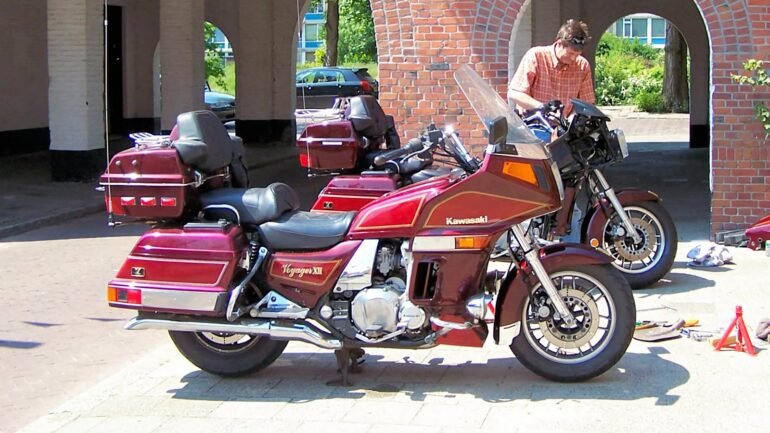
Forgotten through tech advances; that’s what happened, with everything getting bigger, better, faster, and smaller by the week, it seemed. Contemporary motorcycles were generally positioned well against the models that had preceded them, but things didn’t necessarily stop working simply because something newer had come along. This was where we found the Kawasaki Voyager XII.
This was a model that began production in 1986 and was sunsetted in 2003, giving it a nice long run before being replaced by the current Voyager lineup. It came equipped with numerous features that are now considered basic equipment. Ready for two-up travel, the engine was fairly powerful for its time, while maintaining a smaller overall size than its predecessors.
To give you the most up-to-date and accurate information possible, the data used to compile this article was sourced from Kawasaki. The information provided is current as of the time of this writing.

Why This Kawasaki Is A Forgotten Touring Motorcycle That Still Looks The Business
Its Achilles heel: being unconventionally extreme for a sports tourer.
The Voyager Had A Smooth Powertrain That Kept The Miles Rolling
Power for the Voyager XII came from a smooth-running, 1,196 cc inline-four transverse-mounted engine, yet it still fit well with the Voyager’s relatively narrow build. It was a carbureted engine, so a bank of Keihin tomato cans metered the mixture, which admittedly complicated things when it was time to synchronize the carbs. Still, it was a reliable system even if it became a tad dirty emissions-wise by the end. This contributed to the demise of many models around the early 2000s.
The five-speed transmission didn’t come with an overdrive gear. Still, it could reach around 85 MPH before the vibrations became pronounced, though it had a reputation for being a smooth drivetrain overall. A shaft-type final drive provided quiet service, although it could experience wear if not properly maintained. At least the Voyager XII had no tendency to shaft-jack, which helped it handle well, especially in the corners.
Voyager XII Engine And Performance Specifications
|
Engine |
Inline 4-cylinder, liquid-cooled |
|
Displacement |
1,196 cc |
|
Compression |
10-to-1 |
|
Power |
97 HP @ 7,000 RPM |
|
Torque |
79.5 LB-FT @ 5,000 RPM |
|
Transmission |
5-speed |
|
Claimed Fuel Economy |
42.5 MPG, reported |
|
Tank Range |
212.5 miles |
|
Top Speed |
125 MPH, reported |
The Voyager XII Blended Luxury Features With A Light Chassis And Adjustable Suspension
This wasn’t Kawasaki’s first Voyager, but this particular year’s range featured a narrow build that started with the framework. It was an attempt to move away from the big-and-heavy tourbike crowd while remaining a luxury touring machine. It was meant as a more nimble alternative to the big Harley-Davidsons and Gold Wings, and to that end, it was a success. Steering geometry was set up for good tracking at speed, and good road manners were something that never went obsolete.
A set of air-adjustable forks led the way, while out back, the air-adjustable shocks also sported a four-way rebound-damping adjustment for fine-tuning the rear end. This also gave Voyager XII the flexibility to handle changing cargo and passenger loads. Overall, the ride was quite nice, and the handling was light, considering its status as a fully dressed tour bike. Dual front brakes provided all the stoppage needed to handle the approximately 750-pound wet weight, though ABS was not available on this model range.

Why The Kawasaki Vulcan Is The Japanese Mile-Muncher Flying Under Everyone’s Radar
This is the most affordable full dresser available in 2025.
Vintage Style Met Functional Touring On The Voyager

If there was one place the Voyager XII showed its age, it was in the look. It was a look that had been decided on in the mid-1980s and that it carried until replaced by the next generation. It remained a form-follows-function machine, offering decent rider protection, wide seats, and a backrest/armrest combination for the passenger.
The slab seating cushions were also typical of the era and look a bit dated to modern eyes, just like the rest of the bike. However, the seats were adjustable, so riders could dial them in to suit. As for infotainment, it had it all for the time: an AM/FM receiver with a cassette tape deck, and speakers front and rear in an early surround sound setup.
Top cases and saddleboxes never went out of style either, though they were somewhat compact compared to some of the larger and much heavier American-style touring options out at the time. One nifty thing about the Voyager XII was that you could tell its year by its color, as each year received its own colorway that was not repeated within the model range.
Voyager XII Dimensions And Capacities
|
Length |
99.2 inches |
|
Width |
38.0 inches |
|
Height |
59.3 inches |
|
Seat Height |
29.7 inches |
|
Wheelbase |
63.8 inches |
|
Ground Clearance |
5.5 inches |
|
Fuel Capacity |
5 gallons |
|
Dry Weight |
729 lbs |
It Is The Forgotten Kawasaki That Masters The Open Road

The Kawasaki Voyager XII may have been overlooked in its day, but it quietly proved itself as a top-tier touring machine. From 1986 to 2003, it offered a rare blend of nimble handling, comfortable two-up seating, and a smooth, shaft-driven inline-four that could conquer long highway miles without complaint.
Fully dressed with luggage, early surround-sound infotainment, and adjustable suspension front and rear, it delivered features that many modern riders still appreciate. Its mid-1980s styling may look dated now, but the Voyager XII’s balance, reliability, and cornering confidence made it a practical, long-haul companion.
Often overshadowed by heavier American cruisers or more high-profile Japanese tourers, it quietly earned a loyal following. Today, it stands as a forgotten Kawasaki classic that still screams cross-country capability. It’s a machine that proves you don’t need the newest tech to enjoy the open road.